




I’ve been buying, cooking with, and testing freeze-dried food since 2009, and the biggest mistake I see people make is treating it as emergency-only food that sits on a shelf for years untouched. This complete guide covers how freeze-drying works, what to buy first, how to store it, how to rehydrate it properly, which companies are worth your money right now, and how to start cooking with it on regular weeknights.
Back in early 2009, my husband and I decided we needed to get serious about stocking up on food storage. Our first goal was meat. We knew we could grow produce, and I’d learned to dehydrate food. But raising enough animals to feed our family in a suburban neighborhood wasn’t happening. So we went to a prepping expo and bought our very first freeze-dried food. Most of it was ground beef, and it was an expensive investment. But we both breathed easier knowing we had a few months of shelf-stable protein when we needed it for ourselves and our two young children.
That was the beginning of a long education in freeze-dried food, and over time, I’ve learned what’s worth buying, what isn’t, how to use it in everyday cooking, and how to build a supply that will actually feed your family when things go sideways.
Here’s everything I’ve learned.
In This Article
- What Is Freeze-Dried Food, Exactly?
- Why Freeze-Dried Food Belongs In Your Pantry
- How to Store Freeze-Dried Food
- What to Buy First (Important!)
- How to Rehydrate Freeze-Dried Food
- Cooking with Freeze-Dried Ingredients Every Day
- Meals in a Jar: The Homemade Alternative to Pouch Meals
- A Word About Emergency Pouch Meals
- Which Companies Are Worth Buying From
- Building Your Supply Over Time
- Go Deeper
Some of the links in this post may contain affiliate links for your convenience. As an Amazon Associate, I may earn a small commission from qualifying purchases without any increase in price to you.
What Is Freeze-Dried Food, Exactly?
Freeze-drying is a preservation process that removes moisture from food without destroying its cellular structure. The food is frozen first, then placed in a vacuum chamber where the ice converts directly to vapor, skipping the liquid stage entirely. What comes out is a lightweight, shelf-stable product that reconstitutes quickly and retains most of its original flavor, texture, and nutrition.
This is different from dehydrating. Dehydrated food has had most of its moisture removed through low heat. It lasts a long time and is lighter than fresh food, but it changes the texture significantly. Freeze-dried food rehydrates much more completely — chicken that went in as chicken comes back out tasting and feeling close to fresh. Freeze-dried food also looks nearly identical to its fresh counterpart.
The trade-off between the two is cost. Freeze-drying is an expensive process, and the price per pound reflects that. But when you factor in the 25-year shelf life and the fact that all the prep work — washing, chopping, cooking — is already done for you, the math starts to make sense.
Why Freeze-Dried Food Belongs In Your Pantry
I’m not talking about just your emergency food pantry. Your actual pantry, the one you cook from every week.
This is what most people miss. Freeze-dried food gets mentally filed under “emergency stuff” and then sits on a shelf for years, untouched. But the families who get the most out of it are the ones who cook with it regularly, using it to save time, reduce food waste, and build meals from ingredients that are always on hand.
I’ve incorporated freeze-dried food in my everyday cooking for years.
A few reasons it earns its place:
Shelf life that actually means something. Most freeze-dried food lasts 20–25 years when stored properly. That’s not just a marketing gimmick. It’s the result of near-zero moisture content and airtight packaging. You can buy it, store it, and still be cooking with it two decades from now. Really.
No prep work. This is where freeze-dried food really shines. The chopping, washing, and cooking is done. Open the can, measure what you need, add to your recipe. On a busy weeknight, that’s not just a minor convenience. It’s a huge time-saver.
Zero waste. Fresh produce has a short window, and I’m sure you’ve discovered that! Freeze-dried doesn’t. If a recipe calls for half a cup of peas and that’s all you need, the rest stays in the can for months without spoiling. This alone saves money since you won’t be throwing out produce bags filled with green, slimy matter.
Real ingredients, not mystery blends. When you buy individual freeze-dried ingredients, like chicken, corn, peppers, cheese, you control what goes into your meals. And, since most of these foods are free from preservatives, excessive sodium, and the like, you’re starting with healthy ingredients.
How to Store Freeze-Dried Food
Temperature: Cool and consistent. Ideal is between 55–70°F. Every 10 degrees above 70°F cuts shelf life noticeably. Avoid garages, attics, and anywhere that gets hot in summer — in Texas, that’s most of the house in August.
Light: Keep cans away from direct sunlight. Most commercial cans are opaque for this reason, but it’s still worth storing them in a cabinet or pantry rather than on open shelving near a window.
Moisture: Freeze-dried food and humidity are enemies. Keep lids sealed tightly. Once you open a can, the clock starts. Most open cans stay good for 12 months if you reseal them well — some manufacturers say up to two years.
Oxygen absorbers: Commercial freeze-dried food comes packaged with oxygen absorbers already inside. Don’t add more. If you’re making your own meals in a jar using freeze-dried ingredients, you’ll want to add one absorber per jar before sealing.
Rotation: First in, first out. When you add new cans to your storage, move the older ones to the front. Write the purchase date on the lid with a Sharpie if the best-by date is hard to read.
What to Buy First (Important!)
This is where most people overcomplicate it. Start with what you already cook.
Think about the five or six meals your family makes on a regular basis. What proteins, vegetables, and starches show up in those meals over and over? Those are your first purchases. You’re not building a stranger’s emergency pantry. You’re building yours.
A few things worth having early:
Proteins are the biggest gap in most emergency food supplies and the most expensive items to source in a crisis. Freeze-dried chicken and ground beef are the workhorses. Chicken is the most versatile. It goes into everything from soups to enchiladas to pasta without changing the character of the dish. Ground beef opens up tacos, chili, casseroles, soups, and stuffed peppers.
Vegetables round out every meal and are easy to use. Corn, peas, green beans, peppers, mushrooms, and onions are practical starting points. They rehydrate quickly and become part of any recipe the same way fresh produce does.
Cheese surprises a lot of people. Freeze-dried cheddar, mozzarella, and Monterey Jack are real cheese, not the powdered stuff from a mac-and-cheese box. Rehydrate it and it melts, stretches, and tastes like cheese. For families who cook Mexican food regularly, this one is a near-daily utility item. A little expensive but worth it — and, it won’t grow mold like fresh cheese will.
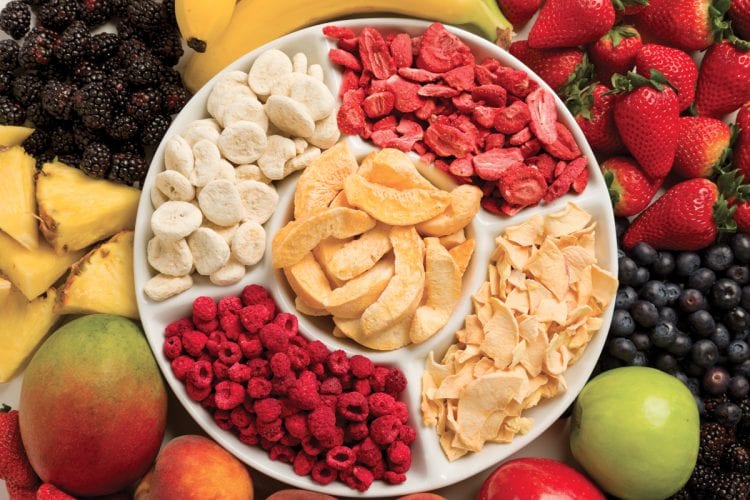
Fruits are worth having for snacking, baking, and adding to oatmeal or yogurt. Freeze-dried strawberries, blueberries, and pineapple eat well straight from the can and rehydrate into something close to fresh when you need it. Freeze-dried peaches and mango are perfect additions for a fruity salsa, and freeze-dried pineapple can be mixed in with oatmeal or even a quickbread.
What to hold off on for now: Pouch meals. More on those below.
Placing your first order? Read my 9 tips for getting it right without wasting money.
How to Rehydrate Freeze-Dried Food
The process is the same for almost everything: add warm water, wait, drain if needed.
Cold water works, but warm water is faster. Hot water is fastest. For most vegetables and meats, a few minutes in warm water is enough. For denser items like ground beef, 10–15 minutes gives better results. I always test a larger chunk of chicken or beef to make sure it’s fully rehydrated and tender inside — never crunchy.
The ratio is usually equal parts food to water by volume — one cup of freeze-dried chicken to one cup of warm water, for example. Check your specific brand’s directions since it varies slightly.
One thing to know: freeze-dried food absorbs water but doesn’t like to be waterlogged. If you’re adding it directly to a soup or sauce, it will rehydrate in the liquid as it cooks. You don’t have to pre-soak it. Just add it dry and give it time.
For cheese, a light sprinkle of water and a few minutes is enough. Don’t soak it. You want it rehydrated, not wet.
Cooking with Freeze-Dried Ingredients Every Day
Admittedly, it took a while for me to begin using my precious, costly freeze-dried food in my everyday cooking, but honestly, this is where it’s truly useful.
Freeze-dried ingredients behave like their fresh counterparts in almost every recipe. The prep is already done, the flavor is there, and the texture after rehydration is close enough that most family members won’t notice the difference, especially in cooked dishes. So, why not put it to use even occasionally?
A few everyday applications:
Mexican food is one of the best use cases for freeze-dried ingredients. Corn, peppers, chicken, ground beef, cheese — every staple in Mexican cooking is available freeze-dried and works beautifully in tacos, enchiladas, rice dishes, and chile relleno casserole. I rehydrate a bit of chicken or ground beef for a quesadilla filling. Once you start keeping freeze-dried corn and peppers on hand, you’ll wonder how you ever cooked without them.
See my full collection of Mexican recipes using freeze-dried ingredients.
Ground beef might be the most versatile protein in the category. It goes into anything that calls for cooked ground beef. It works best as an ingredient rather than in a recipe for meatloaf or meatballs. A few ways I use it is in my spaghetti with meat sauce, shepherd’s pie, and beef stroganoff. The only real adjustment is rehydrating it first, which takes about 15 minutes, and I discovered that chopping it with a food chopper gives me the same texture as fresh, cooked ground beef.
After years of using freeze-dried ground beef, I share my best tips here.
Chicken is the protein I reach for most. It comes pre-cooked in several formats, like diced, shredded, and strips, depending on the company and drops into soups, casseroles, and pasta dishes with no additional cooking required beyond rehydrating. The flavor is noticeably better than canned chicken.
How to use freeze-dried chicken, plus three recipes my family makes regularly.
Cheese goes on everything. Pizza, enchiladas, pasta, soup. Keep cheddar and mozzarella on hand and you’ll use them constantly. If you despair at the idea of not having cheese enchiladas in a worst-case scenario, then freeze-dried cheese will be your new best friend!
The full freeze-dried cheese tutorial, including a video demonstration.
Fruit in everyday cooking means smoothies, oatmeal, yogurt, baked goods, and snacking. Freeze-dried pineapple alone has more uses than most people expect.
24 ways to use freeze-dried pineapple.
How to use freeze-dried fruit in everyday cooking.
Meals in a Jar: The Homemade Alternative to Pouch Meals
A meal in a jar is exactly what it sounds like. You layer dry ingredients, like pasta, rice, dried vegetables, seasonings, and freeze-dried meat, in a Mason jar, seal it with an oxygen absorber, and store it until you need it. When dinner time comes, you empty the jar into a pot, add water or broth, and cook.
It’s faster than it sounds, and it’s cheaper and more nutritious than pouch, “just add water” meals. Because you control every ingredient, the sodium, protein, and flavor are all on your terms.
Wide-mouth Mason jars work best. Oxygen absorbers are essential. And testing one jar before making a large batch saves you from discovering a problem at the worst possible time.
Full instructions for making just-add-water meals in a jar.
Getting started with meals in a jar — tips for your first batch.
A Word About Emergency Pouch Meals
This category of freeze-dried food is where most people jump in (the deep end) without knowing exactly what they’re getting. The buckets and “6 months food storage for 4 people” can be enticing.
These meals deserve their own honest section.
The idea is appealing. A self-contained meal that requires nothing but hot water and 10 minutes. Grab a case and your family is covered. I understand the appeal. But, I’ve tested a lot of these meals. And the honest answer is that most of them are mediocre at best.
The issues tend to be the same across brands: low protein, high sodium and carbohydrates, and sometimes longer cook times that aren’t realistic in a real emergency. Flavor can range from bland to genuinely bad, although this depends greatly on the brand.
I tested four meals from Legacy Food Storage and found sodium levels approaching two full days’ worth in a single family pouch, protein levels lower than my protein bar, cook times up to 40 minutes, and one meal I threw out entirely.
Read my full Legacy Food Storage review before you buy.
That said, pouch meals aren’t worthless. They have their place — camping, short-term grab-and-go, situations where you truly have no other option. The key is knowing what you have before you need it. Pull one out. Cook it exactly as directed. Eat it. Find out now whether it’s food your family will eat.
If the meals you have aren’t great, there are ways to make them significantly better with simple pantry additions, like a splash of acid, good oil, fresh herbs, a bit of fat. And if you want tailored recipe ideas for any brand or variety, that’s exactly what Survival Mom’s Emergency Meal Wizard was built to do.
Tips and recipes for making any freeze-dried pouch meal taste better.
Which Companies Are Worth Buying From
Thrive Life, which was my top recommendation for many years, closed in September 2025. That left a real gap and sent a lot of people searching for alternatives.
The short version of where things stand now:
Mountain House is reliable for pouch meals and grab-and-go emergency food. Widely available at REI, Walmart, and Amazon. Quality is generally consistent, though not every flavor is worth buying. Mountain House sells meals and individual freeze-dried meats.
Augason Farms sells a broad range of products. Their bucket options are popular but heavy on rice and pasta with minimal protein. Their soups are barely edible in my experience. Useful for specific bulk staples, not a one-stop shop. You’ll want to make sure to buy small quantities first to make sure the flavor and quality is what you want. They have frequent sales, and you’ll often find their prices are lowest.
Thrivalist is one of the companies that emerged to fill the gap after Thrive Life closed. Their own freeze-dried line is called Ready Harvest, individual ingredients in double-enameled, BPA-free cans with a claimed 30-year shelf life. Worth checking out if you’re looking for individual ingredients rather than pre-assembled meal kits. You can get 10% off your order with my referral code.
Rainy Day Foods has been in business over 30 years with more than 250 products. Small, privately owned operation out of Idaho. When you call them, a person answers. Good quality and selection, though not the most beginner-friendly experience. If you want to buy meals, check their nutrition label and make sure you’re okay with the carbs, amount of protein, and sodium.
Azure Standard is worth a look for organic options and bulk staples. Large product variety, multiple size options, good for experienced buyers who know what they want.
The rules that apply regardless of brand: start small before buying in bulk, always taste before you commit to a case, and read every nutrition label, especially sodium and protein, before ordering.
My full breakdown of food storage companies, including what each is best for.
Building Your Supply Over Time
The days of having a year’s worth of stored food are long gone for most people. The money, space, and attention necessary for keeping track and rotating can turn into a part-time job no one really wants.
A goal of 30 days or at most 90 days, is plenty for just about every scenario, and as you begin, you don’t need to buy everything at once. Nobody does. The approach that works is methodical and patient.
Start with the proteins, since those are the hardest to source in a crisis and the most expensive to buy in bulk without a plan. Get chicken and ground beef first. Then add the vegetables and fruits your family actually eats. Add cheese if your family cooks with it regularly.
Set a monthly budget, even a small one, and buy consistently. Fifty dollars a month adds up to a real supply over a year. A hundred dollars adds up faster. The goal is a pantry that reflects your actual cooking, not a collection of mystery cans nobody knows how to use.
An alternate approach is to see your freeze-dried purchases as part of your monthly grocery budget. If you buy freeze-dried ground beef, a can of mushrooms, some corn, and a can of cheddar cheese and plan on using it, then deduct that amount from what you would otherwise spend.
And cook with it. That’s the most important thing. Every time you open a can and use it in a regular meal, you learn something — how it behaves, how much you need, whether your family will eat it. That knowledge is exactly what you’ll need when you’re cooking under pressure in a power outage or during a natural disaster.
Go Deeper
Each category of freeze-dried food has its own learning curve and its own best uses. Here’s where to go next:
- Proteins: Freeze-dried chicken | Freeze-dried ground beef
- Dairy: Freeze-dried cheese tutorial
- Fruits: Using freeze-dried fruit in everyday cooking | 24 ways to use freeze-dried pineapple
- Meals: Pouch meal upgrades | Legacy Food Storage review
- DIY meals: Meals in a jar | Getting started with meals in a jar
- Buying: 9 tips for your first order | Best food storage companies
- Recipes: Freeze-dried food in Mexican recipes
Have a question about freeze-dried food that I didn’t answer here? Drop it in the comments. I read every one.
I have a whole room full of THRIVE freeze dried food. Since we are now moving to a small place, I need to know which are still good. On the bottom of the can it ways Cooked diced Turkey FD
MFG: 04/02/2013 – D. – GF
I thought I purchased this before 2013. Is that a manufacturng date or a Best By or Use By date. If it is the manufacturing date, is it still good for another 12 years?
That would be the date it was packaged, Sherry. Keep it stored in a cool location, and it should be fresh for many years to come.