


Legacy Food Storage markets their meals as low sodium, high quality, and “best tasting”, so I bought their 4-meal family entrée pack, paid full price, and put through my four-criteria emergency food test. They failed all four, and the nutrition labels directly contradict their marketing claims. Here’s exactly what I found so you don’t spend $48 finding out the hard way.
I’ve been on a mission to find a good freeze-dried food company since Thrive Life shut down. Their “just add water” meals were quite good. They had real flavor, decent nutrition, contained generous amounts of each ingredient, and they tasted like food we wanted to eat. Since they shut down in August, 2025, many readers have asked me, “Now what? What companies can you recommend?”
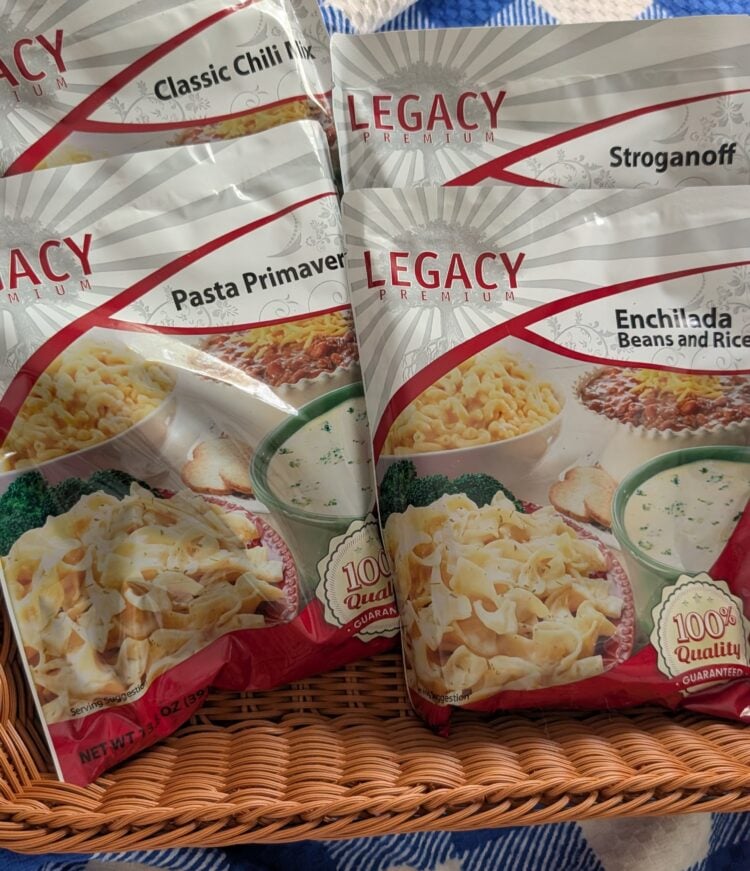
Legacy Food Storage came up repeatedly in my research. Their website makes confident claims: low sodium, high quality food, best value, large portions. They’ve even printed “Voted Best Tasting” right on the packaging. I bought a 16-serving family entrée pack — four meals, $48 plus tax and shipping, roughly $12 per pouch — and put them through the same evaluation I use for every emergency food product I test.
I paid for these myself. Nobody sent me samples or asked me to write this. What follows is exactly what I found.
How I Evaluate Emergency Meals
Before I get into the numbers and the taste, let me explain how I think about this category of food.
Freeze-dried and dehydrated meals aren’t just camping food. They’re what you’re eating when things have gone sideways — a hurricane, a power outage, a situation where your normal cooking setup isn’t available. This context matters a lot when you’re evaluating whether a product is actually useful for that type of scenario.
I look at four things:
1. Does it use a minimal amount of fuel/energy?
Most freeze-dried and dehydrated emergency meals are designed to be as simple as possible, usually: add hot water, wait, eat. That simplicity exists for a reason. In an emergency, you may be running on a camp stove, a propane burner, a generator, or a power station. You can’t waste any excess power on cooking a meal because you’ll need it later for lighting, heat, a fan, and so on.
2. Is it actually nutritious?
Calories matter in an emergency, but so does what those calories are made of. A meal that’s 90% carbohydrates and minimal protein isn’t fueling anyone through physical stress for very long. An emergency meal in a crisis needs to deliver a balance of protein and carbs and be sufficiently nutritious.
3. Can it be made quickly?
A hot meal provides comfort and nutrition when it seems your world is falling apart. That’s why I prioritize the amount of time the meal will take because in that scenario, time isn’t on your side. You need a hot, nourishing, good-tasting meal as fast as you can get it on the table.
4. Does it taste good enough that people will actually eat it?
This sounds obvious, but it’s worth saying: food that sits in a bucket because nobody wants to eat it is not emergency food. It’s expensive storage clutter and a waste of money. And, in a crisis, you shouldn’t have to add a lot of extra ingredients to an “emergency” meal just so it tastes good.
I’ve reviewed many food storage companies, and Legacy Food Storage performed poorly on all four counts. Here’s the breakdown.
The Cooking Time Problem
This was the first red flag, and it’s a dealbreaker for real-life emergency use.
Most emergency meals I’ve tested and used follow a simple process: boil water, add to pouch or bowl, wait 10-15 minutes, eat. Legacy’s instructions are different. They require you to boil water, add the packet, then cook for an additional 12-15 minutes, then let sit for another 3-5 minutes.
For their classic chili, that’s 8 cups of water.
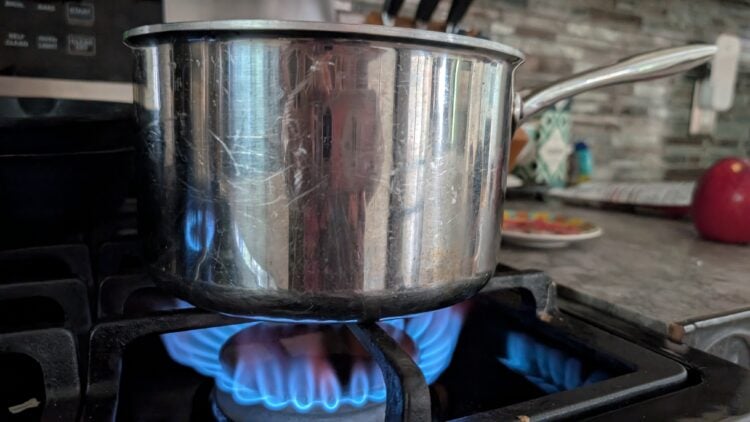
I timed this on my gas range at medium-high heat, which is about the fastest residential cooking setup you can have:
- 6 cups of water in a large saucepan: 9 minutes to boil
- 8 cups of water in a large pot: 22 minutes to boil
Add 14-15 minutes of cooking time (in practice, they all needed the full end of the range) plus 3-5 minutes of rest, and the chili took over 40 minutes start to finish.
That’s more time than it takes for my from-scratch chili and using a gas range in ideal circumstances. On a camp stove, propane burner, or using a power station and an electric burner, it will take longer. In a real emergency scenario with no gas, no grid power, you’re burning through fuel, battery capacity, or generator runtime for 40+ minutes to make one meal.
For comparison, a standard Mountain House or comparable meal takes about 10 minutes total and much less water. Legacy’s meals take four times that for four servings.
The Nutrition Numbers
Legacy’s website claims their meals are low in sodium and high in fiber. The labels tell a different story. Here’s what’s actually in each pouch, per serving:
| Meal | Calories | Sodium | Protein | Carbs | Fiber |
|---|---|---|---|---|---|
| Pasta Primavera | 410 | 710mg (29% DV) | 11g | 63g | 2g |
| Enchilada Beans & Rice | 390 | 1,030mg (45% DV) | 11g | 73g | 2g |
| Stroganoff | 330 | 1,050mg (46% DV) | 10g | 61g | 0g |
| Classic Chili | 360 | 1,160mg (50% DV) | 20g | 70g | 1g |
A few things worth noting:
On sodium: Three of the four meals deliver between 1,030mg and 1,160mg of sodium per serving. The FDA recommends no more than 2,300mg per day. One serving of the chili is half your daily sodium limit. Multiply by four servings, the full pouch, and a family meal delivers 4,640mg of sodium. That’s two days’ worth in one sitting. This is not “low sodium.” Compared, again, with Mountain House, Legacy meals have twice the sodium amount.
From the Legacy website:

On protein: The pasta primavera, enchilada beans and rice, and stroganoff all come in at 10-11 grams of protein per serving. For context, the protein bars I eat run 20-22 grams each. A single protein bar has roughly twice the protein of a $12 emergency meal. The chili does better at 20g per serving, the beans do that, but it’s also the meal requiring 40 minutes of cook time and the highest sodium of the group.
Every other brand of emergency meal I’ve tested includes at least a small amount of freeze-dried meat. Legacy doesn’t, at least in this selection of meals, which explains a lot about the protein numbers.
On the stroganoff specifically: Zero grams of dietary fiber. Not a little. Zero. The ingredient list includes vegetables. The nutrition label says otherwise. You can draw your own conclusions about how many vegetables are actually in that pouch. I didn’t observe a single one.
A note on ingredient labels: I assumed that if an ingredient is listed on the package, it’s actually in the food in a meaningful amount. That’s not how FDA labeling rules work. Ingredients must be listed in descending order by weight. So if corn appears near the bottom of the list, it’s technically accurate and perfectly legal for there to be very little of it. There is no requirement that a listed ingredient make up any minimum percentage of the product.
What the Meals Actually Looked and Tasted Like
I followed the package directions exactly on all four meals. I didn’t doctor anything up, add ingredients, or adjust seasonings beyond what came in the packet. I wanted to evaluate what Legacy is actually selling. Let’s start with Pasta Primavera.
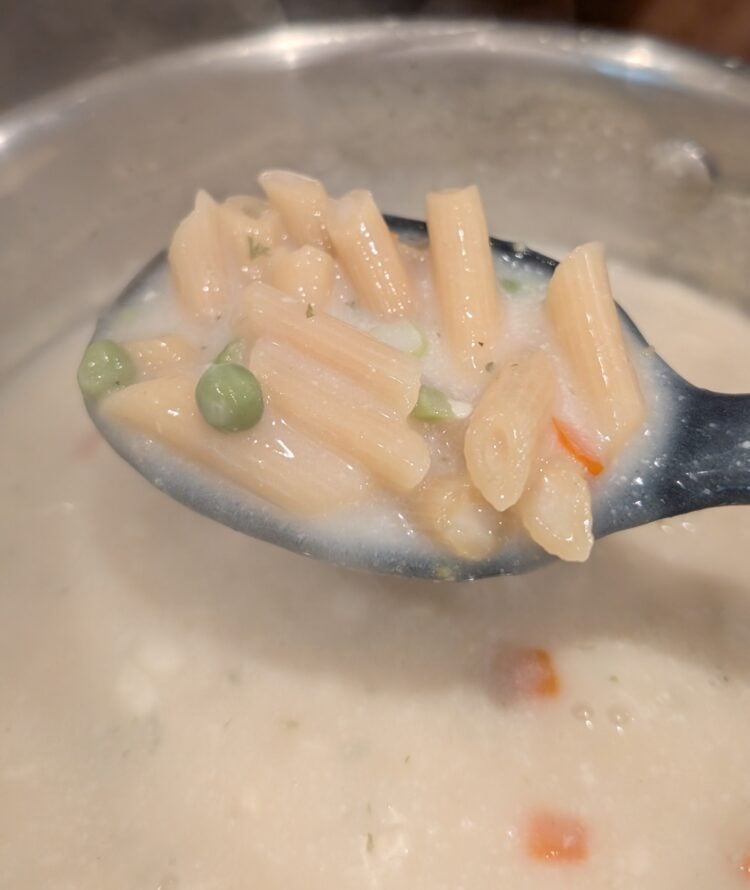
Pasta Primavera: Penne pasta with flecks of two or three vegetables and some sauce powder. The sauce was watery and bland, although it thickened the longer it sat in the pan. The vegetables were present in small enough quantities that they registered more as decoration than ingredients. This meal took the full 15 minutes cook time for the pasta to be finished.
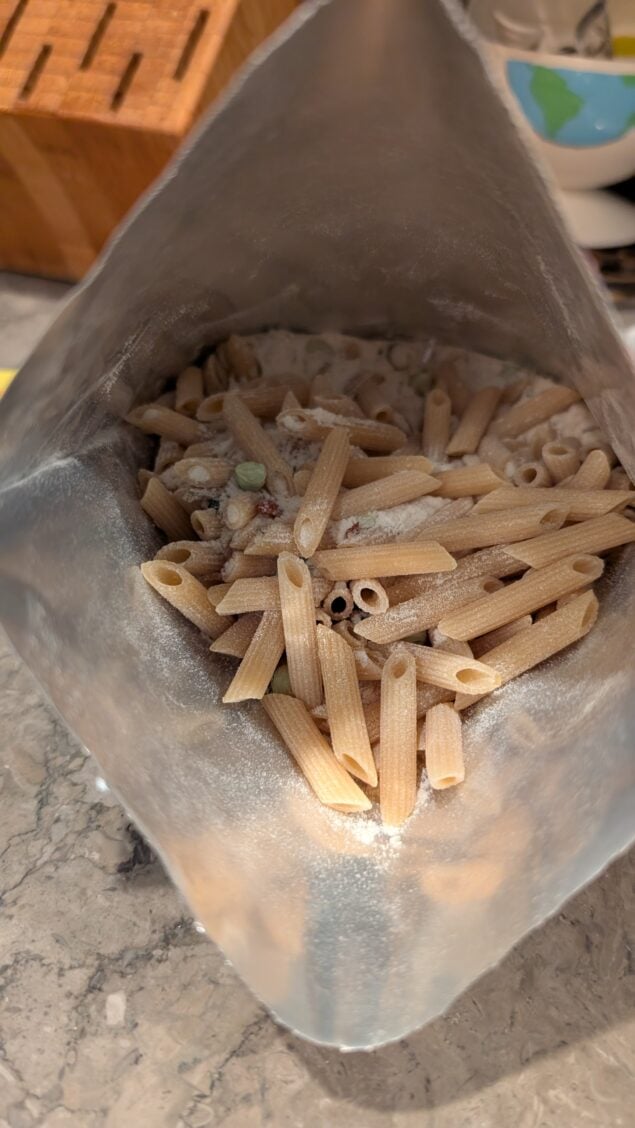
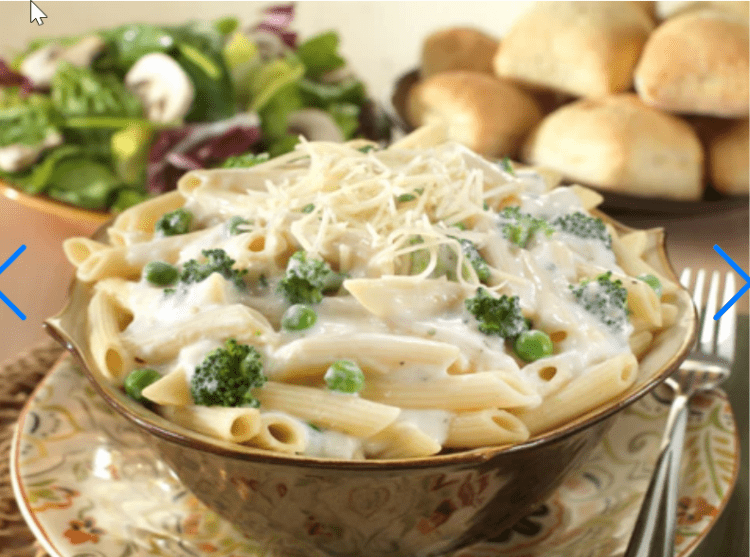
From the Legacy website, here is their Pasta Primavera photo.
Enchilada Beans and Rice: Almost entirely rice with powdered seasonings. The beans and corn listed on the ingredient panel were barely detectable. It had the consistency of a very thick oatmeal and was bland and needed additional salt despite the sodium content. I did not take a photo of this. Honestly, I threw it out before I realized I needed a pic.
Next up, Stroganoff.
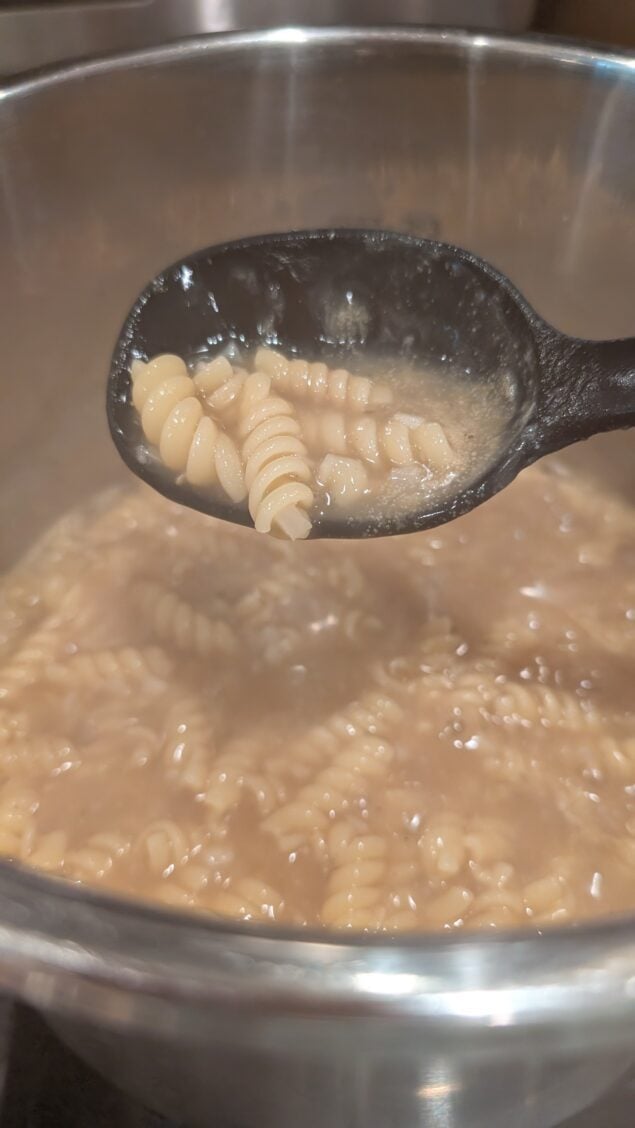
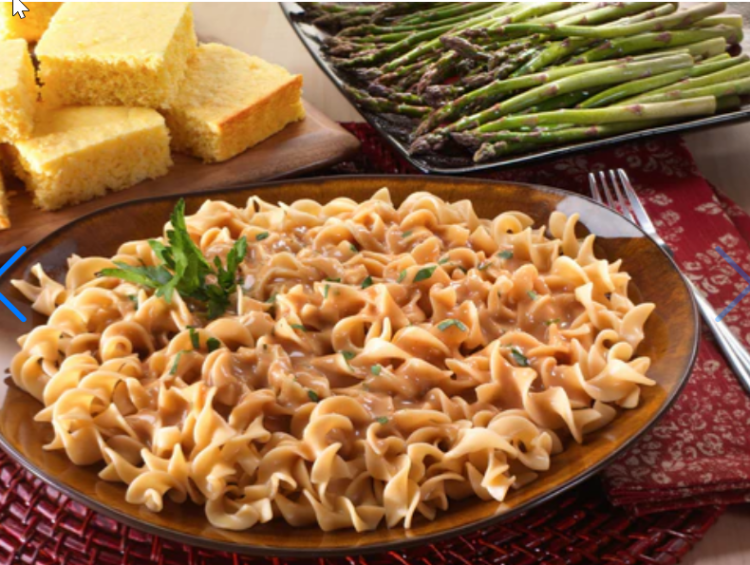
Stroganoff: Entirely spiral pasta and powdered seasonings. No detectable vegetables, which tracks with the zero fiber on the label. Watery sauce. I’m a good cook and knew I could have fixed this (maybe) with sautéed mushrooms, some cream cheese to thicken the sauce, and added protein with a cup or so of beef. But that would mean spending more money and time on a meal that already cost $12. I let it stand on its own, as sold, and ate exactly three pieces of the pasta.
This is their Stroganoff photo from their website:
Next up, chili.
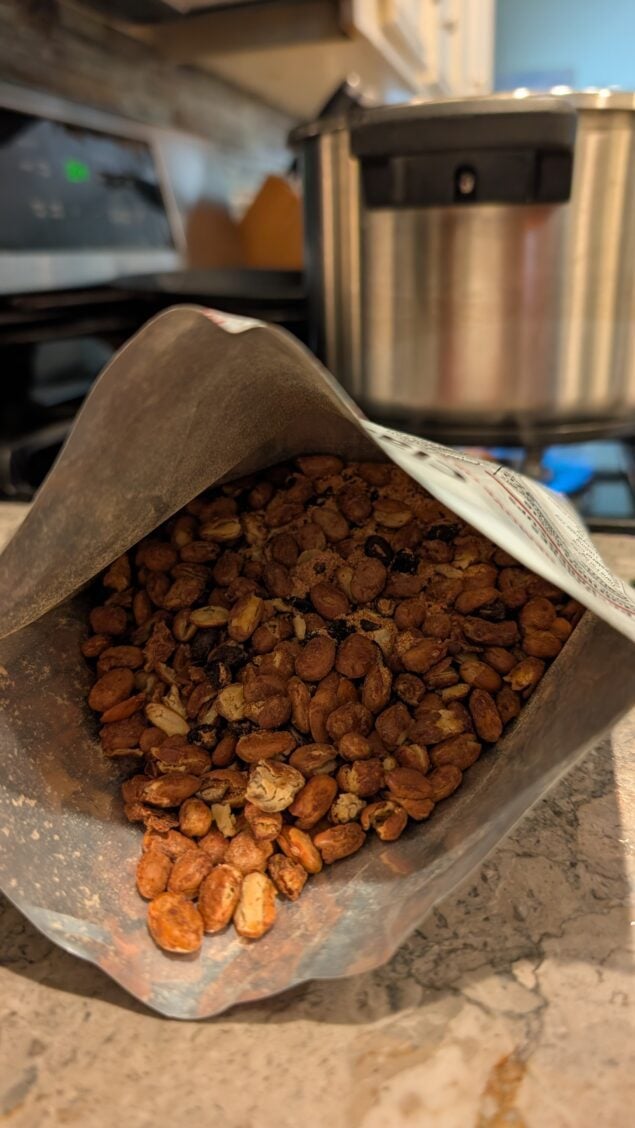
Classic Chili: Mostly dried beans with minimal corn despite corn being listed as an ingredient. Better protein than the others, but I didn’t enjoy the flavor. As you can see, there’s no corn to be found. Quite a disappointment, and no one in my family would eat it.
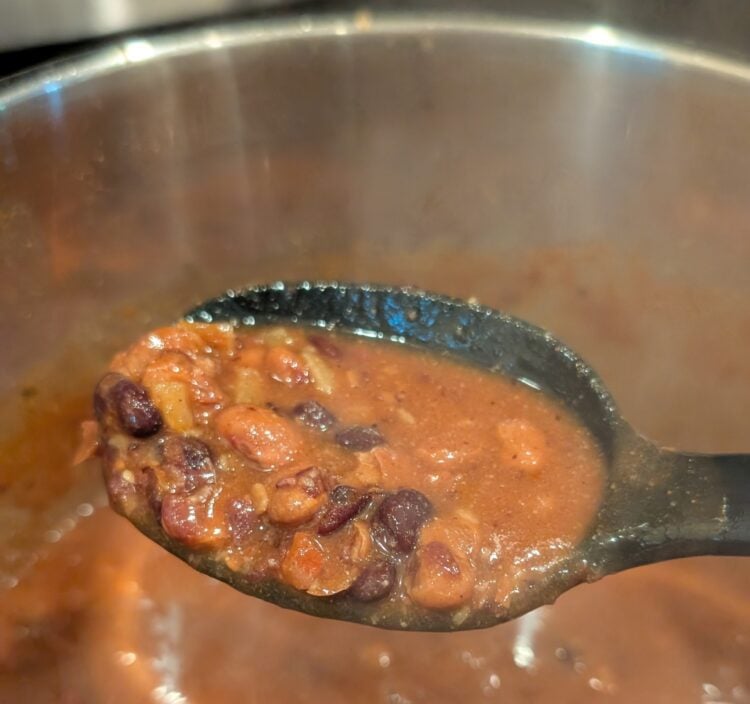
In all four cases, the ingredient lists on the packaging mention vegetables — corn, tomatoes, peas, peppers– but the amounts were negligible. Legacy describes this as “high quality food.” I’d describe it differently.
The “Voted Best Tasting” Claim

It’s printed right on the packaging. I don’t know who voted, or what they were comparing these meals against, but I’ve tested a lot of emergency food over the years. These rank at the bottom. Bland, watery, and nearly all were mostly “filler” ingredients (rice, beans, pasta) and not much else. That’s my honest assessment after testing four meals in their Family Entree Sample Pack.
The Value Question
At $12 per pouch, these meals are priced at the lower-to-mid end of the emergency food market. For that price, you’re getting meals that are nutritionally thin, require significant fuel and time to prepare, and need additional seasoning despite high sodium content.
Every one of these meals could be replicated at home for a fraction of the cost using rice, penne, dried beans, and seasonings from your pantry, and you could vastly improve them with vegetables, real protein, and seasonings to your liking. These could become a “meal in a jar”, made from dehydrated and/or freeze-dried ingredients for something much tastier and far more healthy.
Bottom Line
I wanted to like Legacy Food Storage. I was genuinely hoping to find a solid Thrive Life replacement, and their marketing made a reasonable case. The product didn’t deliver on any of it.
I can’t recommend these meals for emergency food storage. The cooking time alone makes them impractical for many real-life emergency scenarios. The nutrition and portion size is heavily carbohydrate-dependent with very little protein. The sodium levels contradict the “low sodium” marketing claim directly. And the taste doesn’t justify any of those trade-offs.
My search for a good freeze-dried meal company continues. I’ll keep testing and reporting back.
All four meals were purchased at full price directly from Legacy Food Storage’s website. No samples were provided. No affiliate relationship exists with this company.
Thank you for doing this! I know it’s not funny, but I laughed the whole way through your email and this article. Do they not realize that some people actually do try the foods they put in storage or before they buy too many of them? Or are there that many who just grab whatever’s affordable and figure they’ll deal with any problems “later”? Either way, you’ve provided us all with a valuable lesson.
I like when my “preps” to make me feel safe, confident, and ready for emergencies. This food would make me feel like a flop. I’d actually be looking forward to the apocalypse just so I could be raptured away from meals like this. Thank you for your honest review!
I totally get it. They would need so many additional ingredients in order to be nutritious and passably tasty that you might as well just cook from scratch using freeze-dried ingredients.
Thanks for doing this. I’ve been trying to find a replacement for Thrive Live since they closed down. The best I’ve found so far is Nutrient Survival. While I’ve only tried a few of their products so far, I really like the fact that they add extra nutrients to their food. Also, their products come in multiple sizes and not just #10 cans. You can even get a sample pack of single servings which is an easy way to try their foods. It’s a company worth looking into (I have no connection to this company).
I’d also suggest that folks try out freeze dried food before they actually have to use them in a disaster situation. They are different from “regular” food and take some getting used to in terms of taste and preparation.
Thanks, Linda. This is another company I’d not heard of. I wish these companies would sell individual packets or at least a sample selection so you know what the food is like before buying larger quanitities.
A humble tip from an old backpacker–back when there were no dehydrated pre-prepped foods to choose from (had to make my own), when fuel conservation in the back country was essential with open fires prohibited and water supply was an issue: Take any of these “survival” food packages, prep them as directed on your stovetop (maybe cut back on water amount by 25%), bring to boil and maintain only for about 3 minutes, cut off heat and remove from stove, wrap the pot in a “sandwich” of a bath towel, then a Mylar bag or emergency blanket of Mylar material, then an outer layer of more bath towels, an old quilt remnant, whatever works. Let the pot sit for at least 30 minutes before uncovering it and testing the contents. It can sit for 60 minutes and still be very hot when uncovered. We cut our fuel consumption by 66% using this method, which really made a difference when out on a 10 day excursion. All the best!
Thank you for doing this excercise and sharing.