
Depression-era families fed themselves through the worst economic collapse in American history, and they did it using a short list of versatile staples. This is a look at exactly what was in those pantries, the principles behind every decision they made, and how to build your own modern version of the same thing for frugal, versatile, and nutritious meals.
In October 1929, the stock market collapsed and took a large chunk of the American economy with it. Within a few years, unemployment hit 25%. Thousands of businesses closed, banks failed, and family farms went under. Families who had been solidly middle class found themselves standing in bread lines.
In spite of the doom and gloom from those years, most families survived and very often thrived. These were ordinary families in cities, small towns, and out in the country. They survived by figuring out how to keep their households fed, sometimes on next to nothing.
A big part of how they did it came down to the pantry in their kitchens.
These were simple, working pantries, filled with practical, frugal foods. Along with that, these homemakers managed to keep their families fed by using a discipline most of us have never had to develop because we’ve never had to.
I find that kind of resourcefulness inspiring and worth studying, not because I think we’re on the edge of another Great Depression, although between continued inflation and unemployment has set a lot of people back, but because the basic principles behind the Depression-era pantry are just good thinking.
It boils down to buying and stocking up on versatile basics, storing them in a way to maximize their shelf life, and wasting nothing.
Let’s look at how they actually did it.
In This Article
Some of the links in this post may contain affiliate links for your convenience. As an Amazon Associate, I may earn a small commission from qualifying purchases without any increase in price to you.
The Depression-Era Pantry: What Was Actually In It
Before we get into the specific list of staples, it helps to understand what a pantry even meant in the 1930s. When it was time for Great-Grandma to make dinner, what did that look like in her kitchen?
In those days, most families didn’t shop daily. Instead, grocery shopping trips happened weekly or less often. Electric-powered refrigeration was limited, and most homes had iceboxes that required regular ice deliveries. Many rural families had neither, so meals had to be planned ahead around whatever was in season and what was on hand.
If someone in the family asked, “What’s for dinner?”, the answer was, “Whatever’s in the pantry!”
Depression-era homemakers also couldn’t rely on the variety we take for granted today. Exotic ingredients, out-of-season produce, international foods — none of that was accessible or affordable. Fresh strawberries in November? I don’t think so! The pantry was built around what was local, seasonal, cheap, and shelf-stable.
In spite of these limitations, somehow moms managed to keep their families fed, although sometimes the meals were meager.
The Staples That Carried Families Through
A well-stocked Great Depression pantry contained many of the same basics you would expect, but magic happened when cooks knew dozens of ways to combine them, along with a few other ingredients, so nothing was ever wasted.
Flour
Flour was the backbone of the Depression-era kitchen. A 25-pound sack of flour cost around 25 cents in the early 1930s, making it one of the most economical calories available. Families used it for bread, biscuits, pancakes, thickening soups and gravies, stretching meat dishes, and making simple desserts. As times got even tighter, they made sandwiches with fillings like onions and mustard as listed in this article about Great Depression meals.
Flour companies showed support of families during these hard times with Gold Medal and other brands printing recipes directly on the sacks. This was partly marketing genius but also partly a real service to homemakers trying to figure out how to feed a family on almost nothing. Those sacks were then repurposed into clothing, dish towels, and curtains.
Today: A 5-pound bag of all-purpose flour runs about $3–4 and keeps for a year or more in a sealed container. Buy extra and store it in a food-grade bucket with an oxygen absorber for longer shelf life. It’s still one of the best calorie-to-dollar ratios in any pantry, and when you learn how to make your own yeast and bake bread from scratch, you’ve mastered two Great Depression skills.
Dried Beans and Legumes
Pinto beans, navy beans, black-eyed peas, lentils — these were Depression-era protein. They were cheap, shelf-stable, filling, and versatile. A pot of beans could be stretched across multiple meals: beans and rice one night, bean soup the next, fried bean cakes after that.
A popular radio show from the USDA, “Aunt Sammy” promoted using legume-based recipes to help struggling families eat nutritious meals on a tight budget.
Today: Dried beans are still one of the best values in any grocery store, and an excellent food for your emergency pantry. A pound of dried pinto beans, costs about $1.50. Store them in airtight containers away from light and heat, and they’ll last 1–2 years easily. Canned beans are another great staple. They’re already cooked and only need to be drained and added to a meal. I use them as meal-stretchers and as a way to add fiber and protein.
Cornmeal
In the South especially, cornmeal was as essential as flour, and it still is today. Cornbread, corn mush, johnnycakes, hush puppies — these fed families breakfast, lunch, and dinner. Cornmeal was cheap, filling, and could be combined with almost nothing to make something edible.
Cornmeal mush in particular was a Depression staple. It was made with just water, salt, and cornmeal, and could be eaten hot for breakfast or poured into a pan, sliced, and fried for supper. My Nana used to make fried cornmeal mush with a bit of butter and maple syrup on top. I can still taste the crispy fried edges and the combination of savory cornmeal and sweet syrup.
Today: Stone-ground cornmeal has better flavor and nutrition than the degerminated variety, which is what most people buy. When it’s degerminated, the oils, enzymes, and some vitamins are removed, but the taste and texture are what a lot of people prefer and are used to. Store in the freezer to extend shelf life, since the natural oils in stone-ground cornmeal can go rancid faster than processed varieties.
Lard and Fats
Vegetable shortening existed in the 1930s. Crisco had been around since 1911, but many families still rendered their own lard from pork fat. Lard was used for frying, baking, preserving, and even as a spread when butter wasn’t available. Bakers swear by lard for the best-tasting pie crust. Bacon grease was never thrown away. It lived in a jar on the back of the stove and went into everything.
Fat was a simple way to add calories to any meal. In a time when calories were scarce, nobody worried about saturated fat. They were worried about whether the family would eat, and satiation was important.
Today: Lard is having a comeback among home cooks who’ve figured out that it makes exceptional pie crust and fried chicken. I always have a package of it in my fridge, along with the beloved jar of bacon grease. If you want the Depression-era experience, keep a jar of bacon grease on your counter and start using it the way they did.
Salt, Baking Soda, and Baking Powder
These three were the must-haves for most everything, and fortunately, each cost only a few cents. Salt preserved food, seasoned everything, and was used in home remedies. Baking soda leavened bread and biscuits, treated heartburn, cleaned teeth, and scrubbed surfaces. Baking powder made quick breads possible when you didn’t have time for yeast.
They were also nearly indestructible from a shelf-life standpoint, which made them ideal to stock in quantity.
Today: These are pantry insurance and the basics for many of the foods and meals you’ll make. Stock up on different types of salt, and keep all three stored in airtight containers.
Sugar and Molasses
White sugar was used sparingly because it cost money. A 5-pound bag cost around 30 cents, which would be around $7 in today’s money. Molasses was the budget sweetener of the Depression era, about half the price of sugar. It was cheap, calorie-dense, and full of iron and other minerals. Blackstrap molasses in particular was considered almost medicinal.
My Dad, raised by Great Depression-era parents, loved molasses drizzled over a slice of buttered bread. Some tastes you never forget and, apparently, crave the rest of your life!
Brown sugar was often made at home by combining white sugar with a spoonful of molasses. Simple syrup replaced more expensive sweeteners in baking. Every drop of sweetness was used deliberately.
Today: Molasses is underappreciated as a sweetener for many dishes. It’s excellent in baked beans, gingerbread, and marinades, and blackstrap molasses has become trendy for its high levels of iron and other nutrients. A bottle costs around $5 and lasts a long time. If you’ll be storing white sugar for long-term storage, it only needs to be in an airtight container, safe from any moisture, including humidity.
Oats
Oatmeal was a Depression breakfast staple because it was cheap, hot, filling, and could be flavored with almost nothing. If you needed to feed more people, it didn’t cost much — a 42-ounce canister of rolled oats cost around 10 cents. It stretched further than almost any other breakfast food, and depending on what else you had in the pantry, such as molasses, honey, cinnamon, or maybe apples, a Depression-era mom could turn something plain into much more.
Oats were also used in baking. It could be added to meatloaf to stretch the meat (I do this today), mixed into cookie dough, used as a topping for cobblers made with whatever fruit was available.
Today: I recommend stocking up on old-fashioned oats, both for everyday cooking as well as long-term storage. Keep it in an airtight container for longer storage and to make sure insects can’t chew through the packaging. Steel-cut oats are another option as well as oat groats. My vote always goes for the food with the highest levels of nutrients.
In this case, plot twist!, they are very close when it comes to nutrition values, so make your choices according to your favorite ways to cook them. I use old-fashioned oats more often but like oat groats for certain recipes.
Canned Foods
The Great Depression era was peak home canning years. Since nothing could be wasted due to a loss of income and refrigeration wasn’t common in many homes, canning produce grown in the backyard and from exchanges with neighbors insured a family had nutritious fruit and vegetables year-round. Some towns and counties even had community canneries where a family could use pressure canners (which few people could afford) and can large amounts of produce and even meat.
By this time, commercially canned goods were also pantry staples. Either way, canned food helped complete a pantry that provided everything needed for from-scratch meals.
Canned tomatoes, evaporated milk, and canned fish (sardines, tuna) were some of the most popular commercially canned foods in Depression-era pantries. My Nana’s recipe for Shlumgum featured two cans of diced tomatoes! Evaporated milk in particular was a versatile substitute for fresh milk in baking, cooking, and even coffee.
Today: Canned tomatoes are still one of the most useful things in any pantry. Stock up on crushed, diced, and whole as well as tomato sauce and tomato paste. They go into soups, sauces, rice dishes, and stews, and make the recipe come together quickly. If you grow tomatoes and have too many in a season, they’re easily dehydrated and can be turned into tomato powder.
Evaporated milk is worth keeping on hand too. It has a shelf life of about two years and substitutes for fresh milk in almost any recipe.
Rice
Rice was filling, cheap, and neutral enough to pair with almost anything. I consider it to be one of the top, carbohydrate stapes for food storage. A pot of rice could be a side dish, a breakfast porridge with a little sugar and canned milk, or the base of a fried rice-style dish using whatever vegetables or scraps were available. It could easily be used as a meal-stretcher, added to just about anything from soup to stew to a casserole.
Today: White rice stores for 25–30 years in sealed, oxygen-free containers, making it one of the best long-term food storage options available. For everyday use, a 20-pound bag is economical and lasts most families several months. Read this article for tips on using rice to feed a whole family, meal after meal.
Vinegar
Vinegar was the Depression-era household workhorse. It preserved vegetables through pickling, could be used in household cleaning, treated minor ailments (mixed with honey for sore throats, used as an anti-itch remedy for mosquito bites), and added flavor to dishes that didn’t have much else going for them, like a bland soup or pot of beans.
Pickling foods was far more common in those days with things like chow-chow, pickled beets, pickled watermelon rind, and homemade cucumber pickles a regular on the daily menu.
One surprising use of vinegar was to use it as a leavening agent in “Wacky Cake”. The simple recipe utilized vinegar and baking soda to provide the “lift” to the cake without using any eggs, which were expensive unless you had chickens. Vinegar was also used in Mock Apple Pie. Since apples weren’t available throughout the year, moms discovered they could use Ritz crackers along with sugar, cinnamon, a bit of vinegar, and a few other cheap ingredients to make a dessert that, if you used some imagination, tasted quite like the real thing!
Today: Try using white vinegar mixed 50/50 with water to clean most every surface, including the floor. It’s just as cheap, comparatively, as it was during the 1930s. is your cleaner and your pickling brine. Apple cider vinegar goes into salad dressings, marinades, home remedies and much more. I stock up on both.
What They Did Without (And How They Replaced It)
Understanding the Depression-era pantry isn’t just about what was in it. It’s about what wasn’t, and how families improvised. In an era of plenty, with food of every kind shipped into the U.S. year-round, it’s hard to comprehend having such a limited variety of food available.
Fresh meat was scarce and expensive. Families stretched it ruthlessly: boiling a chicken and using every bit including the bones for broth, adding a small amount of ground beef to a large pot of soup, relying on beans and eggs for protein when meat wasn’t available.
Fresh dairy was limited by refrigeration. Evaporated milk substituted in cooking. Buttermilk, which kept longer than fresh milk, was used in baking, which explains why so many “old time” recipes call for it as an ingredient. Families with land often kept a cow or a few chickens.
Fresh produce was seasonal and often home-grown. Root vegetables like potatoes, turnips, carrots, and parsnips stored well in a root cellar and became dietary staples. Canning the summer garden carried families through winter, and if your garden produced more than you could use, it could be sold to neighbors.
Convenience foods existed but weren’t nearly as ubiquitous as they are today with most meals was made from scratch. A few convenience foods that were popular were Bisquick, Jell-O, cake and pancake mixes, and instant coffee.
In a strange way and although food was scarce for many families, they were also eating healthier than some Americans do today with foods laden with high fructose corn syrup, artificial colors and flavorings, and unhealthy fats. Great Depression pantries were stocked with fundamental basics with most meals cooked from scratch. There’s a lesson or two to be learned from that, and learning this style of cooking, with or without a recipe, is a handy skill to learn, starting with the easiest dish of all, soup.
How They Preserved What They Had
Depression-era families couldn’t afford to let food go to waste, and continuing with the theme of healthy-eating, pickled foods were a mainstay.
Canning was the primary method for fruits, vegetables, and even meat. Pressure canners helped them to safely preserve low-acid foods like green beans, corn, and chicken, although most people had to either borrow an expensive pressure canner or go to a community canning center. Water bath canners handled high-acid foods: tomatoes, pickles, jams, and fruit.
Root cellaring kept potatoes, carrots, beets, turnips, apples, and cabbages through winter without using any electricity for cooling or heat. A cool, dark, slightly humid space like a corner in the basement or even a buried bin in the yard was all it took.
Salt-curing and smoking preserved pork, fish, and other meats. Salt pork was a Depression-era staple. It was heavily salted, shelf-stable for months, used to flavor beans and greens. Our family’s Great Depression pork-and-beans recipe features a salty hamhock.
Drying preserved herbs, beans, corn (as hominy or dried kernels), and fruit. Dried apple rings, strings of dried peppers and onions, and bundles of dried herbs were practical pantry additions for year-round flavor.
Fermentation preserved cabbage as sauerkraut, cucumbers as pickles, and in some households, milk as buttermilk or simple soft cheeses. Fermented foods also added beneficial bacteria to a diet that needed all the nutritional help it could get.
The Pantry Principles Behind Every Decision
When you step back and look at a Depression-era pantry and how it was used, you notice certain patterns. It’s not that anyone sat down and made formal rules about it or put them in a book or newspaper article. People simply learned how to make the most of what little they had, and in most cases, used lessons passed down from their own parents and grandparents.
Cheap and filling matters most. This was the Number One rule, and one we can apply today with continued inflation in food prices. You can do cheap and filling without sacrificing healthy.
Stock what keeps. Shelf-stable foods weren’t a backup plan. They were The Plan. Anything that could spoil quickly was used immediately or preserved, but buying basics that could be combined together in an infinite number of ways, using shelf-stable foods, was smart then, and it’s smart now.
Nothing leaves the kitchen as waste. Bones became broth. Stale bread became stuffing or bread pudding. Bacon grease went back into the pan or in a jar for later use. Vegetable scraps went into the soup pot or the compost pile. The concept of throwing away edible food would have been unthinkable. When you think how often you throw out produce that has spoiled or leftovers that were never used and grow mold, maybe it’s time to rethink that.
Variety comes from technique, not ingredients. The same handful of staples produced dozens of different meals depending on how you combined and cooked them. The skill was in the cook, and fortunately, these same meals, recipes, and techniques can easily be replicated in your own kitchen.
Grow what you can. Even families with small city lots kept kitchen gardens, grew herbs, and in many cases, foraged for things like wild asparagus and mushrooms. Anything you grew was anything you didn’t have to buy.
Building Your Own Depression-Era Pantry Today
You don’t need a Depression-era budget to stock a Depression-era pantry. You need a mindset which means buying intentionally, storing properly, and using what you have and deciding to rely less and less on food delivery services and restaurants, whose prices have skyrocketed.
Here’s how to start:
Focus on the foundational staples first. Flour, dried or canned beans, rice, oats, cornmeal, salt, sugar, baking soda, and cooking fat — bacon grease is one of my top choices. These form the caloric and culinary backbone of almost everything else, and adding fat to most every recipe helps with satiety. If you have these ten things, you can feed your family.
Add canned goods strategically. Canned tomatoes, evaporated milk, canned fish, and canned vegetables extend your pantry’s range significantly without much cost. I look for recipes that include a few canned foods because I know I can cook that meal in a matter of minutes. One of my favorites is a hamburger soup with canned tomatoes and canned green beans. With a pound of hamburger, some broth and seasonings, it’s filling, especially with a side of garlic bread.
Store properly. The biggest enemy of a pantry is moisture, heat, light, and pests. Airtight containers and a cool dark space are all it takes to keep most foods fresh for years. A sealed 5-gallon bucket with an oxygen absorber will keep rice and flour fresh for a decade or more if you want to build a long-term emergency food storage pantry.
Learn to preserve. You don’t have to can 200 jars of tomatoes in August to benefit from learning how to can food. Read up on “small batch canning” to take some of the fear and trepidation out of the process! Learning how to make a simple batch of refrigerator pickles is another easy entry point. Learn the water bath canner before you tackle the pressure canner, but both are quickly learned, and it’s motivating to see how many different foods can be home-canned, including entire meals.
Cook from your pantry regularly. The Depression-era pantry only worked because people knew how to use it. A pantry full of dried beans doesn’t help you if you’ve never cooked dried beans before. The thing is, it’s incredibly simple to make an amazing pot of beans! Add homemade cornbread from scratch — bonus points if it’s baked in a cast iron skillet! Get comfortable with the staples, collect recipes that come together quickly, and soon you’ll notice your grocery and restaurant bills taking smaller and smaller bites out of your budget.
Don’t overlook the garden. Even a small garden counts. An Aero Garden on your kitchen counter that grows fresh basil, oregano, and parsley means you’ll have fresh herbs (better than dried, any day of the week) and won’t be purchasing those grocery store packets at high prices. This online course with simple video lessons from expert gardeners will help you learn to garden in a way that suits your budget and location.
A Modern Depression-Era Pantry Checklist
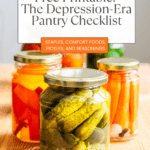
This is a standard pantry checklist from the 1930s. How does it compare with what you currently have on hand? Scroll down to get a printable copy of this delivered to your inbox.
Grains and Starches
- All-purpose flour (5–25 lbs)
- Cornmeal (5 lbs)
- Rolled oats (large canister or bulk)
- White rice (10–20 lbs)
- Dried pasta (several pounds, various shapes)
Proteins
- Dried pinto, navy, or black beans (5+ lbs total)
- Dried lentils (2+ lbs — these cook faster than beans)
- Canned tuna or salmon (12+ cans)
- Canned chicken (6+ cans)
Fats
- Shortening or lard (2–4 lbs)
- Cooking oil (vegetable, coconut, or olive, 1 or 2 large bottles)
- Start a jar of bacon grease — add to it every time you cook bacon.
Sweeteners
- White sugar (5–10 lbs)
- Molasses or blackstrap molasses (1 bottle)
- Honey (1–2 lbs)
Leavening and Seasonings
- Salt (5+ lbs, kosher, table salt, or canning salt)
- Baking soda (2 or 3 boxes)
- Baking powder (2 cans)
- Yeast (dry active, store in freezer)
- Vinegar — white and apple cider (2 large bottles each for cleaning and cooking)
Canned Goods
- Crushed and diced tomatoes (5-10+ cans each)
- Evaporated milk (5-10+ cans)
- Canned vegetables: corn, green beans, carrots, potatoes (6+ cans each)
- Canned fruit: peaches, pears, applesauce (6+ cans)
Extras Worth Having
- Dried milk powder
- Peanut butter (2–4 jars)
- Cocoa powder (for morale, Depression families made Wacky Cake for a reason.)
- Vanilla extract
- Dried herbs, garlic powder, onion powder, black pepper
The women who managed Depression-era households weren’t doing anything magical, and certainly nothing you can’t learn and apply today. They acknowledged the limitations of their (temporary) circumstances, applied clear thinking to how they could creatively use their limited resources, and refused to waste what they had.
Your pantry doesn’t have to look like theirs, but the principles behind it are just as relevant as they were ninety years ago.
Start with the staples, and learn multiple ways to use them. That’s the whole plan — simple, practical, and a strategy that still makes sense.
You might also like:
I am adding Stevia to my “Sweetners”. My husband and I are diabetics and prefer to use it vs any other sweetner.
Have you ever tried to grow stevia? You can dehydrate the leaves and steep them like a tea for a DIY sweetener.
Great article. Very practical and useful.
Thanks very much!
Glad it was helpful!
Just read this article. It is spot on . I’m 77 years old and remember many people including my parents who still lived a lot like this. This is an important article because so many people today do not understand the need for preparedness. I still utilise some of these things myself and keep a well stocked cupboard. My kids do not understand because all they have known is stopping and getting what you need on the way home, take out, delivery , etc. Thanks for the reminder. I am going to make sure my kids have this as well. Bravo.
Thank you, Nancy!
Great article! Apparently I have been stocking a depression era pantry for a lot of years! I think I am only missing a couple of items. This is a wonderful reminder of what we can be doing to protect our families and cook healthy meals on a budget. Thanks again!
I’m so glad it was useful! It really is amazing to think of everything you can cook and bake with just a basic pantry.
Been prepping over 10 years, now. It’s the reason I got back into canning. Found a farm that I can buy veggies in bulk, then I can and dehydrate, too. My protein source is canned beans and buying marked down meats at the local grocery, then either can it individually or as meals. Buy produce from a local farm stand, 1/2 bushel peaches $40, jams, peach halves and peach butter. I became a widow 8 years ago and still prep, to build my pantry but better yet, to keep busy.