
Wild asparagus grows free along fence lines, roadsides, and telephone poles across much of North America, and the trick to finding it in spring is knowing where to look in fall, when the mature plants are tall and easy to spot. This guide covers the full process: how to locate and mark plants in the off-season, when and how to harvest in spring, how to freeze what you can’t eat fresh, and the forager’s secret that the more you cut it, the more it grows.
Free food growing along the side of the road sounds too good to be true. But wild asparagus is exactly that — and it’s available every spring across most of the country. You just need to know when to look, what to look for, and how to get there before the plant outgrows its harvest window.
This is one of the easiest wild edibles to get started with, unlike foraging for mushrooms, which has a steeper learning curve. You’re not learning a complicated new plant. It looks exactly like the asparagus at the grocery store, because it is the same plant. What we call “wild” asparagus is actually feral. It escaped from early settler gardens hundreds of years ago, spread by birds eating the seeds and depositing them along fence lines and roadsides. Now it grows in every U.S. state and every Canadian province.
Here’s how to find it and bring some home.

Some of the links in this post may contain affiliate links for your convenience. As an Amazon Associate, I may earn a small commission from qualifying purchases without any increase in price to you.
In this article
- What Is Wild Asparagus?
- When to Look
- How to Finds Wild Asparagus
- Where Does Wild Asparagus Grow?
- How to Identify Wild Asparagus
- Tips for Locating and Harvesting Wild Asparagus
- How to Harvest Mature Plants with Branching
- Preparing Wild Asparagus
- Freezing For Later
- Why Wild Asparagus Is Worth Eating
- Expand Your Foraging Knowledge
- FAQ
- Like What You Just Read and Want More?
- Related Foraging Content
What Is Wild Asparagus?
Wild asparagus is the same plant as the asparagus you buy at the grocery store — Asparagus officinalis — just growing without any human help. It’s a hardy perennial, meaning the root system survives underground year after year and sends up new spears every spring. Those roots, called crowns, can live for decades and produce reliable harvests season after season from the same spot.
What most people call “wild” asparagus is technically feral. European settlers brought it over and planted it in their gardens. Birds ate the berries, spread the seeds, and over hundreds of years the plant established itself across roadsides, fence lines, and field edges all over North America. Today it grows in every U.S. state and every Canadian province. It’s hiding in plain sight. You’ve probably driven past it hundreds of times without knowing what it was.
When to Look
Timing varies by region and how warm the spring has been. Generally:
- February–March in California and the deep South
- Late April–May across the Midwest and mid-Atlantic
- May–June in northern states and Canada
Miss the window and you’ll miss the harvest. Once asparagus bolts, it ferns out and becomes too tough and fibrous to eat. The spears grow fast — we’re talking inches per day under the right conditions. That’s why the fall scouting method below is so important.
How to Finds Wild Asparagus
The secret most beginners don’t know: don’t look for asparagus in spring. Look for it in fall.
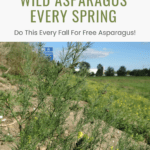
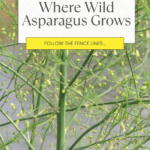
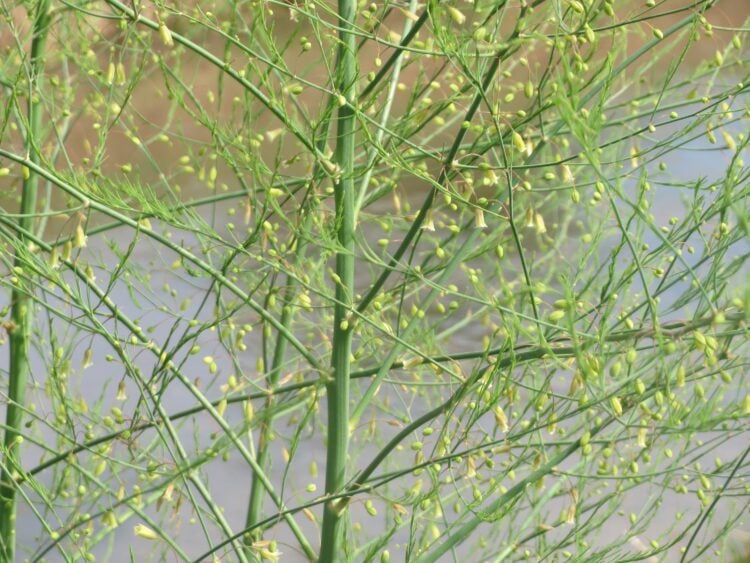
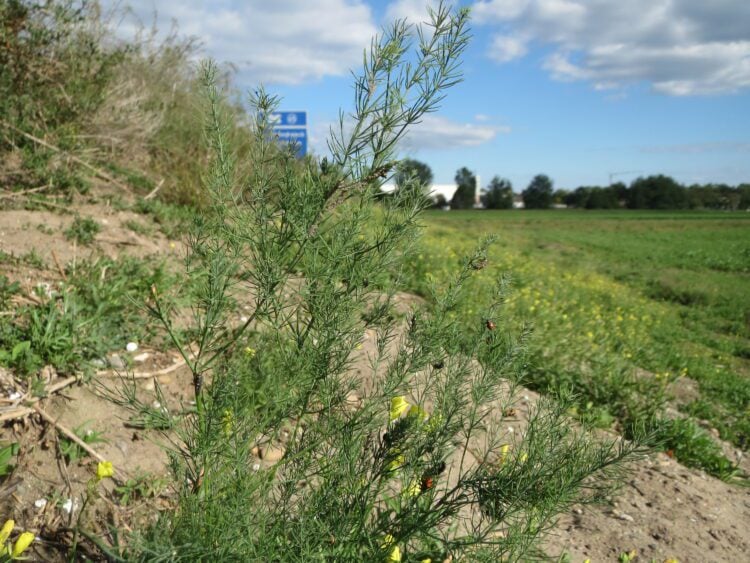
In late summer and fall, mature asparagus plants are easy to spot. They stand two to four feet tall, with feathery, fern-like foliage that looks almost like a delicate Christmas tree. As the season progresses, that foliage fades from bright green to golden yellow, and those golden clusters are visible from a moving car. Female plants also develop small round berries that ripen from green to bright red.
Scout those locations in fall, mark them, and you’ll know exactly where to return when spears emerge in spring.
Where Does Wild Asparagus Grow?
Asparagus is not a shade plant. You won’t find it in the woods or anywhere with significant overhead cover. It loves full sun and disturbed soil, which is why it shows up so consistently in these spots:
- Along fence rows bordering farm fields and county roads
- In roadside ditches, especially near irrigation
- Under power lines and along old telephone poles
- Near old homesteads and abandoned gardens
- Along the edges of fields, streams, and drainage ditches
The fence line and telephone pole locations make sense when you think about it. Birds eat the berries, perch on the wires and posts, and do what birds do. Seeds fall, roots establish, and a patch develops. Follow those fence lines and you’ll find it.
If you happen to have it on your property or in your backyard, you’re lucky! Since it grows so well in much of the country, you might want to add it as part of your own edible landscaping.
One important note: roadside areas are sometimes sprayed with herbicides by county road crews. Avoid harvesting from spots you know have been sprayed, and when in doubt, skip it. It’s worthwhile to learn safe foraging practices.
How to Identify Wild Asparagus
In Fall and Winter
The mature plant is your best identification tool. Look for:
- Feathery, fern-like foliage, 2–4 feet tall
- Stems that are multi-branched and slightly drooping
- Golden yellow color as it ages into fall
- Small round red berries on female plants (smaller than a pea)
- A reed-like base that folds over rather than snapping off cleanly
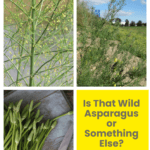
The dried winter stalks are beige to off-white and easy to miss among similar weeds. The key difference: old asparagus is more reed-like at the base and tends to fold over, while most dead weeds snap off. The stalks also tend to have a slightly grayish tone compared to the tan or brown of surrounding vegetation.
In Spring
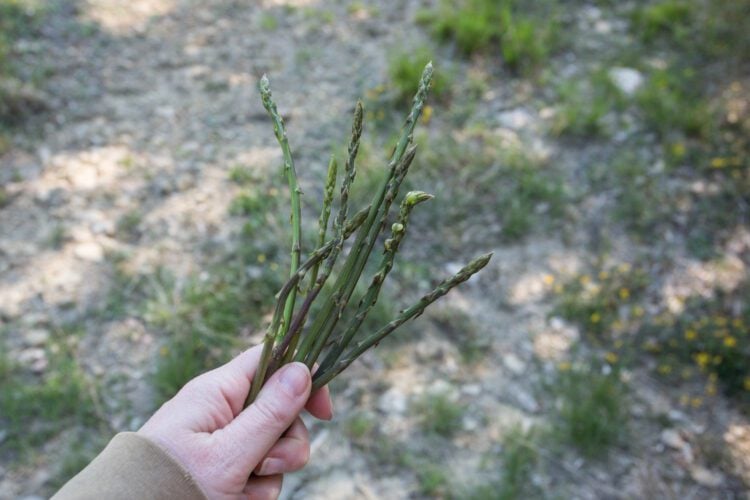
Once you’ve located your fall spots, return in spring and look near the base of those old dried stalks. New shoots emerge within a foot or two of the original plant.
Young spears are easy to recognize once you know what you’re looking for:
- Slender stalks with small triangular scale-like bracts along the stem
- Pointed, tightly closed tip
- Often purple or purple-green when first emerging, turning all green as they grow
- Identical in appearance to grocery store asparagus
Harvest when spears are 6–8 inches tall. That’s your sweet spot.

Tips for Locating and Harvesting Wild Asparagus
Scout in the fall. This is the single most important tip. Mature plants are dramatically easier to spot than spring spears. Make it a fall habit to note locations and you’ll arrive in spring knowing exactly where to go.
Mark your spots discreetly. You don’t want to advertise your best foraging locations. A photo on your phone works well — include a visible landmark in the frame. Add it to a saved pin in Google Maps with a short note (“asparagus, near old fence post, ~8 plants”) and you can navigate straight back next year.
Check after mowing. When road crews mow along roadsides, asparagus grows back faster than the surrounding grass. It practically announces itself in the days after a mow.
Look early morning or late evening. The lower angle of light helps catch the purple tint of young shoots that blend in during midday.
Gently lift dead grass and debris. New shoots often hide under the previous season’s dried material. A gentle sweep with your hand can reveal a whole cluster you’d have walked right past.
Harvest with a sharp knife. Cut cleanly near the base. Don’t yank or twist. You can easily damage the crown, which is a perennial root system that will produce for you year after year if you treat it right.
Don’t clean out a single plant. Leave some spears to mature and go to seed. That’s how the patch sustains itself.
Visit frequently. These plants grow fast. A spot that had nothing on Monday might have a full harvest by Wednesday, especially after rain.
How to Harvest Mature Plants with Branching
As the season progresses, asparagus develops side branches. Still harvestable, but the lower portion gets tough. Either take only the tender upper section, or harvest the whole stalk and snap off the woody end at home. It’ll naturally break at the point where tenderness begins, just like store-bought asparagus.
Once a plant has fully ferned out and looks like a small shrub, leave it alone for the season. It’s done producing edible spears and is now feeding the root system for next year.
Preparing Wild Asparagus
Fresh-foraged asparagus doesn’t need much. Rinse the spears, pat them dry, and toss with a little extra virgin olive oil. From there, seasoned salt, garlic powder, or lemon pepper all work beautifully.
My favorite preparation is on the grill. Lay down foil on a preheated grill, add the seasoned spears, and cook until you get some char. That char is flavor. Don’t skip it. I know there are recipes out there that call for wrapping asparagus with bacon or some other addition, but you know what? That baby wild asparagus is perfect, as is.
I like to coarsely chop it and add to a salad with a very simple vinegar and olive oil dressing. Again, super simple.
For a more filling meal, chop grilled spears and toss them into pasta with other fresh vegetables and a sliced chicken breast. Simple and genuinely good.
Fresh asparagus is best eaten within 24 hours of harvest. It loses sweetness and flavor quickly. If you can’t cook it right away, store it upright in a jar with an inch of water in the refrigerator, loosely covered, like flowers in a vase. It’ll stay crisp for a few days that way.
Freezing For Later
If you’ve had a good harvest and can’t eat it all, you have two solid options.
Blanch and freeze. Blanching stops the enzymes that degrade texture and color in the freezer. Drop spears in boiling water for 2–3 minutes, then immediately transfer to ice water to stop the cooking. Pat dry, bag, and freeze.
Vacuum seal. My preferred method. You can skip the blanching step, and the vacuum seal eliminates the ice crystals that form in regular freezer bags. Better texture, better color, better results overall, and the vacuum sealing process protects it from freezer-burn.
Why Wild Asparagus Is Worth Eating
Beyond the fact that it’s free, wild asparagus is genuinely nutritious. It’s a good source of folate, vitamins K and C, and prebiotic fiber that feeds beneficial gut bacteria. The wild-foraged version also tends to have more flavor intensity than grocery store asparagus because it’s been working harder for its living.
Some of the links in this post may contain affiliate links for your convenience. As an Amazon Associate, I may earn a small commission from qualifying purchases without any increase in price to you.
Expand Your Foraging Knowledge
- The Complete Guide to Edible Wild Plants by Department of the Army
- Foraged Flavor by Tama Matsuoka Wong
- The Forager’s Harvest by Samuel Thayer
- Nature’s Garden: A Guide to Identifying, Harvesting, and Preparing Wild Edible Plants by Samuel Thayer
FAQ
It depends on where you live. California can be as early as February; the Midwest is typically late April to May; northern states and Canada can run into June. Watch for other spring indicators in your area — when lilacs start budding or you see asparagus coming up in a neighbor’s garden, it’s time to check your spots.
Take spears at 6–8 inches tall, and don’t strip a plant bare. Leave some spears to mature and reseed the patch for future seasons.
Yes, with two caveats. First, be confident in your identification — though asparagus is one of the easier wild edibles to identify correctly. Second, avoid harvesting from areas that may have been sprayed with herbicides, particularly roadsides in areas with active county maintenance programs.
Sulfurous amino acids broken down during digestion. Normal, harmless, and not everyone experiences it. You’re fine.
You can collect seed-bearing branches and shake them out in a sunny spot on your property. It takes about three years before the crowns produce harvestable spears, so it’s a long game. Asparagus roots are also available at most garden centers if you want a head start.
Mature asparagus is quite distinctive and hard to confuse. Young spears are trickier but still recognizable if you know what to look for. The triangular scale-like bracts along the stalk are a reliable identifier. When in doubt, don’t eat it, and go out with an experienced forager your first time.
When I was stationed in Sicily, a farmer taught me how to find wild Asparagi (asparagus). Once you spot it and learn where it grows you never forget. Fresh harvested and cooked with pasta it was fantastic. Great post. DaveP
Great article. I’ve done a lot of foraging, but not asparagus yet. But I’ve seen it at the wrong time of year.
What resources did you find helpful when you were getting started foraging?