
When I used to teach survival classes for kids at Cabela’s, one of the parents, a former Army Ranger, told me they pulled more guys out of the field for eating the wrong plant than for almost any other reason. That stuck with me. Foraging is a genuinely useful skill, but only 5-10% of plants are actually edible, which means going in without knowledge isn’t foraging, it’s a gamble. This covers how to find and use reliable guides, the Universal Edibility Test for unknown plants, ethics for harvesting responsibly, and the most common edible plants you’re likely to find no matter where you live.
When I taught a survival class for kids at Cabela’s, a parent in the back of the room stopped me mid-sentence. He was a former Army Ranger, and he had something important to say: more soldiers were pulled from the field for eating the wrong plants than for almost any other reason. Not injuries. Not exhaustion. Plants.
That story has stayed with me because it gets at the truth about foraging that most enthusiastic articles skip right past. Foraging is a genuinely valuable skill, one your grandparents and great-grandparents likely knew well, but it’s one that requires real knowledge before you start putting things in your mouth.
Only 5-10% of plants are actually edible. The rest are either toxic, unpalatable, or have a deadly look-alike growing right next to the edible version. This guide will help you build your foraging skills the right way, starting with safety, building knowledge before you forage, and knowing exactly when and how to use emergency identification methods as a last resort.
Foraging safety first
It’s natural to view plants in the wild as a natural source of food. After all, we eat all kinds of veggies, fruits, and nuts — surely, those plants in the wildnerness must be edible, too!
But with only a tiny percentage of them being safe to eat, some education and a sharp eye are required.
Begin with a foraging guide that has clear photos and detailed descriptions of edible plants. The descriptions should also contain information about any deadly look-alike plants. Elderberries are wonderfully edible and medicinally useful. However, the berry and plant are easily confused with water hemlock and pokeberries, or pokeweed. A good guide book, website, or app will spend plenty of time listing warnings about dangerous look-alikes, as well as potential dangers of the edible plant itself.
A few recommended foraging guides and sites are:
- The Complete Guide to Edible Wild Plants by Department of the Army
- Foraged Flavor by Tama Matsuoka Wong
- Forager’s Harvest website
- The Forager’s Harvest by Samuel Thayer
- Foraging Texas website (Many of the plants listed here are found in many other parts of the country.)
- Nature’s Garden: A Guide to Identifying, Harvesting, and Preparing Wild Edible Plants by Samuel Thayer
- Stalking the Healthful Herbs by Euell Gibbons
- Tree Finder by May Theilgaard Watts
- Wild Edible Fruits and Berries by Marjorie Furlong and Virginia B. Pill
There are many, many foraging and wild foods websites and blogs on the internet. As you browse through them, apply the same criteria to their information as you would that found in a book: very clear photos and illustrations, detailed descriptions, and plenty of time spent discussing and describing dangerous plant look-alikes.
Phone apps are a wonderful thing and I have several of survival and prepper related apps on my own phone. There are a number of apps related to foraging as well. However, it’s only one tool towards identifying plants that are safe to forage and eat, so don’t rely on a plant identification app alone, especially mushrooms. Those require a double and triple check with an identification book, photos to check for accuracy, and in-person foraging classes, if possible.
I highly recommend iNaturalist when it comes to help with plant identification. It’s one of the most reliable and free tools, and Samuel Thayer’s book, Incredible Wild Edibles, is one for your bookshelf.
TIP: Regarding foraging for mushrooms, expert Dr. Mart “Merriweather” Vorderbruggen of Foraging Texas recommends leaving those alone until you can take a class on identifying wild mushrooms and are an experienced forager.
The universal edibility test
The Universal Edibility Test (UET) has been taught in survival courses for decades, but it’s worth knowing that survival experts have raised significant concerns about it. It does not work for mushrooms. It does not catch all plant toxins, and some deadly plants cause no skin reaction whatsoever. And it should never be used as a substitute for actually learning to identify plants in your area. Think of it as a last resort only, something to know about if you’re genuinely stranded with no other options and no reference materials. For a more updated approach, look up the USAF Rule of Eight, which was developed specifically to address the UET’s shortcomings.
The UET is laborious and, frankly, would be a pain in the neck if my life depended on it, but knowing the process gives you a good idea just how difficult it is to discern an edible plant from one that could kill you.
Step 1: Take the plant apart.
Separate the roots, leaves, stem, berries, flower/bud. Some parts may be edible, but unless you test each part separately, you may not realize that you’re holding an intensely nutritious root but poisonous leaves — or the other way around!
Make sure the plant is free of mold, fungus, or is infested with insects.
Step 2: Smell each part of the plant.
If any part gives off an unpleasant odor, assume it won’t be safe to ingest.
Step 3: Check to see if each part irritates your skin.
During this time, don’t eat anything else to avoid food/plant interaction or confusing a reaction to a food with a reaction to this new plant. If the plant irritates your skin, then it won’t be healthy to consume or use medicinally. Take one part of the plant and rub it on in the inside of your wrist or elbow. It may take several minutes or even a few hours before you see a reaction.
Possible reactions are:
- Burning
- Itching
- Numbness
- Rash or other obvious irritation
If your skin shows no reaction, then move on to Step 4.
Step 4: Prepare the plant as you would for cooking.
Some plants become safe to eat once cooked. Boiling is a good method for this step. If you can’t cook the plant part, then you’ll have to continue with it raw. Once boiled, or using a raw piece of the plant, rub or hold it to your lip for a few minutes. If there’s any burning or painful sensation, the plant part isn’t safe to eat.
Step 5: Take a small bite.
Hold a small bite of food in your mouth for a few minutes to see if there’s any unpleasant reaction, such as burning or tingling. If there is, spit it out and rinse your mouth out with water. By this point, you just wasted possibly several hours to learn that a single part of the plant isn’t safe to eat!
Step 6: Chew — but don’t swallow!
That’s right. It still isn’t safe to ingest that small bite of plant. Chew and then hold it in your mouth for 15 minutes, again to see if there’s any burning, tingling, or other weird sensation. If there isn’t, you can finally swallow that bite!
Only at this point can it be somewhat safe to assume that the plant part you just chewed and swallowed is edible and safe to eat. Survival experts recommend waiting another few hours after that first bite before eating any more of that particular plant part. After this entire process, it’s possible that you may have encountered a plant that isn’t safe to consume in large quantities, but you may not discover that until days or weeks later.
I’ve included the Universal Edibility Test as an illustration of just how hard it is to identify a safe plant on your own! Foraging is great and is becoming a bit trendy, but to head out and harvest plants without knowing exactly what it is you’ll be consuming is dangerous.
A note for parents
Teaching kids about foraging is great but it’s even more important for them to know how dangerous plants can be. Kids at about 7 or 8 can remember the basic steps for the Universal Edibility Test, as a precaution, but it’s even better for them to tag along as you look for safe, edible plants. Berries, in particular, look enticing and since kids are used to eating berries of all kinds, they might easily assume that all berries are going to be yummy. However, there are a number of very poisonous berries out there. Just to name a few:
- Mistletoe
- Holly berries
- Pokeweed berries
- Belladonna
Enjoy discovering edible plants in your area
While I envy folks up north who find wild asparagus and burdock, there’s still plenty of great plants in my part of Texas. I just have to learn what they are and then get out and look for them! The same is true of your area. No matter where you live, even in the hottest deserts of the U.S., there are edible plants everywhere.
Check out websites for county extension offices and botanic gardens in your area for possible foraging classes. Give them a call because they’ll be great local resources for tracking down a nearby foraging class or meet-up group you might be able to join.
Otherwise, search online for the name of your town/area and “wild plants” or “foraging” or “edible plants”. Those searches will result in websites and other resources to get you started.
Some of the most common and widespread plants that you may very well find are:
- Acorns
- Amaranth
- Cattails
- Chickweed
- Dandelions
- Fireweed
- Kelp
- Lamb’s Quarter
- Mallow
- Pine
- Plantain
- Prickly Pear
- Purslane
- Wild Violets
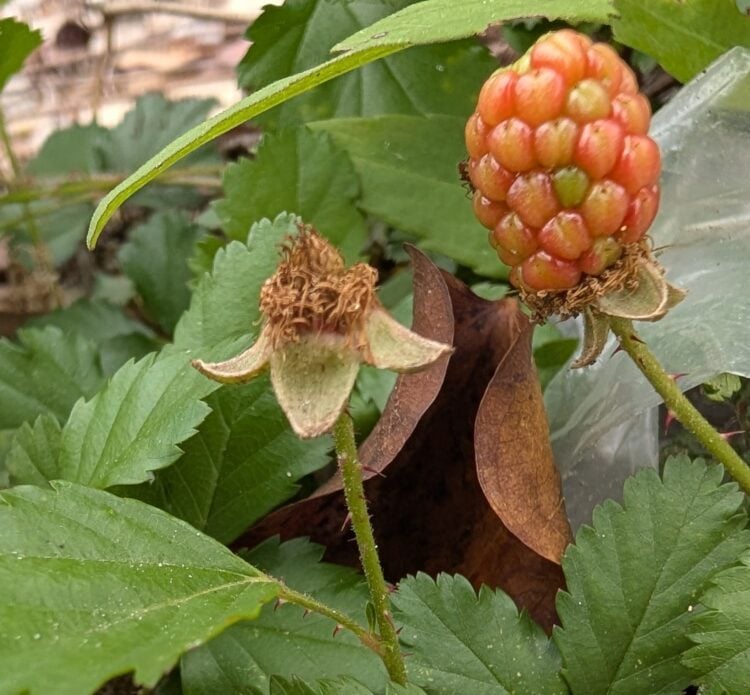
- Wild blackberries, raspberries
Foraging ethics
When we visit the homes of our friends, there are certain, unwritten rules that we follow, right? If you invite my family over for dinner, my kids know better than to rummage through your fridge and I promise not to check out the contents of your medicine cabinet!
When you’re out foraging, do the same thing. More and more folks are figuring out that foraging is an enjoyable and rewarding hobby, but as they begin filtering out into the deserts, forests, and other wild areas, it’s easy to forget that you are, in fact, a guest.
Rule 1: Forage only where you have permission to do so.
Check out your city, county, and state laws, but it’s illegal to forage in most of those areas. Federal lands as well. (The next time you hear that the federal government has “set aside” another few hundred thousand acres for “the greater good,” well, that land has just been stolen from the American people and you have no right to be there or utilize it in any way. Think about that.)
Rule 2: Don’t get greedy.
Just as you wouldn’t come to my house and eat half the lasagna, don’t take more of any particular plant than you can reasonably use within a short period of time. Harvest just a few leaves or sprigs, use a sharp knife for cutting, and then move on.
Rule 3: Be a good steward of nature.
We’re all adults here and no one should need a reminder, but don’t leave trash in your wake. Be respectful of the plants, the property, and any animals you might encounter. If you want a foraging area to continue to be available to you and to others, then treat it as carefully as you would your own.
Frequently Asked Questions
Start with one plant at a time, not a list of twenty, and start in your backyard or a nearby park. Pick the most common, easily identifiable edible plant in your region — dandelions are a great first choice because they’re widespread, have no deadly look-alikes, and every part is edible. Get a regional field guide, learn that one plant thoroughly, and go find it in person with the book in hand. Build from there. The biggest beginner mistake is trying to learn too many plants at once before any of them are truly locked in.
Dandelions, wood sorrel, lamb’s quarters, and blackberries are among the most beginner-friendly because they’re common, distinctive, and have no dangerous look-alikes. Avoid anything in the carrot family (white umbrella-shaped flowers) until you’re experienced. It includes some of the most deadly plants in North America, including water hemlock and poison hemlock, which have killed experienced foragers.
Apps have improved significantly but should never be your only identification tool. Plant identification apps have produced dangerous misidentifications, including fatal mushroom poisonings. Use apps as a starting point or secondary check, not a definitive answer. Always verify against a printed regional field guide and ideally have your identification confirmed by an experienced forager before eating anything unfamiliar.
Avoid all mushrooms until you’ve taken a hands-on identification class with an expert, no exceptions. Avoid anything in the carrot family with white umbrella-shaped flowers. Avoid plants with milky sap, fine hairs, or spines. Never eat white or yellow berries. Avoid anything that smells like almonds or pears, which can indicate cyanide. When in doubt, don’t eat it.
It has a place as a last resort in a genuine survival situation, but it has real limitations that most articles don’t mention. It does not work for mushrooms. It won’t catch all plant toxins. Some deadly plants cause no skin reaction whatsoever. And it takes up to 24 hours per plant part, which makes it impractical in most real scenarios. The US Air Force developed a newer Rule of Eight test that addresses some of the UET’s shortcomings. Neither test is a substitute for learning plant identification before you need it.
Foraging typically refers to gathering wild plants and fungi for food. Wildcrafting is the broader practice of harvesting wild plants for any use — food, medicine, or crafts. The terms are often used interchangeably, but wildcrafting tends to carry a stronger emphasis on sustainable harvesting and medicinal plant use.
Regional specificity matters enormously in foraging. A guide written for the Pacific Northwest is nearly useless in Texas or Florida. Look for field guides written specifically for your state or region. Local foraging groups, university extension offices, and native plant societies are excellent resources. The website Foraging Texas covers many plants found across much of the country despite the name, and iNaturalist is a free app and website that lets you see what plants others have identified in your specific area.
Yes, urban foraging is more viable than most people realize. Dandelions, wood sorrel, lamb’s quarters, mulberries, and purslane grow in most urban and suburban environments. The main additional concern with urban foraging is contamination. Always avoid foraging near roadsides, industrial areas, or anywhere that may have been treated with pesticides or herbicides. Parks and green spaces that don’t use chemical treatments are generally safer options.
So, let’s learn to forage!
Knowing, for sure, the safe, edible plants in your neck of the woods could become important in a survival scenario. Knowing the medicinal uses of these plants is just as important.
Get your guidebook ready, put on some walking shoes, grab a bottle of water and a few plastic bags to hold your harvest, and get out there!
Hi there, First, just let me say that I just joined your website, and I so appreciated common sense, with urgency, yet not craziness, it portrays for people wanting to be prepared. It’s really nice to hear tons of craziness.
I’ve been reading about droughts and wanted to get your take on the possibility of a 100 year drought and water shortages. I do see some stuff on your site about this, but I’ve also been reading about machines that make water out of the moisture in the air and how to make them yourself, so I’m wondering what your thoughts are on those machines? Do you have any Q&A’s on them? Research available? And last but not least, a cheaper way to make or obtain one since the ones I’ve researched are pretty pricey.
I’d appreciate any information you could offer, and I know you get tons of emails, but would love to see more information on this device and possibility of providing water in worsening droughts.
Thanks so much!
Heather