
The variety of mushrooms, both in the wild and what you’ll find at the grocery store, is impressive. They can grow without sunlight, only need a very small growing space, and they’re loaded with nutrients, including B12 and vitamin D. Growing mushrooms is fun and relatively simple, but foraging them should be done with a lot of care. This covers both cultivation methods (from beginner kits to multi-year shiitake logs) and foraging, including the six easiest wild species to start with and the safety rules that aren’t optional.
I’ll admit it took me a while to take mushrooms seriously.
Button mushrooms from the grocery store? Fine. Forgettable. But the first time I tasted a properly cooked wild chanterelle, golden, fragrant, almost fruity, I understood why serious cooks and foragers treat mushrooms as a whole world unto themselves — and why so many turn up their noses at the lowly button shroom!
Here’s why they’re worth your time, and how to get started with learning how to grow mushrooms at home and safely foraging them.
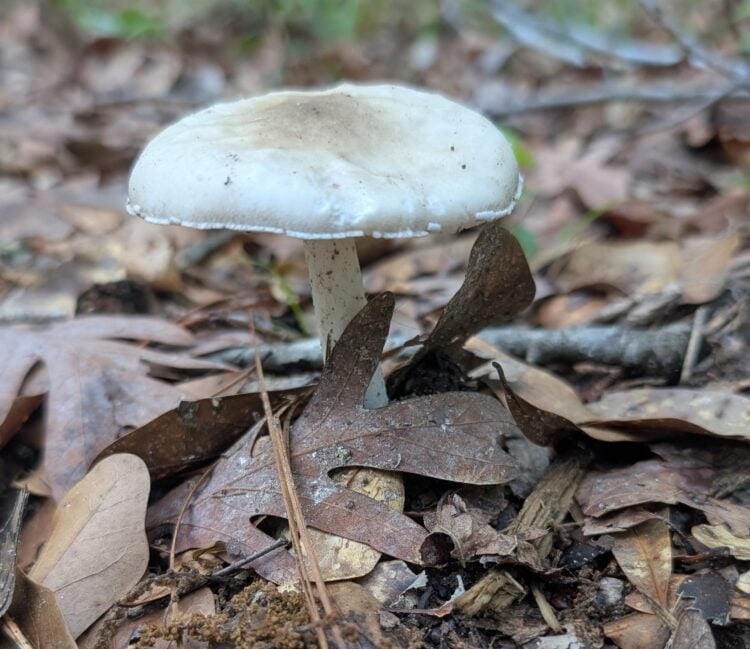
NOTE: Even experienced foragers occasionally misidentify a mushroom. It happens. Dr. Mart “Merriweather” Vorderbruggen of Foraging Texas, one of the most respected voices in wild edibles, recommends taking a hands-on identification class before you ever eat anything you’ve found in the wild.
Why Mushrooms Deserve More of Your Attention
Let’s start with nutrition, because this is where mushrooms genuinely surprise people, probably because of their mild taste.
Mushrooms are one of the few foods that hit multiple nutritional needs at once. They’re high in B vitamins, including B12, which is hard to find outside of animal products. They’re one of the only non-animal food sources of vitamin D. They’re rich in selenium, copper, potassium, and zinc. And they contain beta-glucans, compounds well-documented for supporting immune function.
They’re also gluten-free, low-carb, high-fiber, and filling without being calorie-dense. If you’re cooking for someone with dietary restrictions, mushrooms are remarkably flexible. And for vegetarians trying to keep their iron and B12 levels up, they’re genuinely useful.
Beyond nutrition, there’s the flavor argument. A good shiitake or hen of the woods cooked in butter is deeply savory in a way that grocery store mushrooms simply aren’t. Once you’ve tasted the real thing, whether you grew it or foraged it, it’s hard to go back.
Mushrooms grow where most crops won’t. They don’t need sunlight. They grow indoors, in sheds, on shaded logs in the backyard. If you’ve ever wanted to grow your own food but felt limited by space or climate, mushrooms are worth a serious look.
Two Ways to Get Mushrooms: Cultivation and Foraging
There’s a real distinction between these two skills, and they’re worth keeping separate in your mind.
Cultivation means growing mushrooms intentionally — on logs, in grow bags, with a kit. You control the species, the conditions, and the harvest. It’s reliable and repeatable, and it’s where I’d tell anyone to start. It’s also the safest, other than the grocery store, since you know exactly which type of mushroom you’re eating.
Foraging means finding and harvesting wild mushrooms. It’s deeply rewarding and costs nothing once you have the knowledge, but that knowledge is the work. You cannot skip the learning curve with mushroom foraging for beginners. Foraging for wild asparagus is safe and easy, but with mushrooms, the stakes of getting it wrong are too high. More on that in the foraging section.
My honest recommendation: start with cultivation. Get comfortable with how mushrooms grow. It’s fun to grow your own mushrooms, and easier than you might think. Then layer in foraging knowledge over time.
Growing Your Own Mushrooms at Home
You don’t need land, a garden, or even a yard for this. Some of the best cultivation methods work on a kitchen counter or in a closet. Here are the main approaches for learning how to grow mushrooms at home, starting with the simplest.
Mushroom Grow Kits (Best for Beginners)
A mushroom grow kit is exactly what it sounds like: a pre-inoculated block of substrate (usually hardwood sawdust or straw) with the mycelium already established and ready to fruit. You open the box, mist it with water, and mushrooms appear within one to two weeks.
Oyster mushrooms are the most common kit variety, and they’re genuinely impressive to watch. You’ll get multiple flushes — that means multiple rounds of mushrooms — from a single kit over several weeks. Back to the Roots and Northspore both make good kits; you can find them on Amazon or at garden centers.
If you’ve never grown mushrooms before, this is money well spent. It demystifies the whole process before you invest in anything larger, and you might just end up with a fun hobby that provides a nourishing food and a way to learn more about nature.
Grow Bags and Buckets (Next Step Up)
Once you understand the basics, you can scale up on a budget with 5-gallon buckets or grow bags filled with substrate, pasteurized straw, hardwood sawdust, or even coffee grounds. You inoculate the substrate with mushroom spawn, let it colonize, then introduce fruiting conditions: high humidity, fresh air exchange, and indirect light.
Oyster mushrooms are the easiest here, too. A single 5-gallon bucket can produce a pound or more per flush, and pink and golden oysters are especially vigorous. The setup costs very little once you have a basic process down.
Shiitake Mushroom Logs (A Longer Game, Worth It)
This is the most work upfront, and it requires patience, but there’s nothing quite like walking out to your backyard and harvesting beautiful shiitakes from logs you inoculated yourself. It’s also the most cost-effective over time. One well-prepared log can produce mushrooms for 3–5 years. It’s also a fantastic project for kids and teens — and a way for them to earn a little extra money if they grow enough to sell. When you know how to grow shiitake mushrooms, you’ll have a supply for many, many future stir frys!
What you’ll need:
- Fresh-cut hardwood logs, ideally oak — 3–4 feet long, 4–6 inches in diameter
- Mushroom plug spawn (wooden dowels inoculated with mycelium), typically sold in bags of 100
- 5/16-inch drill bit and drill
- Food-grade beeswax and a small paintbrush
- Something to melt the wax (a small crockpot works perfectly)
- A rubber mallet or hammer
How to do it:
Let your logs rest for at least three to four weeks weeks after cutting before inoculating them. Freshly cut wood produces natural compounds that resist fungal growth, and you want that window to pass. The wood should still feel moist inside when you drill into it.
Drill holes in a diamond pattern, every 6 inches along the length of the log, rotating as you go. Each hole should be just slightly deeper than your plug, about 1.25 inches for standard plugs.
Tap a plug into each hole with your mallet, then immediately seal it with melted beeswax and the paintbrush. The wax protects the spawn while the mycelium works its way into the wood. Once you’ve drilled and plugged the whole log, stack it somewhere shaded and humid, under a deck, along a north-facing fence, or propped against a shaded wall.
Keep the logs off the ground (cinder blocks or a pallet work well) and water them thoroughly twice a week during dry weather.
Shiitakes typically take 6–18 months to produce their first flush, depending on when you inoculated and your climate. Once they start, they’ll fruit in spring and fall for years. A helpful trick: once your logs are mature, you can trigger fruiting by soaking them overnight in cold water. Useful if you want a harvest for a specific occasion.
Other species that do well on logs: Oyster mushrooms, lion’s mane, wine caps.
Foraging for Wild Mushrooms For Beginners
I want to be honest with you before we get into the fun part: finding edible mushrooms to forage is genuinely learnable, and the beginner-friendly species are hard to mistake once you know what you’re looking for. But this is not an area where confidence is a substitute for knowledge.
Some mushrooms that look similar to edible species can cause serious liver damage. Every year, people are poisoned because they were sure they knew what they had. I’m not saying this to be alarmist. I’m saying it because the rules below are worth taking seriously. There’s a reason for the popular meme, “Every mushroom is edible. Once.”
The Rules That Aren’t Optional
1. Never eat a mushroom you’re not 100% certain of. Not 90%. Not “pretty sure.” If there’s any doubt, leave it. The woods will have more mushrooms another day.
2. Learn from people, not just pictures. Photos can look nearly identical for species that are very different. Take a class with a local mycological society. Go on a guided foray. Apps are useful for learning but not reliable enough for eating decisions.
3. Use a regional field guide. What grows in Texas or your state is completely different from what grows in the Pacific Northwest or New England. National Audubon Society Field Guide to North American Mushrooms is a solid general reference. Your state’s mycological society will have region-specific recommendations.
4. Cook all wild mushrooms thoroughly. Most edible mushrooms are at least mildly irritating when raw. Cooking takes care of this.
5. Try a new species in small amounts first. Even a properly identified, genuinely edible mushroom can cause GI distress in some individuals. When you eat something new for the first time, have a modest portion and wait 24 hours.
Six Great Beginner Mushrooms
These are chosen because they’re distinctive, widely distributed across most of North America, and either have no dangerous lookalikes or only very obvious ones.
Giant Puffballs Possibly the most beginner-friendly edible mushroom there is. They look like a white soccer ball (or basketball — they can get enormous) sitting in the grass or leaf litter. Before eating, cut one in half top to bottom. If the interior is solid white all the way through with no internal structure — you have an edible puffball. Any color other than white, or any hint of a cap or stem inside, and you leave it alone. Mild flavor, absorbs whatever you cook it in. Great sautéed in butter.
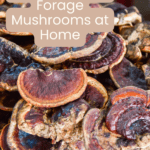
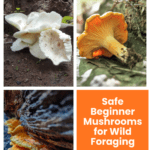
Chicken of the Woods Brilliant orange and yellow shelf fungus growing on the side of a tree. Truly hard to miss. Harvest the young, tender outer edges when they’re still bright and moist — the inner portions get tough and woody. The flavor is mild and genuinely a bit chicken-like, which makes it one of the most versatile wild mushrooms for cooking. The only lookalike is Berkeley’s Polypore, which is also edible.
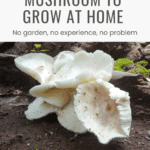
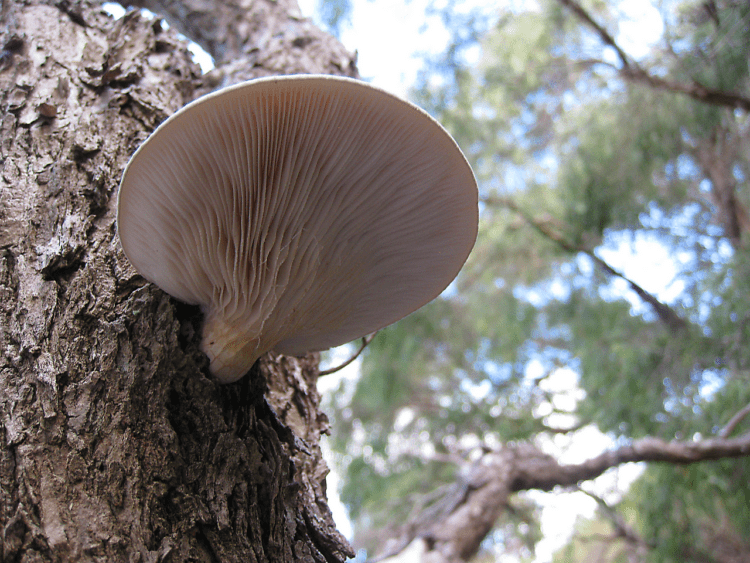
Oyster Mushrooms Cream to pale gray, fan-shaped caps growing in clusters on dead or dying trees. Found in most of North America across multiple seasons — fall through spring in warmer climates. No dangerous lookalikes. Mild, velvety, and one of the best wild mushrooms for stir-fries and pasta.
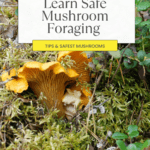
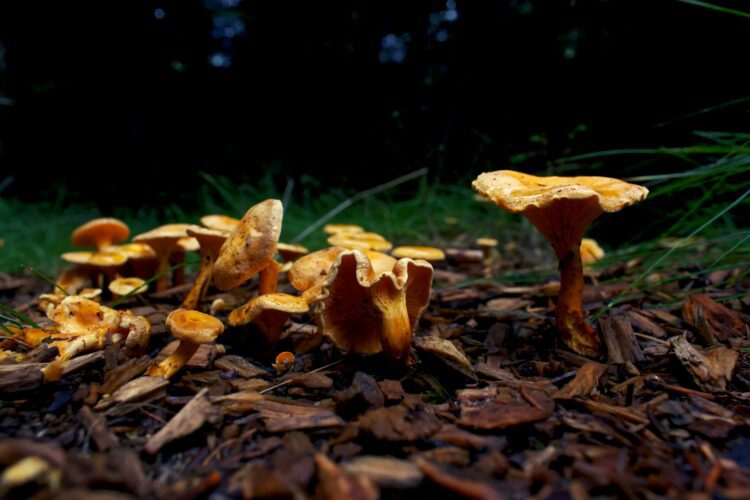
Chanterelles Golden to pale orange, funnel-shaped caps with a distinctive fruity fragrance — often described as apricot. They grow individually in forest leaf litter and tend to reappear in the same spots year after year. Experienced foragers do not share their chanterelle spots. The only meaningful lookalike is the jack-o-lantern mushroom: bright orange, grows in clusters at the base of trees, and has true gills (chanterelles have false ridges, not gills). Jack-o-lanterns won’t kill you, but they’ll ruin your evening. Learn the difference before foraging chanterelles.
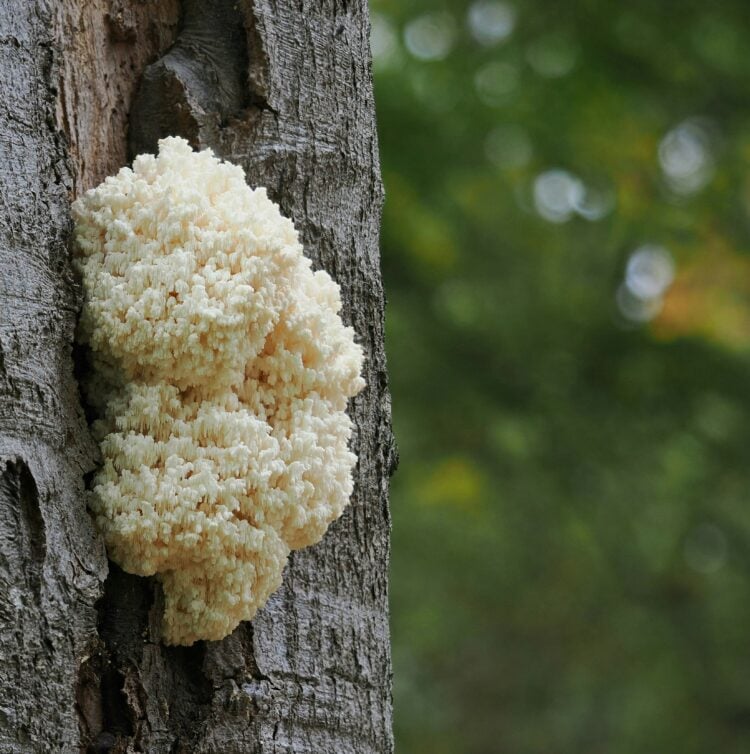
Lion’s Mane Unmistakable: looks like a white, shaggy pom-pom growing on a hardwood tree. No lookalikes at all — every form of lion’s mane is edible. Mild flavor with a hint of seafood. Also one of the more interesting mushrooms from a culinary standpoint; sliced and seared in butter, it’s genuinely impressive on the plate.
Hen of the Woods (Maitake) A large rosette of overlapping, spoon-shaped caps at the base of oak trees, typically tan to gray-brown. One find can yield several pounds. Rich, earthy flavor. No dangerous lookalikes, though you should still do your identification homework. Particularly common in the eastern US through fall.
Find Your Local Mycological Society
This is my strongest recommendation for anyone who wants to forage seriously: find your regional mushroom club. Nearly every state has one, many counties do too, and they run guided forays, identification walks, and educational events where you can learn from people who have been doing this for decades.
In Texas, the Texas Mycological Society is the place to start. Nationally, the North American Mycological Association has a club directory on their website. A single afternoon in the field with an experienced forager will teach you more than months of reading alone.
Preserving Your Harvest
Whether you’re growing or foraging, there will be times you have more than you can eat fresh. Here’s how to handle it.
Drying is the simplest and most shelf-stable option. Slice and dry at 95–115°F in a food dehydrator until completely brittle, then store in an airtight jar. Dried mushrooms rehydrate beautifully in soups and sauces and keep for a year or more. Shiitakes and hen of the woods are especially good dried.
Sautéing and freezing works well for oyster mushrooms and chicken of the woods. Cook fully in butter or olive oil, cool completely, and freeze in portions. Good for 6–12 months and easy to pull out for weeknight cooking.
Mushroom powder is something I wish more home cooks knew about. Grind completely dried mushrooms to a fine powder in a blender or coffee grinder. A spoonful stirred into soups, gravies, or even scrambled eggs adds deep, savory flavor and a real nutritional boost. Shiitake powder in particular is extraordinary. It keeps for 1–2 years in a sealed jar.
Frequently Asked Questions
Yes, this is one edible plant you can grow just about anywhere. Start with store-bought grow kits and the bucket/bag method work on a countertop or in a closet. You don’t need outdoor space to get started.
Oyster mushrooms. They colonize quickly, fruit reliably, and are forgiving of beginner mistakes.
They can be, but only when properly identified. The safety comes entirely from your knowledge. Start with beginner-friendly species, use a regional field guide, and ideally learn in person from an experienced forager before eating anything wild.
A well-inoculated oak log will fruit for 3–5 years, producing twice a year in spring and fall. Expect to wait 6–18 months for the first harvest after inoculation.
Start Where You Are
You don’t have to learn everything at once. Pick up a grow kit and spend a few weeks watching oyster mushrooms fruit in your kitchen. It’s genuinely delightful, and it’ll make everything about cultivation click. Then get a regional field guide and start identifying what you see on walks — just to look, not yet to eat. Join your local mycological society when you’re ready to go further.
The knowledge builds on itself. Within a year you could have shiitake logs producing in your backyard and a handful of wild species you can identify with confidence. That’s a real and practical skill, the kind that makes you more capable and confident in the kitchen and as a gardener.
Mushrooms have been part of how humans eat for thousands of years. They’re worth getting to know.