

Cruise ships are far safer than headlines suggest and more popular than ever. Your odds of dying on one are about 1 in 6.25 million, better than the drive to the airport, but real emergencies do happen, from the 2013 Carnival Triumph engine fire to the 2019 Viking Sky evacuation off Norway. The muster drill isn’t optional: skip it and the cruise line can legally deny you boarding or pull you off at the next port with no refund. Know your muster station and deck plan before you need them, pack a small preparedness kit, and remember that ports-of-call, not the ship itself, are where you’re most likely to run into real trouble.
Every year millions of people set sail on a cruise ship. Basically a resort on water, these ships provide plenty of fun and beautiful vistas, but what should you know just in case an emergency happens while at sea? Keep these tips in mind, pack a few of the emergency supplies I suggest, and then bon voyage!
This article has been completely updated and rewritten with new advice, tips, and examples of cruise ship emergencies. September 2026.

Some of the links in this post may contain affiliate links for your convenience. As an Amazon Associate, I may earn a small commission from qualifying purchases without any increase in price to you.
For most cruise enthusiasts, sailing to an exotic Caribbean island or through Alaska’s Inside Passage is a dream come true. All-you-can-eat buffets, a relaxed atmosphere, pools and hot tubs, and sunny skies. Few people anticipate a cruise where things go horribly awry.
The scenarios for cruise travel going wrong aren’t hypothetical. A fire that knocks out power for days, a storm that catches a ship in open water, an outbreak that locks thousands of people in their cabins. None of these are common, but each one has actually happened, and each one gives you a clear picture of what cruise ship preparedness needs to cover.
In September 2025, Royal Caribbean’s Vision of the Seas got caught in a violent storm that sent furniture sliding and passengers holding on to anything stable, for dear life!
Back in 2013 many of us were fixated on the story of the Carnival Triumph. This massive cruise ship lost nearly all its power due to fire and for five days became a bobbing cork in the water. That cruise disaster has been memorialized in the Netflix documentary, Trainwreck: Poop Cruise.
And how about the Diamond Princess quarantine, when thousands of passengers were confined to their cabins for weeks?
Before you get too worried, your odds of dying on a cruise ship are about 1 in 6.25 million. Compare that to 1 in 103 for a car crash, and cruising starts looking like one of the safer vacations you can take. Going overboard, while it makes headlines, still only happens to roughly 1 in 2 million passengers. All in all, cruising is an extremely safe way to vacation.
Cruising is more popular than ever
When Covid hit, a lot of people thought cruising would never recover, but it didn’t just bounce back. It’s now blowing past every record it ever set. In 2025, a record 37.2 million people took a cruise, according to CLIA’s 2026 State of the Cruise Industry Report, up from 34.6 million in 2024, which had already surpassed the pre-pandemic high of 29.7 million set back in 2019.
More people are boarding ships than ever before, the under-40 cruisers are now about 30% of passengers (it’s not just for retired folks anymore), and all this means that knowing what to do if something goes wrong is more important than ever.
Readers have asked me, “Survival Mom, what would you have done if you had been on the Carnival Triumph? How do you deal with a cruise ship crisis?” Well, very coincidentally, I actually WAS on a cruise ship at the same time as the ill-fated Triumph. We also left from Galveston and had a similar Caribbean itinerary. It was a bit surreal.
Here, I’ll share what cruise ship preparedness looks like for me, both what I pack and some tips that I believe would have helped us survive those days at sea with a smile on our faces. In fact, some of this can help you and your family on any type of vacation, whether the seas are smooth or rough. Alright, let’s get you cruise ship ready!
Remember that these ships are floating cities!
They even have their own crime reports. Under the Cruise Vessel Security and Safety Act, cruise lines operating from U.S. ports are required to report serious incidents to the FBI and the Coast Guard, and the U.S. Department of Transportation publishes the data quarterly.
In the first quarter of 2026 alone, the FBI logged 43 reports of criminal activity across the industry, mostly sexual assaults and thefts over $10,000. Women especially need to take precautions.
The United States has more than 15,000 towns with populations smaller than the capacity of the larger cruise ships. The largest ship afloat, Royal Caribbean’s Icon of the Seas, holds over 10,000 passengers and crew at full capacity.
You need to behave on the ship the same way you would walking around a city on land and practice situational awareness. That includes your children. If you wouldn’t let them wander around an unfamiliar city on their own, they shouldn’t be left with the run of the ship. However, do drill them on what to do if they are separated from you, and they should know how to find your cabin.
Overall being on the ship is very safe, but crimes and accidents do happen. Many of the injuries and deaths that occur onboard are related to alcohol consumption. The same can be said for some of the crimes committed.
Too much alcohol leads a person to make poor decisions, like going back to the cabin of a crew member or other passenger or allowing others into your cabin. I know you’re on vacation, but be smart about your alcohol intake, especially with those all-you-can-drink packages if you plan to imbibe.
Bottom line, you don’t know your fellow passengers. I have met some wonderful people on cruises but I have always maintained a level of safety while onboard, just as I would on a land vacation. That includes knowing what to do if I lose my smartphone or if it’s stolen.
Before You Leave Home Port
Know your cruise ship and the emergency procedures
Cruise ship preparedness goes beyond the kit you pack and bring. And it begins even before the ship leaves port and before you involve yourself in cruise ship life.
First, familiarize yourself with the ship. They are HUGE, and some people find it difficult to find their way around a large cruise ship. It’s sometimes easy to get turned around and not know fore from aft, and not every deck is set up the same way.
Fortunately, your cruise line’s app has a searchable deck plan built in an app you can download to your phone. Download it and study the layout so you know your way in an emergency. It’s worth asking guest services for a paper deck plan too, since a dead phone battery won’t help you find your muster station, and there are maps posted at every elevator.
Travel Essential: The Med Kit
The “Muster Drill”
This element of cruise ship preparedness is non-negotiable. Attendance at a “muster drill” is mandatory. At the designated time (almost always before leaving the embarkation port), the ship will sound the alarm and passengers must go to their assigned muster station.
One newer practice doesn’t require a physical muster drill. Instead, you’ll be required to watch a short video, about 5 or 6 minutes long, and then report to the ship location where your muster group will assemble. I found the video to be far more informational than the traditional drill. Pay attention and memorize where to go and the instructions of the crew. This information is also printed on a sign on the back of your cabin door.
On our last cruise, the crew knew exactly who had shown up to watch the muster drill video, and soon, over the loudspeaker, we heard the names of two or three no-shows. No-shows are treated very seriously, and the captain has the discretion to disembark them at the next port of call.
In an emergency, don’t wait! Get your life jacket from your cabin, if it is safe to do so, and go straight to your muster station.
The first responders to any cruise ship emergency are the crew themselves, and they are highly trained, not only for medical emergencies but with the same skills a fire department would have on land. If the ship is close enough to shore, the Coast Guard or a national rescue service takes over, the way Norwegian rescue crews did for the Viking Sky.
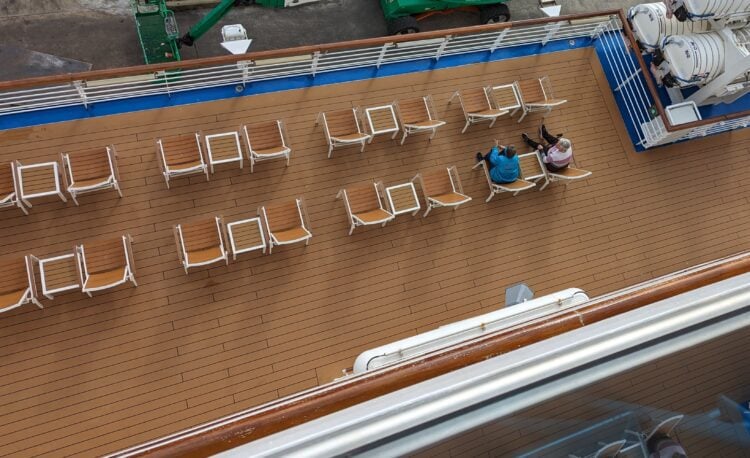
Stay Safe in Ports-of-call
Now here is where you’re far more likely to run into trouble than you ever will on the ship itself.
Cruise ship preparedness includes any stops you make during the cruise also, and some of those stops are safer than others.
Your cruise ships offer an informative session with an expert for each port-of-call, and those are worth attending, even though I personally snubbed them for several years! Yes, you get some sales pitches for certain shops at the port, but you also get frank advice for which parts of town or neighborhoods to avoid.
Don’t carry your passport off the ship. Use the in-cabin safe to store your passport but do carry a copy of your passport with you, and don’t forget your ship ID.
Take a photo of your family and friends as you get off the ship. If anyone gets lost, you have a current photo and description of the clothes they are wearing. And, just in case of a sudden illness or injury, have your travel insurance info with you. I always use Allianz, and their phone app has all the information I need if I need help.
What should you pack for a cruise with safety in mind?
You’re on vacation, so the last thing you need is to burden yourself with everything in your bug out bag or emergency kit! The rule of thumb is that if you can’t carry it on an airplane, you won’t be able to carry it on the cruise ship, so many of your everyday carry items will likely have to be left at home. Be sure to check with your cruise line for a list of prohibited items.
With these restrictions in mind, here’s a recommended list of items to carry on the ship with you.

Cruise Ship Preparedness Kit
Here is what I packed along with bathing suits and comfy shoes:
Laundry soap. We didn’t do any laundry by hand but could have. A slice of Dr. Bronner’s soap can be used for laundry as well as a very gentle shampoo and body soap.
Protein bars. You may likely eat more food on a cruise ship than at any other time in your life! Cruise ships have a very precise calculation of how much food they need, and they get close to running out toward the end of the cruise. If there is an emergency that delays the ship from returning to port, plans are made to stretch the food out. I pack a few of these for every trip, not just a cruise.
Packets of Clorox wipes. These pack flat and can be used to wipe down things like handles, door knobs, and countertops in your cabin.
Hand sanitizer. Just a small bottle since cruise ships have multiple hand sanitizer dispensers available near the dining rooms, buffet lines, and bathrooms.
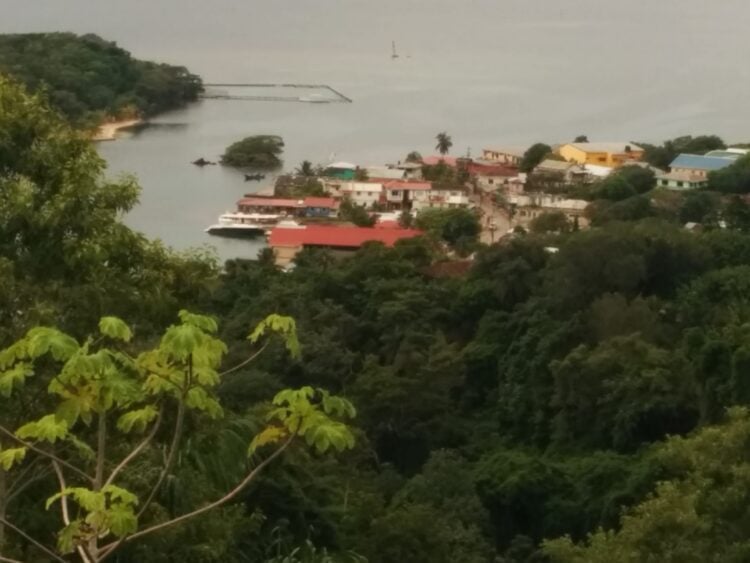
Medications. Each ship has a medical clinic and one or more doctors onboard. We’ve only had to use this once on a cruise through the Panama Canal, and the doctor and nurse were helpful, professional, and very kind.
However, In an emergency or in a large outbreak, the clinic may be overwhelmed. Having the ability to self-treat in your cabin will be beneficial. Also, while you can get cold medications, motion sickness, and other OTC drugs onboard, they are expensive. Carry a minimum of one extra week of any prescription medication you must take daily and this handy med kit. I keep this completely packed and updated and is one of the first things I pack for every trip.
NyQuil or Z-Quil. Gosh, I love that stuff! If we really had been stranded at sea for a while I might have opted to sleep through the whole ordeal! Just add a few doses to your med kit.
A battery-powered fan. At night, you may want some air circulation in your cabin. Buy a fan that collapses and stores flat and bring along a set of extra batteries. If your luggage space allows, I can’t recommend the Venty fan highly enough.
A Swiss army knife. Check with the cruise line about restrictions BEFORE leaving home.
A power strip. Check your cruise lines rules for this before packing it. During the Carnival Triumph debacle and its power outage, there were still some outlets here and there with power, and a power strip would have enabled several people to charge cell phones and other electronics at one.
A few optional items
Duct tape. Just a bit but it can be helpful for holding together a broken zipper on luggage along with other uses.
A deck of cards and/or a travel version of a game. Without power available there were no movies, TV, or internet on the Triumph, and I’ll bet there were a lot of cranky, bored people.
Small lantern, battery operated tea lights, or light sticks. These are all small, and if you have an interior cabin, the tea light, in particular, is super handy as a night light.

All of these supplies are quite small, except for the power strip, and should be a part of your emergency kit anyway. Also, everything was quite inexpensive.
Want more useful info from Survival Mom?
What can we learn about cruise ship preparedness from the Carnival Triumph aemergency?
Quite a bit actually. In the case of the Carnival Triumph, the discomfort level of passengers depended greatly on where their cabins were located.
Their attitude also contributed greatly to their experience. This would be true on any vacation, from a camping trip to a stay at a luxury resort.
Passengers with inside cabins were the first to make their own makeshift tents out of bed sheets and hauled mattresses into hallways and the outside decks. Clothespins would have come in handy, for sure.
The passengers with cabins that had balconies and windows that opened had fresh air. Even though I know incidents like Carnival Triumph are incredibly rare, it’s the primary reason why I’ll only ever book a cabin with a balcony!
What Carnival Triumph passengers did to cope
The ship’s captain and crew had emergency plans in place, but even so, it’s up to the individual to find their own ways of coping. Here are a few steps that some passengers of the Triumph took and a few tips of my own.
- Get acquainted with other passengers, or vacationers, as quickly as possible in a crisis. One older couple on the Triumph who had to stay out on deck said they became friends with a younger couple and the four of them got through the ordeal together. There’s nothing like a crisis for bringing people together, and I would have taken advantage of this. I read of one group of passengers that held regular Bible studies. That was smart on a number of levels. It brought people with a common interest together, their focus was on something positive, and it provided a routine and an activity to look forward to.
- Set up a routine as quickly as possible. This could include participating in ship activities, walking the outdoor track, or anything else we could do to take at least some control of our time in order to avoid panic and negativity.
- Stay hydrated! If we were spending a lot of time out on the deck, we would need our sunblock and plenty of water. Life Straw water bottles, or any other bottles with a filter, can safely filter water if you have any doubts.
- Eat small, light meals and when possible, set aside food for snacks later on. I don’t mean hoarding food if there was truly a food shortage, but taking some food for a meal and then setting a bit aside for later. This would be especially important if with kids or for family members with health issues.
- If sanitation becomes a problem, use hand sanitizer and those Clorox wipes liberally!
- Find something to enjoy. Out on the ocean, with no electric lights, the stars must have put on one heck of a show. The show of a lifetime for most people.
- Avoid complaining, negative people. What happened on the Triumph, happened, and these passengers were never in mortal danger. It would be hard enough to stay positive in this particular scenario, but with kids along, I would have made sure I checked my own bad attitude or worries at the door, figuratively speaking.
- For a time, alcohol played a role in helping some people cope with the stranded at sea trauma. However, I heard that the captain turned off the tap, so to speak, and passengers had to finish the trip fully lucid. Alcohol would not be my recommendation for coping with any vacation crisis! It’s too easy to make bad decisions when you’re tipsy, or worse.
Where to Go If Your Cabin Loses Power (Lessons from the Triumph)
The Lido deck (the open pool/buffet deck, usually deck 9-10 on a Destiny-class ship like the Triumph) was objectively the best place to be, and passengers proved it by turning it into an actual tent city with bedsheets.
Here’s why, mechanically:
1. Vacuum-flush plumbing backs up from the bottom. Cruise ship toilets run on a vacuum system powered by electricity. When the Triumph lost power, that system failed everywhere, but the effect was worst on lower and interior decks. Sewage and standing water pooled low in the ship first, and interior cabins with no airflow trapped the smell with nowhere for it to go. The Lido deck, being high up and open-air, never had that problem.
2. Heat rises, but open air beats trapped air. Without AC, interior cabins turned into sealed ovens with no windows, no cross-breeze, no relief. The Lido deck was hot too (it’s outside, in the Gulf of Mexico, in February… actually mild, but still), but it had airflow and shade options, which interior cabins couldn’t offer. The interior cabin people were the ones I felt most sorry for!
3. It’s where the food and light were. Crew consolidated food distribution near the buffet/galley areas on the Lido deck once the main dining rooms became unworkable, so it wasn’t just more comfortable, it put you first in line for what supplies existed. Emergency lighting also tends to prioritize public assembly spaces (this overlaps with muster station areas) over interior corridors.
4. Distance from the fire mattered less than you’d think. The fire was in an aft engine room, so forward cabins had a small edge on immediate smoke exposure, but since the fire was contained fast and the failure that made the cruise miserable was the power loss, not the fire itself, proximity to the original fire wasn’t what made the ordeal so miserable. Plumbing and ventilation were.
The one thing that beat “which deck”: an outside-facing cabin with a working window or balcony. This solved the airflow problem without giving up privacy or a bed.
Just for the record, we were on a Royal Caribbean ship and had a fabulous time. Loved every minute of it.
As news about the Triumph reached us, I asked my daughter, age 13 at the time, how she thought our family would have fared. I was so proud when she said, “I think we would have done just fine!”
That’s my girl!
Frequently Asked Questions
Not a category 4 or 5, but that’s not the plan. Lines monitor storms days in advance and move ships away from the predicted track. The goal is avoidance, not a survival test. A ship can change itinerary, reverse the route (Eastern Caribbean to Western, for example), stay in port longer, or leave early.
They’re designed for heavy seas with steel hulls, a low center of gravity, wide beams, and active stabilizers. This design makes them capable of handling waves of about 50 feet, trough to crest. Naval-architecture discussions often cite design capability for waves on the order of about 50 feet trough to crest. That is not the same as steering into a Category 4 or 5 eyewall.
Yes. International maritime law (SOLAS) requires cruise ships to carry enough lifeboat and life raft capacity for 125% of the ship’s total passenger and crew count.
Modern cruise ships rarely sink. The Costa Concordia in 2012 remains one of the only major examples in recent decades, and it was caused by human error (the ship deviated from its planned route).
Related Travel Content
- How to be Ready and Stay Safe in an Emergency in Another Country
- How to Prepare for a Hotel Emergency
- Pack a Handy Travel Medical Kit & Stay Healthy While Traveling
- The Ultimate Guide to Surviving Canceled Flights and Other Travel Challenges
Final Thoughts
A cruise ship crisis is rare, but “rare” isn’t “impossible,” and a little preparedness goes a long way toward turning a scary situation into a story you tell your friends for the next twenty years instead of a nightmare. Pack smart, pay attention at the muster drill, and go have that vacation.
Have you experienced a significant crisis during a family vacation? How did you cope?
Originally published 8/2/2017 with contributions from Amy VR.
Don’t the cruise lines X-ray baggage? Would they allow a Swiss Army knife?
They do xray baggage. My husband’s kilt pin set off some concern as it is shaped like a knife. You should look at the cruise line’s site to see if there are prohibited items.
They do, but it’s not TSA.
I spend roughly 6 months out of each year at sea as the Radio Electronics Officer on board a research vessel. I never ever go out without certain items. Before I sail, I have my Doctor write a prescription for a 5 day Z-Pak course, and Flagil as well. The Z-Pak is a broad spectrum antibiotic, and the Flagil is for parasites that you may ingest during visits to 3rd world eateries. (Oh the stories…hurts to think about it) I also recommend asking your Doctor about a prescription for Transderm-Scop. This is Scopolamine in patch form, and it will keep most anyone from getting sea sick. Even if it is relatively calm seas, if you ever need to spend time in a life raft, you will encounter seasickness and the patch must be applied within minutes after you enter the raft. Seasickness can kill you via dehydration, so it must be dealt with effectively. (We like to say the only sure cure for seasickness is to sit under a tree!) Always have the sea version of a “bug out bag”. This waterproof “abandon ship bag” bag will include water, extra glasses, prescriptions, a hat, sun screen, low carb energy bars (high carb bars will dehydrate you), and copies of your ID and papers. I tend to back up my photos on a thumb drive every so often while out, in case I end up having to leave my laptop on board during a distress. Some of our crew even include a long sleeve shirt in their bags to keep from sunburn. If you ever get the order to abandon ship, begin drinking water immediately- lots of it. Water will be rationed strictly and on schedule once in the raft, so show up well hydrated. Attitude is contagious, whether it is good or bad. Be the person with the best attitude on the boat. As people get edgy in close quarters in poor conditions, you will find that people will be apt to follow your lead in attitude if you consciously make an effort. Just tell yourself to have a good attitude, even if that makes no sense given the circumstances. Close quarters, isolation and stress can slowly take its toll on a person without them even noticing the change. Deciding periodically to deliberately exude a positive attitude will help keep you in check and contribute greatly to your overall survivability.
Great tips! I always pack extra food and water wherever I go. Car trouble? At least I have something to eat while we wait or if we have to walk somewhere. It also helps when doctor’s appointments run long or we get stuck in traffic.
Worst vacation was getting sick in Mexico- I was a kid but it was pretty darn miserable…
I just have to say I did a Carnival cruise 2 years ago and had an absolute blast. I was unable to take a knife with me as it got checked on the boat. yep, but i did utilize my nail clippers and had a small pair of craft scissors in my luggage that passed.
Dont forget excursions off the boat. My friend and I had a larger “shopping” bag and we carried 2 – 1 liter bottles of water from the boat, didnt drink anything on the islands. small versions of sunscreen, bug spray, hand sanitizer, first aid kit, sewing kit from the dollar store, rain ponchos, umbrella, extra socks, and copies of out personal identification folded small in a ziplock bag. and hats for the sun.
By the end of our week we had used almost everything in that bag, was nice to have it just in case and most didnt take up much room. though our purchses did 🙂
not sure why my other comment didn’t go through, i shared a link of a travel power strip that I travel with… my other thought was binder clips instead of clothespins because binder clips seem to be a bit more sturdy.
The whole knife issue…not being able to bring a knife would probably be a deal-breaker for me.
For laundry consider a small bottle of castile soap as it has multiple uses from laundry to “tooth paste’. Another option would be a strip or two of laundry detergent that is marketed by “TrueEarth” to save weight just slide a couple into a sealable bag.
I love castile soap! You could also slice of a bit from a bar and use that to not only scrub a few pieces of laundry, but it’s also a good shampoo, body wash, etc. I usually buy Dr. Bronner soaps, but there are many other good brands.