


Depression-era kids weren’t just passive members of the family, They took an active role in helping the household in dozens of ways starting from a very young age. This is what they actually did, broken down by age, and how those years affected them in positive ways — something most kids today never get the chance to develop.
Ask anyone whose parents or grandparents lived through the Great Depression and you’ll hear a version of the same thing: those people were different. They were tougher, more resourceful, and they knew how to do everything.
What made them that way? Well, a lot it starts with what happened to them as kids.
Nobody in a Depression-era household got a free ride. Not the adults, not the teenagers, and not the kids. From the time they were old enough to be useful, they were expected to contribute, and they did.
Life Was Different Before It Got Hard
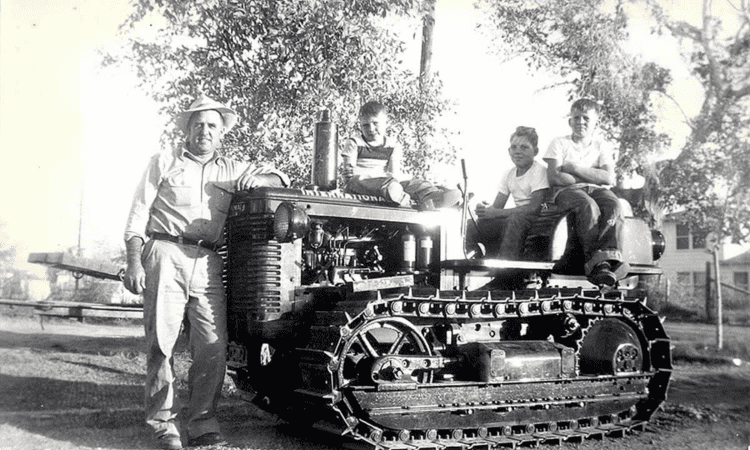
Before the crash of 1929, most American families, especially rural ones, already expected children to actively take on chores and responsibilities. Farm families had always depended on everyone doing this, but when the Great Depression hit, this became even more important to the family’s survival. Families who had been comfortable suddenly weren’t as hundreds of thousands of fathers lost jobs. By 1933, a third of all farmers had lost their land, and one in four workers was unemployed at the peak of the crisis.
Kids pick up on things, especially when parents are stressed and worried. They could see it in the empty pantry, the meager dinners, and in their parents’ faces. By far, most responded in the same way their parents did. They stepped up and did whatever had to be done.
What the Little Ones Did (Ages 4–7
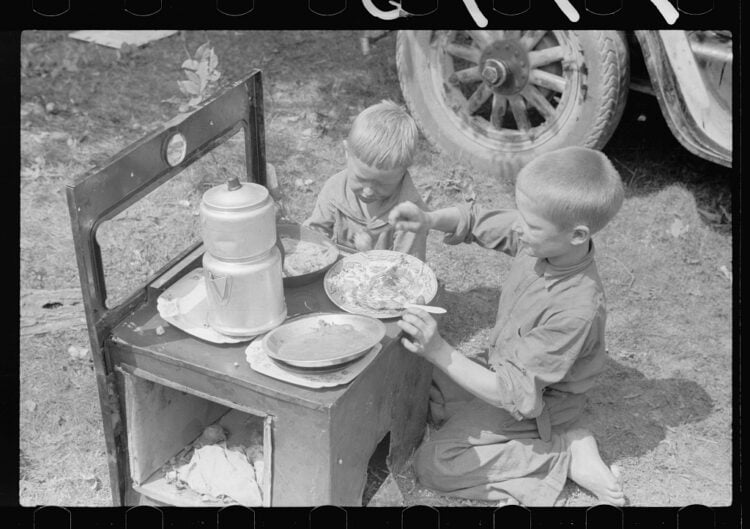
Even the youngest children had jobs — real jobs (or tasks) that were more than just busy work. They were helpful and important contributions to the household.
By age four or five, children were gathering eggs, bringing in buckets of water from a well, carrying small loads of wood, and running errands to neighbors or the corner store. A four-year-old can carry eggs without breaking them. A five-year-old can pick green beans for an hour if she understands why it matters.
My Nana told us stories of her step-dad coming home from work, handing her a small bucket, and sending her down the street to the pub for a bucket of beer! She was just six years-old at the time! An essential household task? Apparently it was, for him.
Kids this age also watched younger siblings, sometimes for hours at a time while parents worked. There were no playdates, no schedule full of “enrichment” activities. If there was a baby and an older child, the older child was often put in charge of the baby and younger siblings.
Small children also helped with the constant sorting and salvaging that Depression-era households required. Remember, nothing could be wasted. They pulled nails out of scrap wood so they could be reused. They untangled and rolled up string and picked through dried beans, looking for tiny stones before the beans went in the cooking pot. For the little ones, this was useful work that taught small hands to do careful and patient work.
The smallest chores had a way of becoming some of the most enduring memories. One woman, whose mother grew up on a farm in rural Oregon, described how her mother’s first household job as a very young child was drying the silverware after her grandmother washed dishes. She would spread the pieces out on a chair near the stove and carefully wipe and put away every single one. That little girl grew up to run an entire household’s cooking, baking, sewing, and food preservation before she was a teenager because someone had started her young and taught her to do it right.
For some Depression-era children, “young” meant very young, younger than we might consider to be capable today. In households where older children were out working or going to school and moms were stretched thin, even a five or six-year-old might be handed a baby and told to watch. There was no pondering whether they felt ready or not. The need was there, the child was there, and that was that.
Looking back, it’s impressive how rarely the people who lived this way describe it as deprivation. More often, there’s something almost wistful in the stories they told me — a recognition of being needed and valued from an early age.
The Middle Years: When Kids Became Real Contributors (Ages 8–12)
This is where Depression-era childhood gets even more interesting, with children in this age group barely experiencing an actual childhood, as we would define one today.
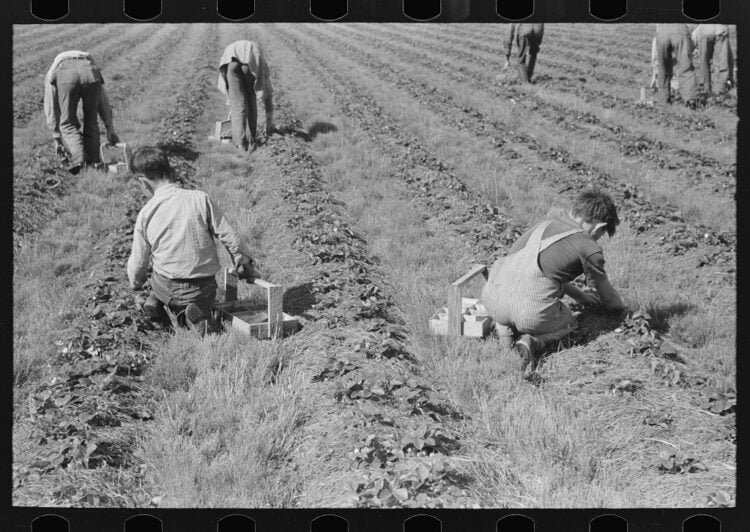
By eight or nine, they were expected to cook basic meals from their pantry, tend the family garden from planting through harvest, care for livestock, and do laundry, which meant hauling water, heating it, scrubbing on a washboard, wringing clothes by hand, and hanging them to dry. I’ve done this myself, and it’s an all-day project, not to mention back-breaking.
Girls were taught to sew, mend, and patch almost as soon as they could hold a needle. A pair of pants with a worn-out knee wasn’t thrown away or given to charity. It was patched, then patched again, handed down to be worn by younger siblings, and then the fabric was eventually cut up for quilt squares or some other use.
The family garden required non-stop effort, nearly year-round, and the natural source of labor were the kids. Families grew as much food as they possibly could, and kids planted seeds, pulled weeds, watered, watched for pests, and then helped pick and preserve the harvest. One man told me that he could still remember the cracking sound made by big, green grasshoppers as his grandma snapped them in two!
Linda Morgan, who grew up hearing her Depression-era parents’ stories, described her mother’s childhood in rural Oregon this way: from around age seven, her mother and her sister baked a full batch of bread every single day. They handled most of the household cooking and chores mostly because their grandmother was often ill and someone had to do it.
Canning required the whole family to get involved, and children were put to work on it from an early age. Washing and sanitizing jars, snapping beans, peeling peaches, carrying bushels — there was no end to the work involved every late summer and early fall. The canning season was exhausting, hot, and could last for weeks, but from emails sent to me from readers, it was one of the great, shared memories of their childhoods. There was something about working together toward a goal everyone participated in and then could see the results as shelves filled up with colorful jars of jams, pickles, and that season’s harvest.
Some kids took on responsibilities that might deter many adults today. Chester Myers, who grew up near the Navajo reservation in New Mexico, started getting up at 4 a.m. to hunt, fish, or set animal traps before school at age nine. When asked years later why he did it every day, even on school days, his answer was simple: if he didn’t go out, the family wouldn’t have meat that day. On mornings when the hunt came up empty, they ate beans and cornbread.
Carol Jackson’s father took a different approach to the food problem. He foraged. His own father taught him to pick blackberries, collect black walnuts, and identify edible greens, like dandelions, chickweed, and others, that could be cooked like spinach. He walked along the railroad tracks near their home picking up pieces of coal that had fallen from passing trains. Those went into the stove that heated the house. He knew which plants the caterpillars loved, and could almost always find a worm in the stem to use as fishing bait.
This wasn’t just a way to spend time or explore nature, and these weren’t hobbies. They were skills his family depended on, passed from father to son because the alternative was going without, and going hungry.
Earning Money
By ten or eleven, many children were busy earning money. It became not only a part-time job but a way to learn and build skills, too. Boys sold newspapers on corners, shined shoes, or did yard work for neighbors who still had a bit of money to spare. Girls took in mending, helped with other families’ washing, and sold garden produce and home-baked goods door to door.
Chester Myers saved an entire year’s worth of trapped beaver pelts and brought them to the local Trading Post. The money he made went toward buying his older sister a purse she had wanted for Christmas. He was proud he could be the one to give her that special gift and equally proud that his family had come to count on him for food.
The important part about children’s earnings in this era is that the money rarely belonged to the child. It went to the family, and that was accepted and understood. A twelve-year-old who handed over his week’s wages to his mother learned about personal sacrifice and interdependence. These kids grew up very quickly — their childhoods weren’t nearly as carefree and self-centered as is the case for many kids today.
One of my readers, Shirley, told me about her mom’s creative way to earn money. She took her broken crayons, the ones too small to draw with, and carved tiny high-heel shoes out of them. Then she sold them to the boarders who rented rooms in their home and saved every penny she made so she could go to a movie or buy ice cream.
My husband’s Uncle Marvin left home in West Texas at the ripe old age of ten. He decided to live the life of a hobo and road the trains as far as Washington state. He must have seen the long line of teenage boys and men standing in line each day for hours in hopes of getting a job like digging ditches, and decided that wasn’t for him.
Teenagers: Near-Adult Responsibility
If kids as young as 4 or 5 were helping to share the family’s load of work and responsibility, then teenagers were more or less adults in every way that mattered.
Often, it was the boys who left school to take full-time jobs and contribute money to their families. Girls ran households when moms were sick, taking on extra jobs, such as doing laundry for wealthier families or working full-time jobs as long as they could. Some families had to split up temporarily, sometimes sending children to live with relatives who could feed them when staying at home could lead to outright starvation.
The Civilian Conservation Corps started in 1933 and employed young men between 18 and 25, but the effects trickled down through families in many ways other than money sent back home. When an older brother left to work for the CCC, his responsibilities fell to the next in line. In a lot of households, seventeen became the new adult age, and often, even younger than that.
Kathy Griffin’s father grew up in Columbus, Georgia, where the main employer was the cotton mill. His own father, damaged by a mustard gas attack in World War I, couldn’t work there because he couldn’t handle the dust. The family survived mostly on catfish her grandfather caught. When her father was fifteen, in 1939, he lied about his age to join the Army. His motivation was simple. In the Army he could count on three meals a day, and it wasn’t going to be catfish! It took his stepmother years to convince him to eat catfish again, or even go fishing.
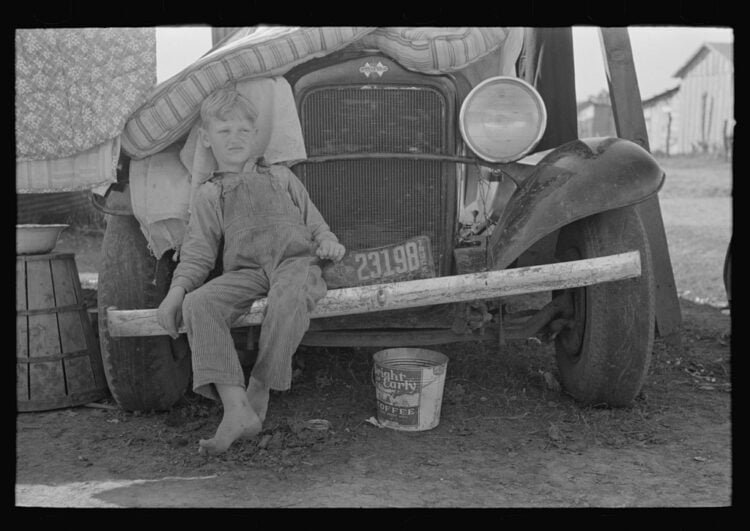
Darlene Ertzberger’s father had a different kind of abrupt ending to his childhood. His family lost their Arkansas farm during the Depression. They loaded everything they could onto a wagon and headed west with no particular destination in mind. They picked crops in Texas, then California, then Oregon, where her grandmother finally said, this is where we stay. Her father was in the eighth grade when he quit school to go to work and help support the family. His own father then abandoned them, leaving her grandmother to hold everything together alone.
What strikes Ertzberger, looking back, is not the hardship but what it produced. All of those children grew into hard workers, capable adults, and kind people. The men had a deep respect for women, and they showed that by always standing up when a woman entered the room. They demonstrated integrity and respect for the rest of their lives. Hard times, she wrote, are not necessarily bad.
Moving so quickly from childhood to a teen with adult responsibilities isn’t ideal, of course. The stories we’ve been told from those years don’t pretend to be otherwise. What’s striking, though, is how rarely Depression survivors describe those years with bitterness. More often their voices are filled with pride. They survived one of the most difficult era in American history. When it really mattered, they stepped up and showed they were willing and able to take on the challenge.
What They Did for Fun
Here’s what surprises a lot of people. Depression-era kids had a lot of fun, not despite their circumstances, but often because of them. More than one person told me how much they enjoyed those years.
In spite of working hard, there was still free time, and when you can’t buy entertainment, you invent it. Turns out, kids are incredibly good at inventing all kinds of ways to stay entertained and have fun.
Outdoor Play — All Day, Unsupervised
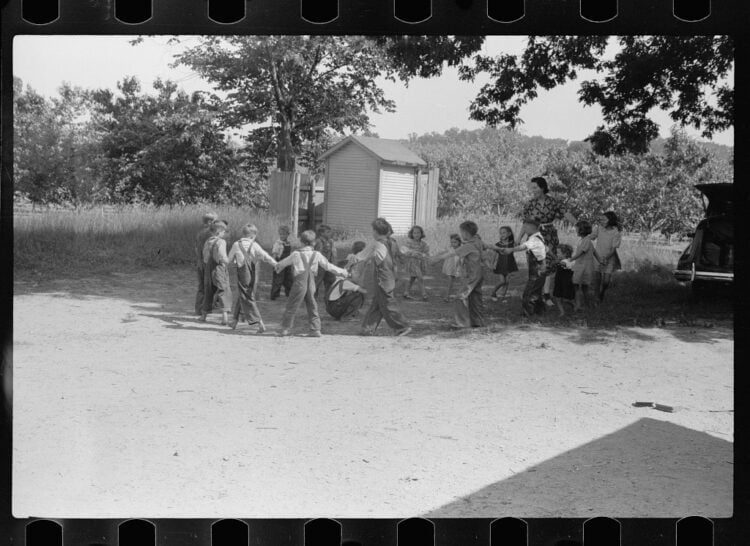
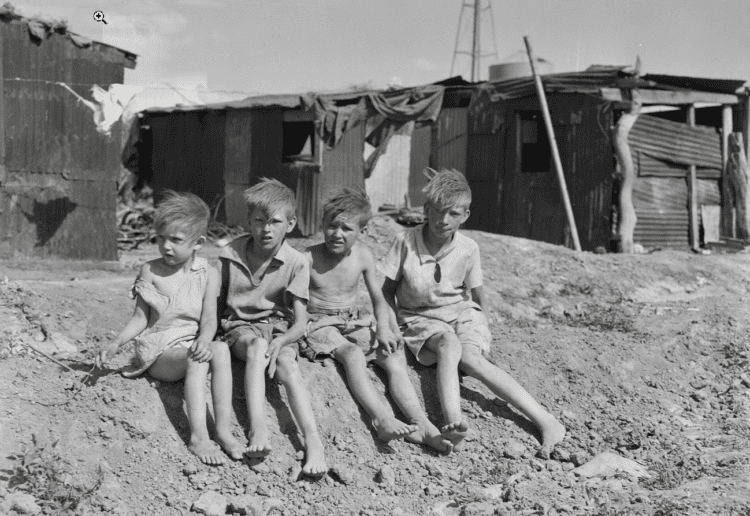
Regardless of where they lived, kids roamed. They roamed around their neighborhoods, nearby fields, creeks, and woods. They built forts, dammed up streams, caught crawfish and lightning bugs, organized games of kick the can and hide-and-seek for the whole neighborhood that went on until dark. They spent most of their free time outdoors.
Local swimming holes, if you were lucky enough to live near one, were the summer social center for rural kids. And, they were on their own with no supervision, no lifeguards, and no formal swimming lessons. Kids who couldn’t swim learned from the kids who could, and if they got hurt, they dealt with it, and kept swimming or exploring.
Homemade Toys and Games
Games were simple with the most basic supplies. Marbles were a big deal, and kids played for keeps, carried their favorites in a cloth bag, and negotiated trades with the intensity of Wall Street brokers. A good marble collection was something to be proud of.
“I’ll trade you these two cat’s-eyes for one of your steelies.”
Tops, hoops, jump rope, pickup sticks, and jacks — couldn’t get any simpler than those. Dolls could be made from corn husks or scraps of fabric, and a store-bought doll was an unbelievable luxury. Slingshots, BB guns, and walking the rails — there were plenty of opportunities for serious injuries! None of it cost anything but without fancy or expensive must-have toys and games, the emphasis was on the experience and countless hours spent with friends.
The Radio
The radio was the great equalizer of Depression-era America. Families from every walk of life gathered around it in the evenings the way families now gather around a television. Kids listened to serial dramas, comedies, and music. Jack Benny, The Lone Ranger– my Dad loved Fibber McGee and Molly. These characters were as beloved as any major celebrity is today.
Chester Myers’ family in New Mexico had welded a giant antenna to their blacksmith shop to pull in two stations, one from Denver and one from Mexico. All the men in the neighborhood would gather at the shop to listen, especially to the prize fights. In a place that remote, a radio was a lifeline to the wider world, and an entire community would build its evenings around it, and then talk about it the next day.
Bob, who grew up in rural Texas, remembered his grandparents’ evenings the same way. His grandfather came in from the oilfield, supper was on the table, and after the meal a battery-powered radio brought in the evening news and the Grand Ole Opry. That, he says, was real entertainment.
Listening to radio required something television never did — imagination. Kids pictured the stories in their heads, invented the faces and the settings. The music swayed their emotions, and the storylines held their imaginations for weeks and months at a time. Today we would call this “cognitive development.” Back then, it was just a fun way to spend an evening.
Going to the Movies
Then, Hollywood discovered it could turn a profit, entertain, and distract millions of Americans from their dire circumstances all at the same time. A dime could get you into a double feature where you could watch a short Laurel and Hardy flick, then a newsreel, and sometimes a cartoon. For Depression-era kids, the Saturday matinee was an event. It was something they worked towards, saved money for, anticipated, and talked about for days afterward. For a few cents they could escape into a world of color, glamour, and adventure.
Making Things/Learning Skills
In a Depressions-era household, work often became fun. You could do something productive, maybe learn a new skill, and have fun all at the same time, like making fudge on a cold afternoon or patching a quilt with your grandmother. These didn’t seem like “work” at all.
Gina Gould put it plainly when she told me about the men in her family who had lived through those years. With no television, no money, but with lots of time on their hands, it meant people became inventors and discovered talents they didn’t know they had. Her uncle and father built cars from scratch and actually invented farm equipment. They played any instrument you put in front of them. My own great-aunts could play multiple instruments and formed a singing group that traveled around from church to church.
So when Depression-era kids had time on their hands but no money, they got creative in ways that our modern-day kids and grandkids rarely get a chance to.
What All This Built In Them
Read through enough first-hand stories from the Great Depression, and a few things stand out, mostly the lifelong effects, positive effects, those years had on people. There’s so much wisdom to be learned from them.
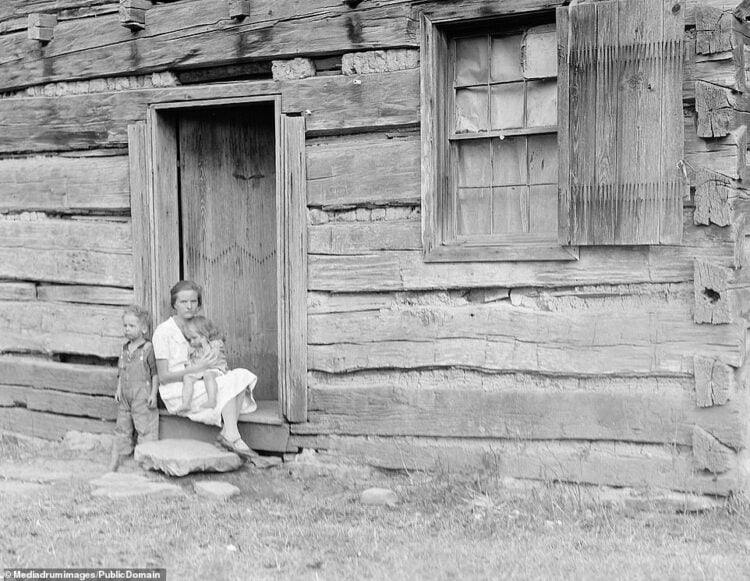
Competence. They knew how to do things — like, everything! They learned real, physical, practical skills they could use every day. From the earliest ages, they learned how to feed themselves, clothe themselves, fix things, grow things, and even invent things. When a child becomes competent in any skill, their confidence grows, and this is something a classroom doesn’t give you.
Thrift as a virtue, not a hardship. Depression-era survivors didn’t experience frugality as deprivation. Instead, of a throwaway mentality, they really did, “Use it up, wear it out, make it do, or do without.” Gordon Peterson’s mother saved every leftover, no matter how small. Even a spoonful of vegetables went into the refrigerator. Every Tuesday she cooked up everything that had accumulated during the week — cooked vegetables, bits of pork and chicken, and even leftover soup or a casserole — then went shopping Wednesday morning. He couldn’t remember her ever throwing out spoiled food, because she simply didn’t let it get that far.
Kate Redden grew up in a New York household where aluminum foil was finger-pressed flat and reused, brown paper bags became garbage bags or book covers, and worn-out clothes became rags. When the rags wore out, they were cut into strips, braided together, and sewn into rugs. Nothing left that house without being used up completely.
Delayed gratification. The Saturday movie matinee was special because you saved and waited for it. Strawberries in June were extra special because there were no strawberries in February, unless you had used last summer’s batch to make jam.
Lynn Vielbaum’s husband Frank had watched his family get evicted and spend a night on the sidewalk surrounded by piles of everything they owned. For the rest of his life he never went into debt, putting off purchases until he was certain he had the money to pay cash, in full. This wasn’t because he was a miser. In fact, at his memorial service, when the speaker mentioned how thrifty Frank was, the whole room laughed, because they all knew Frank. He had learned the way to avoid ever sleeping on the sidewalk again was to delay wants, save and budget for them, and then enjoy the purchase without any regrets.
Family identity. When you work together toward the same goal, like filling the root cellar with crops you pulled from the ground together, you become part of something bigger than just yourself. Dan, a Midwesterner who grew up hearing Depression stories from every branch of his family, described how his grandfather’s family had a once-a-month “depression food” meal together — beans and cornbread, rabbit or squirrel, potatoes, oak leaf tea, chicory coffee, and vinegar pie for dessert.
His grandfather started each of those meals with a prayer of thankfulness and closed it with, “May we never forget.“ When the meal was done, the family spent hours around the table just talking — about problems, joys, and how the family managed the challenges of that day and time. And they were deliberate about remembering. They wanted their kids and grandkids to know where they came from and what their people were made of. That’s how a family forms an identity.
Neighborliness
Carol’s grandmother was born in 1900 and lived to be 96. On her 92nd birthday, someone asked her what she considered her best years. Her answer: the Great Depression, and her reasoning made sense. Nobody was better than anyone else or looked down on someone because they had less. They all pulled together to survive, the whole neighborhood.
She described block dinners where every family brought whatever they could — a cooked vegetable, a loaf of bread, a dish of some sort (my Nana would have brought her Shlumgum), and the whole community made sure every family on the street had a hot meal that night. When someone was sick or a baby was due, the neighborhood showed up.
This is hardly the experience in most neighborhoods today. Carol commented that she doesn’t even know her neighbors anymore. People want to be left alone, and neighborliness has become more and more rare.
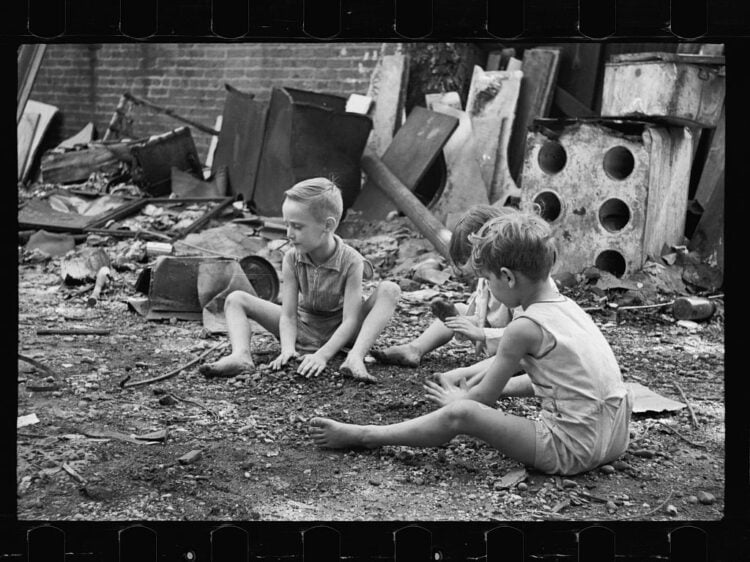
Resilience This was a natural and predictable result of experiencing and learning things the hard way. Nobody sat down and taught these kids, “Here’s how to be resilient.” They naturally learned this by getting through hard times the only way you can — by getting up every single morning and doing what has to be done.
How Does Your Family Measure Up?
What We Can Take From This
You don’t have to manufacture your own Great Depression experience at home to give your kids some of what those kids had. The research on this is pretty clear. Kids who do real household work, tasks that are significant, not “busy work”, and contribute to the family and household in a significant way, grow up more confident, more capable in handling life’s ups and downs.
They also grow up knowing all the practical things, like how to cook, do laundry, grow a garden, and manage their own money. Astonishingly, there are a lot of adults who lack these basic skills!
The use it up, wear it out, make it do, or do without mindset didn’t make Depression-era kids miserable. It made them resourceful. There’s a reason people who lived through those years are often described by their own kids and grandkids with awe. They could do things. They knew things, and they didn’t panic when life got hard.
We can choose to raise our kids the same way. Not because we’re headed into hard times, although that’s worth thinking about, but because capable kids become capable adults. Confident kids who make smart decisions become adults, trained and ready to do the same.
So, give them a little plot of their own in the backyard and a few vegetable seeds to sow. Ask them to make dessert for the family, and if they mess up, let them try again. Give them some real responsibility and then step back. I think they’ll surprise you, and more importantly, they’ll surprise themselves.
Love this article! I, too, I am a product of depression era parents. I know what it is to eat lettuce with sugar sprinkled on top for a snack; a ketchup sandwich, another snack with food items always at the ready in the kitchen. I survived and and I am all the more resilient for it
The stories you have here echo the stories that I heard form my parents who grew up in the Depression. They passed a lot of those same skills onto me and my brother. Today’s kids live in abundance, but from what I see coming they are going to live in scarcity in the not too distant future.
My parents both grew up as the youngest of 8 children during the Depression in Brooklyn. In my mother’s family, as the older kids grew up and got jobs, they continued to live at home and gave their income to their mother, who stretched every penny to feed the family, while putting cardboard in her shoes to make them last longer. Some of their uncles also came to live with the family. It must’ve been crowded in their two-story row house, but that’s just the way it was. Growing up in the suburban middle class of the 1950s, my brother and I often heard our Mom say, “You kids have no idea how good you have it.” I think we are all about to find out just how fortunate our lives have been. Thank you, Lisa, for this article.
I’m so happy you enjoyed this article and for the memories it brought back to you!
Great article! It echoes so many stories I heard from my parents and grandparents while growing up. Thank you!
You’re welcome! I’m so glad you enjoyed it.
I didn’t grow up during the Depression but my parents did. My Dad made most of our toys and was continually repairing our bicycles…we learned how to make the repairs as well as we grew older. One year, my Dad even “made” our Christmas tree. He used a length of closet pole, drilled holes at an upward angle, and inserted branches cut off of trees in a Christmas tree lot, and secured them with wire and screws.
I made my own sidewalk racer(s) using recycled wheels, skate wheels, etc., etc. My Dad had a well-stocked workshop and all four of us boys had our own tools and could use Dad’s homemade jigsaw (with permission). Dad always scrounged whatever he could to build a playhouse for the girls (2 sisters), a shack for us boys, and even a small church for my youngest brother. He sometimes went to the city dump to scrounge old windows, used siding, used beams, etc.
I used the library a LOT growing up and I made my own magic tricks using the tricks and illusions shown in those library books. I even performed once in public and was a “hit” with my sleight-of-hand and my homemade illusions.
My Mom was musical and taught all of us piano. She could read music and play by ear. We all took music lessons and “paid” for them by babysitting and mowing lawns. All of our instruments were used, but satisfactory and we had the ONLY Family Band (8 of us including our parents) in our city of 25,000 and performed semi-regularly and we were once in a local parade. My oldest brother still has the trophy we won at that event.
I spent many days roaming the 25,000 acre Crocker Estates, aka San Bruno Mountains, and kept lizards and snakes and the insects to feed them. We also raised parakeets and sold them when that was the “craze”. We tended our many pets including mice, pet white rats, a guinea pig, a pigeon, a rabbit, cats, dogs, reptiles, goldfish, etc., which taught us responsibility, as well as our jobs of baby sitting, paper routes, lawn care jobs, and when we reached our upper teen years we worked at local stores as sales persons and janitors. That’s how I paid for my college tuition.
I had a wonderful childhood, played with the neighborhood kids, travelled all around our city on bicycles with friends and siblings and the only rule was “be home before dinnertime.”