
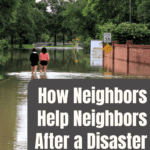
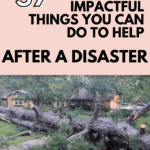
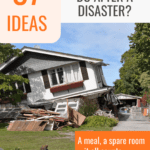
When Hurricane Harvey hit our community, I saw something truly amazing. Instead of waiting for organizations like FEMA or the Red Cross, they just started helping each other in every creative way they could think of. This list came straight from what I saw happening around me: 27 practical, real-world ways ordinary people stepped up with boats, chainsaws, hot meals, help with laundry, and guest rooms. The next time you’re wondering how you can best help someone or an entire community in need, refer to this list.
After a disaster, one of the most common feelings isn’t helplessness — it’s not knowing how to help. You want to do something, but donation drives feel impersonal and you’re not sure a check to a big charity will reach the people who actually need it. I’ve witnessed several major disasters and saw for myself the types of help that made a difference. This list is for people who want to help in ways that are immediate, practical, and make a difference.
Some of the links in this post may contain affiliate links for your convenience. As an Amazon Associate, I may earn a small commission from qualifying purchases without any increase in price to you.
This article updated with new information and tips, June, 2026.
Hurricane Harvey taught me more about community than any preparedness course ever could. I had written an entire book about preparedness and taught prepping classes for years, but in the days after the storm, my local forums lit up with offers I never would have thought of.
A man with a chainsaw was out clearing elderly neighbors’ yards within hours after the hurricane. Moms offered hot plates of food, grocery shopping trips, childcare, and even laundry service to families whose homes had been devastated the the flooding. A former military guy organized a bicycle information network across flooded roads. What I witnessed was a masterclass in neighbors helping neighbors, and what I learned, first hand, is the most effective disaster relief rarely comes from the top down. It starts with churches and neighborhoods.
In fact, it was the churches who were the first boots-on-the-ground. I hadn’t realized how prepared they already were with supplies, phone chains, community contacts, and an outreach using social media and their own member directories. Inside 24 hours, they were offering meals, cases of water bottles, cleaning supplies, a place to sleep, and work crews to help families muck out their flooded homes.
When you see people in your community in desperate straits, wanting to help but not knowing how is a frustrating feeling. Writing a check to a large organization is fine, but it’s not the only option and often not the most effective one since you never know if your donation made it to the people in need. Here are some ways I saw this play out after Hurricane Harvey to give you a few ideas to provide real, immediate help when it matters most.
Physical Help
- Cutting up wood with a chainsaw and helping clear yards of storm debris, especially for elderly neighbors and when roads were blocked
- Showing up at road closures and delivering water to volunteers and first responders stationed there
- Boat owners joining rescue efforts. The mayor of Houston put out a call and the response was overwhelming.
- A family with acreage opening their property to horse owners who needed emergency shelter for their animals
- Offers to help with home cleanup that started with hauling out damaged furniture, debris removal, mucking out flooded rooms. This was important because mitigation companies were overwhelmed with calls and had appointments scheduled out for weeks, and a flooded home need immediate attention.
Community Coordination
- Organizing a bicycle information route. Volunteers on mountain bikes riding through affected neighborhoods to check water levels and relay information to shelters and local authorities.
- Neighborhood clean-up crews sweeping away leaves and debris blocking drainage holes
- Social media groups and pages keeping everyone informed of the help available as well as updates for trash removal and help from the city and county
- Churches setting up organized free “stores” where people in need can drop by and take what they need
- Churches coordinating with each other to make sure the entire community got the help they needed.
- Toll roads offering free passage during and after the disaster
- Companies offering free legal information to employees before they file insurance claims
- Cellphone companies setting up tents where you could charge your phones and have internet access
- A local business offering free photo salvage service
- Homeschool families setting up a dedicated help page where families can post needs and others can donate supplies
- A large furniture store opening its doors to anyone needing a cool and comfortable place to relax and sleep
- Calling a local church if you don’t know where to start. Every church in town was involved in one way or another
- Collecting packing materials like cardboard boxes and bubble wrap for families packing up damaged homes
- Community volunteers learning how to become Zello dispatchers to direct and organize other volunteers on their routes delivering supplies. Read a thorough review of using Zello for emergency communication.
- Families providing meals to the local fire and police stations
Food & Household Help (including Kids & Pets)
- Doing laundry for emergency workers pulling 24/7 shifts
- Doing laundry for people staying in shelters. One company also offered to pick up wet laundry and move dry clothes between locations.
- Cooking hot meals and taking them to neighborhoods hit hard. “We just take plates of food and ask if anyone is hungry.”
- Rounding up large electric fans and generators to help dry out homes and businesses.
- Local restaurants offering free meals to anyone who could reach them
- Taking snacks, water bottles, sandwiches, and energy bars to local fire stations
- Having guest rooms ready for strangers who need a place to stay
- Pillows and bedding given to shelters, churches, and displaced families.
- Stay-at-home moms babysitting for volunteers, emergency workers, and families dealing with cleanup
- Caring for pets for families overwhelmed with cleanup, anything to relieve one less worry
- Rescuing stray pets, caring for them, and working to reunite them with owners
- Children helping pack snack and hygiene kits for evacuees
- Delivering pizza or meals directly to families in need
- Women putting together gift bags with personal care products and delivering them to other women in hard-hit areas
- Delivering meals and hygiene supplies to families living in hotels. This went on for many weeks.
Ultimately, this came down to each individual and business finding a way they could uniquely contribute to the recovery of the community.
- A local furniture store offered free gift certificates for families who have lost furniture and beds.
- An optometrist gave free contact lenses to those who lost theirs in the flood.
- One homeschool organization taught a free webinar, “how to homeschool”, for families whose kids had no school to return to
- Apple offered to replace flooded iPhones for free.
- One large school district gave free breakfasts and lunches to all students for an entire month
- The IRS got into the spirit of things and postponed tax due dates!
Whatever your circumstances, you CAN find ways to help! Inventory your own skills, talents, and the amount of time you have, and you will almost certainly find your own creative way to offer support and comfort.
The Blessing of Social Media
Social media doesn’t get enough credit as a disaster relief tool. A televised fundraiser with celebrity bands can raise millions of dollars, but it can’t bring you a hot meal, watch your dog, or help you haul waterlogged furniture to the curb — and all too often, those millions of dollars seem to disappear into the pockets of the organizers.
Real help, the hands-on kind, is what neighbors and communities are for. Facebook groups, NextDoor threads, and WhatsApp chats become real-time coordination hubs. In minutes they can match people who need help with people who have something to offer. Someone needs food for their pets, and in moments, that need can be met.
A few social media platforms to know:
- Facebook groups and pages
- WhatsApp for quick messaging
- Nextdoor.com
- GroupMe for quickly coordinating groups of specific people or businesses
- TikTok for any video-savvy person or group who can put the call out for help
- Zello phone app to turn your phone into a walkie-talkie
Anyone, Anywhere Can Be Useful
Hurricane Harvey taught me that the most powerful relief network isn’t FEMA or the Red Cross. Those organizations have cumbersome and confusing processes and schedules that can make recovery more difficult. Real help comes from the people who already know each other or are willing to meet as strangers and act like neighbors.
I’ve never forgotten the young man who came to my door to pick up gas cans for his generator. We’d only ever talked online. He left with full cans, and I went back inside knowing I’d actually done something that made a difference to him and his familly and made a new friend at the same time.
That’s what this list is really about. After a disaster of any kind, even something like a job loss or a major illness, it’s just people using what they have to help whoever is in front of them. The most ordinary person with limited resources can make a big difference in the lives of someone in need.
As much as I enjoy learning from various preparedness sites, I always find it depressing how many of the people say that when disaster strikes that the people turn into savages. You are an eyewitness that that is not inevitable but that the opposite is just as or more likely to occur (of course I know not EVERYONE will be as noble and some perhaps hostile).
Thank you for sharing! In fact our neighborhood flooded last year thanks to Mathew, Our house was spared but many homes on our street were not. I was able to make meals for some families and watch a pet dog for one. I saw both those items in your list! There are so many ways to help
This is a wonderful article I came across..texas and Harvey were and are horrible situations..i have friends who have survived in Puerto rico..lots of problems there..my friends just had a son fly in from ca. With 600 water filters..should I send this article or not..anu more ideas from you folks for a devastated island…thanks for your input..