


Sprouting seeds is one of those skills that sounds more complicated than it is. All you need is a mason jar, some water, and two minutes twice a day, and in three to five days you have fresh, nutrient-dense food growing on your kitchen counter. There’s no need for a garden, soil, and no electricity required. This guide covers the best beginner seeds for sprouting, exact steps for sprouting at home, how long seeds stay viable in storage, food safety basics, and how to fix the most common problems that trip up first-timers.
Sprouting seeds is one of the simplest ways to grow fresh, nutrient-dense food right on your kitchen counter, no garden required. But many beginners ask an important question: how long do sprouting seeds last? Whether you’re storing seeds for future use or wondering how long fresh sprouts stay good in the refrigerator, understanding shelf life and safety is key. In this guide, I’ll walk you through how to sprout seeds at home, how long they remain viable in storage, and how to keep your fresh sprouts safe and delicious.

Some of the links in this post may contain affiliate links for your convenience. As an Amazon Associate, I may earn a small commission from qualifying purchases without any increase in price to you.
In this article
- What Are Sprouting Seeds?
- Why Sprouting Seeds Is So Popular in Preparedness Circles
- How Long Do Sprouting Seeds Last?
- Best Sprouting Seeds for Beginners
- Step-by-Step Guide: How to Sprout Seeds at Home
- Are Sprouts Safe? Important Food Safety Tips
- Common Sprouting Problems and How to Fix Them
- The Final Word
- Frequently Asked Questions
- You Might Also Like…
- Want More Useful Info From Survival Mom?
Updated with current tips and recommendations, February 2026.
What Are Sprouting Seeds?
Sprouting seeds are edible seeds that are grown briefly in water and air until they begin to germinate and produce small shoots. When a seed begins to sprout, it wakes up from dormancy and starts converting its stored nutrients into energy for growth. During this short germination stage, usually just a few days, the seed produces a tender shoot that can be eaten raw or lightly cooked.
You’ve almost certainly eaten (mung) bean sprouts — the popular ingredient in Asian dishes like Pho, Lo Mein, Pad Thai, and Bibimbap and sprouts are popular in salad bars.
Some of the more common sprouting seeds include:
- Alfalfa
- Broccoli
- Mung beans
- Lentils
- Radish
- Clover
Sprouting does not require soil, sunlight, or special equipment, and that alone makes this hobby a no-brainer. All that’s needed is clean water, proper drainage, and a few days at room temperature. In just three to five days, a jar of dry seeds can become a bowl of fresh, crisp sprouts, ready to eat.
What Does It Mean to “Sprout” a Seed?
Sprouting is when the seed becomes a plant, putting out roots, shoots, and leaves. In other words, it has germinated. The shoots and leaves, the sprouts, are harvested and eaten. They are easily digestible and nutritious, and add a nice crunch to other foods, like sandwiches and as a topping for salads and stir-frys.
Sprouts vs. Microgreens vs. Seedlings: What’s the Difference?
In restaurants and grocery stores, you’ll likely see these terms and have wondered if they’re describing the same food or if each one is a little different.
The difference between these three categories of tiny plants is the length of time allowed for their growth, and amazingly, their nutrients change as they grow from one form to another.
Sprouts
Sprouts are seeds that have just begun to germinate. They are grown in water without soil and harvested within 3–5 days. Both the seed and the young shoot are eaten.
Sprouts are rich in enzymes and certain vitamins that increase during germination, including vitamin C, B vitamins, and antioxidants. Because the entire seed is eaten, you also get the seed’s original protein and fiber. That makes these tiny sprouts nutritional powerhouses.
Microgreens
Microgreens are young vegetable greens grown in soil or a growing medium. They are harvested after the first true leaves develop, usually 7–21 days after planting.
Unlike sprouts, only the stem and leaves are eaten. When I grow them, I use a pair of scissors to cut off only the top portion of the green, and the root and seed hull are discarded.
Microgreens often contain higher concentrations of vitamins and antioxidants than mature vegetables. As the first true leaves develop, levels of vitamin C, vitamin E, and carotenoids typically increase.
Seedlings (Baby Greens)
Seedlings, sometimes called baby greens, are allowed to grow longer than microgreens. They develop more mature leaves and a stronger root system.
Seedlings (baby greens) begin shifting toward a more mature plant nutrient profile. They still contain strong vitamin and mineral content but usually have lower enzyme activity than sprouts and slightly lower antioxidant concentration per ounce than microgreens.
Quick Comparison
| Feature | Sprouts | Microgreens | Seedlings |
|---|---|---|---|
| Growing Medium | Water only | Soil or grow mat | Soil |
| Light Required | No | Yes | Yes |
| Time to Harvest | 3–5 days | 7–21 days | 3–6+ weeks |
| Edible Parts | Seed + shoot | Stem + leaves | Leaves |
| Best For | Quick nutrition | Flavor & garnish | Small-scale gardening |
If sprouting has you thinking about growing more of your own food, planning ahead makes all the difference. I created a simple Garden Assessment to help you map out your growing zone, planting dates, and what your family actually eats.
You can download the Make Your Next Garden Your Best Garden Assessment here.
Why Sprouting Seeds Is So Popular in Preparedness Circles
Sprouting seeds has become a favorite skill among preparedness-minded families for one simple reason: it turns a small jar of dry seeds into fresh food in just a few days. They can be sprouted at any time of the year, with or without power, and the process is simple enough for children to learn.
Sprouting seeds are one of the few foods that fit easily into a long-term food storage plan and still provide fresh nutrition. Most long-term food storage consists of shelf-stable staples like rice, beans, pasta, and canned goods. While those foods provide calories, they don’t always provide fresh nutrients, especially vitamin C and antioxidants. Sprouts provide those in abundance.
Beyond being highly nutritious and easy to grow, sprouting has other benefits, too.
Fresh Food Without a Garden
Sprouts require no soil, no backyard, and no special lighting. A mason jar, clean water, and a countertop are all you need. That makes sprouting accessible to apartment dwellers, retirees, and anyone who doesn’t want to maintain a full garden but wants to maximize the nutrients they get from food.
Nutrition During Power Outages
Unlike many fresh foods, sprouts don’t require electricity to grow, making them useful during a power outage. Imagine adding intensely nutritious food to your meals without the need for special lighting or temperature control.
Long Storage, Short Growing Time
Sprouting seeds store for years when kept cool and dry. That long shelf life makes them ideal for food storage plans. Yet unlike many emergency foods, they don’t stay dormant forever, they can quickly become something fresh and alive. Proper storage makes a big difference, just like with other long-term food storage basics.

Small Space, Big Return
A single tablespoon of seeds can produce a surprising amount of food. Because sprouts are lightweight and compact, they fit easily into even modest food storage systems.
For families who want a simple, affordable way to add fresh nutrition to their preparedness plan, sprouting seeds check all the boxes: low cost, minimal equipment, long storage life, and fast results.
Shelf Life and Compact Storage
Sprouting seeds have a shelf life of 1 to 5 years, depending on the variety. Refrigerating can double the lifespan, while freezing can extend it 4 to 5 times. Learn more about sprouted seeds’ shelf life and storage here.
Most sprouting seeds are very small but grow exponentially. A single pound of alfalfa sprouting seeds, for example, can produce 7 pounds of edible food!
How Long Do Sprouting Seeds Last?
Sprouting seeds typically last 2 to 5 years when stored properly. Some varieties can remain viable even longer if kept in cool, dry, airtight conditions. Once the seeds are sprouted, however, fresh sprouts usually last only 3 to 7 days in the refrigerator.
Understanding both stages, dry storage and after sprouting, helps you plan realistically and reduce waste.
How Long Do Sprouting Seeds Last in Storage?
Most sprouting seeds remain viable for 2–5 years, depending on the type of seed and how they are stored.
Seeds last longest when they are kept:
- In an airtight container
- In a cool location (ideally below 70°F)
- Away from humidity
- Out of direct light
Alfalfa, broccoli, and clover seeds often stay viable toward the longer end of that range. Larger legumes like lentils and mung beans may gradually lose germination strength after several years.
Seeds don’t suddenly “expire.” Instead, their germination rate slowly declines. If older seeds sprout slowly or unevenly, they may still be usable, just test a small batch before committing to a full jar. I do this by placing a few seeds between damp paper towels, making sure they remain moist (but not soaked) for 3 or 4 days. I can quickly see whether or not they are still viable for sprouting.
How Long Do Fresh Sprouts Last After Growing?
Fresh sprouts typically last 3 to 7 days in the refrigerator.
To maximize freshness:
- Rinse and drain thoroughly before refrigerating
- Store in a breathable container or loosely covered jar
- Keep them cold but not wet
Discard sprouts immediately if they become slimy, develop a sour odor, or show visible mold.
Because sprouts are moist and delicate, they have a short shelf life compared to dry seeds. For best results, grow small batches that can be eaten within a few days to ensure they are at their highest level of nutrients.
Can You Extend the Shelf Life of Sprouting Seeds?
Yes, you can significantly extend the shelf life of dry sprouting seeds with proper storage.
For longer storage:
- Use airtight containers such as mason jars or sealed food-grade buckets
- Add oxygen absorbers for multi-year storage
- Store in a cool pantry, basement, or refrigerator
- Keep humidity as low as possible
Freezing dry seeds is possible if they are completely moisture-free and sealed, but avoid temperature fluctuations once removed from storage.
As for fresh sprouts, refrigeration is the only practical way to slow spoilage. Freezing sprouts is not recommended, as it destroys their texture. Imagine freezing bean sprouts — with their high water content, they’d become mushy and inedible. Same principle applies with most other sprouts.
Best Sprouting Seeds for Beginners
Fastest Sprouting Seeds
If you want quick results, some seeds sprout noticeably faster than others. Many varieties begin showing tiny tails within 24–48 hours and are ready to eat in just a few days. These varieties are also among the most forgiving for beginners.
Radish (3–4 days)
Radish sprouts are one of the quickest to grow and add a fresh, slightly spicy flavor. They germinate rapidly and are very reliable.
Broccoli (3–5 days)
Broccoli seeds sprout quickly and produce mild, tender greens. They’re popular for their nutritional density and consistent germination.
Alfalfa (4–5 days)
Alfalfa sprouts grow fast and produce a classic, mild-flavored sprout commonly used on sandwiches and salads.
Mung Beans (2–4 days)
Mung beans are among the fastest of all, especially if you prefer thicker, crunchier bean sprouts. They’re very forgiving and easy for beginners.
Lentils (2–4 days)
Lentils sprout quickly and are hearty enough to be added to soups and stir-fries after a short cooking time.
Most Nutritious Sprouts
While all sprouts provide fresh vitamins and enzymes, some varieties are especially known for their nutrient density. This is especially useful if you want to ensure your family’s diet is nutrient-dense and budget-friendly. Here are a few standouts:
Broccoli Sprouts
Broccoli sprouts are widely recognized for their high levels of sulforaphane, a naturally occurring antioxidant compound. They also provide vitamin C and fiber, making them one of the most nutrient-dense sprouting options per ounce.
Red Cabbage Sprouts
Red cabbage sprouts are rich in antioxidants and contain vitamin C and vitamin K. Their deep color often signals higher phytonutrient levels.
Radish Sprouts
Radish sprouts contain antioxidants and vitamin C, along with beneficial plant compounds similar to those found in mature radishes. They also add a flavorful punch to meals.
Lentil Sprouts
Lentils offer more protein than many smaller seeds. When sprouted, they become easier to digest while retaining their fiber and mineral content.
Alfalfa Sprouts
Alfalfa sprouts are mild in flavor and provide vitamin K and several B vitamins, along with trace minerals.
Best-Tasting Sprouts
This category is a bit subjectrive, but generally, these varieites are considered to have the best flavor.
Alfalfa Sprouts
Mild, slightly nutty, and crisp. Alfalfa is often the easiest introduction to sprouts because it blends well into sandwiches, wraps, and salads without overpowering other ingredients.
Broccoli Sprouts
Tender and mildly peppery. They have more flavor than alfalfa but are still easy to pair with eggs, avocado toast, or mixed greens.
Radish Sprouts
Bright and spicy, similar to a mild radish. These are excellent if you enjoy a little kick. They add flavor without needing extra seasoning.
Clover Sprouts
Soft, slightly sweet, and delicate. Clover sprouts are similar to alfalfa but a bit sweeter and very pleasant in cold dishes.
Pea Sprouts (Shoots)
Fresh and slightly sweet, with a flavor similar to fresh garden peas. These are technically closer to microgreens but are popular for their appealing taste.
Step-by-Step Guide: How to Sprout Seeds at Home
Step 1: Choose the right seeds
Use seeds labeled for sprouting (food-grade). Avoid garden seeds unless the package specifically states they are safe for sprouting.

Step 2: Measure your seeds
Start small so you don’t end up with more sprouts than you can eat. You’ll be surprised by how quickly just a small amount of seeds will fill your sprouting container.
- Small seeds (alfalfa, broccoli, clover, radish): 1–2 teaspoons
- Larger seeds/legumes (lentils, mung beans): 1–2 tablespoons
Step 3: Rinse the seeds
Put the seeds in a clean jar or sprouting container. Add cool water, swirl, and drain. This removes dust and helps prevent off smells.
Step 4: Soak the seeds
Add fresh water and soak:
- Small seeds: 4–8 hours
- Larger seeds/legumes: 8–12 hours
Then drain completely.

Step 5: Drain well and keep the jar angled
After soaking, drain thoroughly. Set the jar upside down at an angle (mouth down) in a bowl or dish rack so excess water can drip out. Sprouts do best when they’re damp, not sitting in water.
Step 6: Rinse and drain 2–3 times a day
Rinse with cool water, swirl gently, and drain very well.
- Most homes do fine with morning + evening
- In hot/humid weather, rinse 3 times daily to keep them fresh
Step 7: Keep them in a good spot
Store the jar at room temperature, out of direct sunlight. A countertop is fine. You don’t need light at first. Once tiny leaves form on seeds like broccoli or alfalfa, you can give them indirect light for a few hours to “green up.”
Step 8: Know when they’re ready
Most sprouts are ready in 3–5 days, depending on the seed.
- You see short shoots and (for many seeds) tiny leaves
- They smell fresh and clean
- They look plump and alive, not slimy
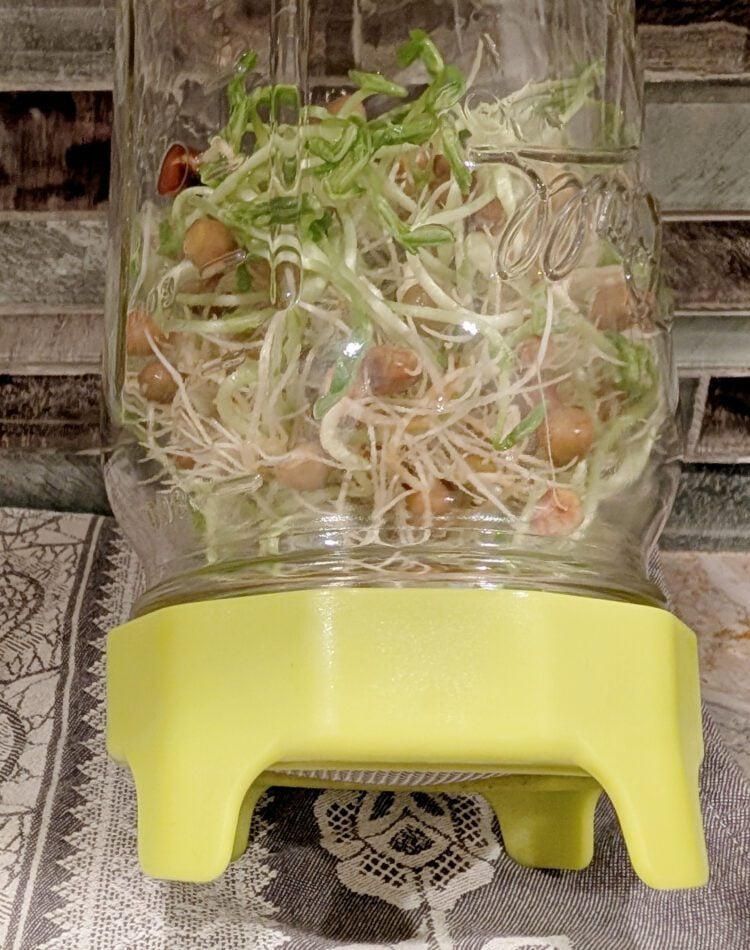
Step 9: Final rinse and optional “seed hull” removal
Do a final rinse and drain. For small seeds, you can remove some hulls by:
- Filling the jar with water
- Swirling gently
- Skimming off hulls that float
Step 10: Dry and store in the fridge
Drain very well. If they’re dripping wet, they spoil faster. Then store:
- In a clean jar or container
- With a paper towel to absorb moisture (optional but helpful)
- Loosely covered (sprouts do better with a little airflow)
Fresh sprouts typically last 3–7 days refrigerated.
Recommended Sprouting Supplies
Mason Jar with Screen— With just a Mason jar and a sprouting lid with screen, you have all you need. Line up a few jars with screen lids and quickly reap a multi-sprout harvest.

Four Tray Sprouter— A multi-tiered tray system allows you to sprout more than one variety at a time. This is the one I’ve been using.
High Quality Seeds — I only buy seeds from True Leaf Market. The company has a huge variety of seeds (some I never knew existed) and the quality is always excellent.
PRO TIP: Stagger the growth of seeds by starting the trays a couple of days apart so you have a continual supply of fresh sprouts.
Are Sprouts Safe? Important Food Safety Tips
Because sprouts are grown in warm, moist conditions, they can sometimes support the growth of bacteria if seeds are contaminated or hygiene is poor. Fortunately, you’ll know immediately if your sprouts have gone bad just by the smell.
Why Sprouts Can Grow Bacteria
Sprouts grow in conditions that are ideal for germination: warmth, moisture, and airflow. Unfortunately, those same conditions can also allow bacteria such as Salmonella or E. coli to multiply if they are present on the seed.
The key point is this: contamination, when it occurs, usually originates with the seed itself — not the sprouting jar.
Because sprouts are typically eaten raw, there is no cooking step to eliminate bacteria. That’s why safe seed sourcing and clean handling are important.
How to Reduce Risk at Home
You can reduce the risk of any contaminants by:
- Using high-quality seeds suitable for home sprouting produced in a food-grade facility
- Always using clean hands, clean water, and clean equipment
- Rinsing and draining well
- Smell before eating
- Refrigerate promptly once the sprouts are ready
Who Should Avoid Raw Sprouts?
Certain individuals are more susceptible to foodborne illness and may want to avoid raw sprouts or cook them before eating. This includes:
- Pregnant women
- Young children
- Older adults
- People with weakened immune systems
For healthy adults using safe sprouting practices, the risk is generally low, but awareness is important.
Common Sprouting Problems and How to Fix Them
As simple as sprouting can be, there’s still a learning curve. If your sprouts don’t look or smell right, don’t give up, most problems are easy to correct with a small adjustment, typical for any home garden.
Why Aren’t My Seeds Sprouting?
If your seeds fail to sprout or only a few germinate, the cause is usually one of these:
Old or poorly stored seeds
Seeds lose viability over time. If they were exposed to heat or moisture before purchase, germination rates may be low.
Water that’s too hot or too cold
Use cool or room-temperature water. Hot water can damage seeds.
Insufficient soaking time
Some seeds need a full 8–12 hours of soaking before they wake up.
Improper drainage
Seeds sitting in water can suffocate and rot instead of sprouting.
Room temperature too cold
Most seeds sprout best between 65–75°F.
If you’re unsure whether seeds are viable, test a small batch first. If only a few sprout after several days, the seeds may be past their prime.
Mold vs. Root Hairs — How to Tell the Difference
This is one of the most common concerns for beginners.
Root hairs are normal and harmless. They look like tiny white fuzz near the root tip and often appear after rinsing. They are evenly distributed and disappear when rinsed.
Mold, on the other hand, tends to:
- Form in patches
- Look gray or web-like
- Smell unpleasant
- Spread across multiple seeds
If there is any sour smell or visible growth that looks patchy and spreading, discard the batch and start fresh.
When in doubt, throw it out.
Why Do My Sprouts Smell Bad?
Healthy sprouts should smell fresh, clean, and slightly green.
A sour, musty, or unpleasant odor usually means:
- They weren’t drained thoroughly
- They sat in standing water
- They weren’t rinsed often enough
- The room temperature is too warm
To prevent odors:
- Rinse 2–3 times daily
- Drain completely after every rinse
- Store finished sprouts in the refrigerator promptly
If sprouts smell off, it’s safest to discard them and begin again. Fortunately, sprouting seeds are inexpensive, and a new batch can be ready in just a few days.
Quick Troubleshooting Tips for Better Sprouts
If your sprouts aren’t turning out the way you expected, try these simple adjustments:
1. Improve drainage.
Sprouts should be damp, not sitting in water. Always store the jar upside down at an angle so excess moisture can drain out completely.
2. Rinse consistently.
Rinse 2–3 times daily, especially in warm weather. Infrequent rinsing can lead to sour smells or bacterial growth.
3. Adjust room temperature.
Most seeds sprout best between 65–75°F. If your kitchen is cold, germination may slow. If it’s very warm, spoilage risk increases.
4. Start with smaller batches.
Overcrowding reduces airflow and increases moisture buildup. Small amounts sprout more evenly and stay fresher. This is especially true for tiny seeds, like radish seeds. It’s easy to underestimate how quickly even a small amount will fill up your container.
5. Sanitize equipment between batches.
Wash jars, lids, and trays thoroughly with hot, soapy water before starting again.
6. Use high-quality sprouting seeds.
Seeds labeled for sprouting are safer and more reliable than untreated garden seeds.
7. “Green up” in indirect light.
Once tiny leaves form (for broccoli, alfalfa, etc.), place the jar in indirect light for a few hours to encourage color and improve flavor.
8. Test older seeds before committing.
Sprout a teaspoon first to check germination before using a larger quantity.
PRO TIP: If a batch fails, don’t assume you’re doing something wrong. Sprouting is a simple skill, but like baking bread or starting a garden, it improves quickly with small adjustments. Most problems are solved with better drainage and consistent rinsing.
The Final Word
Sprouting seeds isn’t complicated. It doesn’t require a green thumb, a backyard, or special equipment. It’s simply a small, repeatable habit that turns something dry and dormant into something fresh and nourishing, and it’s fun!
If your first batch isn’t perfect, try again. Adjust the rinsing, improve the drainage, or test a different seed. For families who want practical skills that actually get used, sprouting checks all the boxes. It’s affordable, low-effort, space-saving, and surprisingly satisfying. A tablespoon of seeds can become a handful of fresh, living food in just a few days.
Start simple. Keep it clean. Grow a small batch this week, and see how quickly sprouting becomes a new hobby with great, nutritious benefits.
Frequently Asked Questions
Sprouting seeds typically last 2–5 years when stored in a cool, dry, airtight container. Some seeds, like alfalfa and broccoli, may remain viable even longer if protected from heat and moisture. Once sprouted, fresh sprouts usually last 3–7 days in the refrigerator.
Yes, sprouting seeds can lose viability over time. While they may not “expire” in a food safety sense, older seeds often have lower germination rates and may sprout unevenly. Proper storage greatly extends their usable life.
You can often sprout older seeds, but success depends on how they were stored. Seeds kept in a cool, dry environment may still sprout after several years. If germination is poor or sprouts smell off, discard them.
Fresh sprouts typically last 3–7 days in the refrigerator. Store them in a breathable container and ensure they are well-drained before refrigerating. Discard sprouts if they become slimy, develop an unpleasant smell, or change color.
Freezing fresh sprouts is not recommended because it damages their texture and makes them mushy. If you need longer storage, it’s better to keep dry sprouting seeds on hand and grow fresh batches as needed.
Sprouting seeds are specifically packaged and tested for safe food use. Regular garden seeds may be treated with chemicals and are not always safe for sprouting. Always purchase seeds labeled for sprouting to reduce contamination risk.
You Might Also Like…
If you’re interested in building more food resilience at home, you might also enjoy:
- How to Stretch Meals on a Budget
- Food Storage: Where Do I Begin?
- First Steps to Setting Up a Micro-Homestead
These are the short nonsensical articles that cut the chase and add easy inexpensive calories to my diet. Thank you so much. If I had a daughter, I would want her to be just like you. thanks again
What difference is there between sprouting seed and just plain seed?
Nothing, other than is the seed going to give you a sprout that you would want to eat. Not all of them are tasty.
Lots of good info packed in here. Personally I really like the easy green autosprouter which was left out of the list. It mists the sprouts 5x/day, so all you have to do is load the tray with seeds and harvest. Also one important mention-able is that its good to soak the seeds with a tsp of food grade hydrogen peroxide in 8oz of water. This can help prevent mold and bacteria in the process.
“Messenger” … You’re so sweet! Thanks!
Hi Amy, I am helping my vegan friend to get supplies for sprouting. How much pounds of seed would a family need per person per week if they are completely vegan.
I taught the mother how to sprout as they never know about even though they are vegan. Now she hooked on it and wants to purchase seeds in bulk.
Please advise.
All the best,
Jennifer
Hi Jennifer. Lisa here. A more important question to ask is how many calories and which nutrients this family needs for their daily intake. Sprouted seeds contain a negligible amount of calories — 43 calories per 1/2 cup of sprouted radish seeds, for example. Sprouted seeds are an excellent source of micronutrients, not calories, to SUPPLEMENT a well-rounded diet.
As I can only grow in outdoor containers about 7 months of the year (SW FL) and I dislike buying produce from unknown sources I rely on sprouts. Typically I have 3 ready to eat and 3 growing. And eat 1.5-2 cups daily.
My favorites are fenugreek for the crunch, red clover and radish for sandwiches, cabbage & broccoli for salads. Inside I also grow as microgreens buckwheat, sunflower and mung beans (as a sprout the bean part raises my blood sugar too much) and I’m going to try romaine lettuce as a microgreen as I got a good buy.
I’m not fond of arugula or alfalfa but will buy the seeds if on sale.
Thanks for sharing your sprouting experience, Bellen. Fenugreek is a new one for me, so I looked it up. It has quite a remarkable list of medicinal properties! I’m wondering…what do you sprout your seeds in?
I use wide mouth canning jars with either the plastic sprouting tops or the plastic ring with stainless mesh insert. Tops can be found on Amazon or a natural food store. Both have little ‘feet’ so I manually drain the water then set upside down for further draining, usually less than a teaspoon, until the next rinse.
Draining well seems important, so I like the idea of the “feet” to elevate.
I would love to try sprouts. Where do you get your seeds from?
https://www.highmowingseeds.com/ might be an option for you, Jennifer. They have a store locator on their website and you may be able to find them locally.
I just re-ordered mung beans and alfalfa to sprout. This year I want to add buckwheat and quinoa sprouts. True Leaf has a lot of seeds for sprouting. (I’m not affiliated with them.) Mason Jar Lifestyle has some of the mesh lids with “feet”. (Not affiliated with them either.) 😀 I use sprouts in salads, Pad Thai, Egg Foo Young, and on sandwiches instead of lettuce.
Just as a FYI you need to be careful about adding just any seed for growing to use as a sprout. Some of them have been treated with chemicals to help them grow in soil.
I use and like the same lids with feet. It’s good to remind people to buy and use only seeds that are designated for sprouting/microgreens.