
Gardening doesn’t require a big yard, a big budget, or years of experience. It really just requires a willingness to stick something in the dirt, give it a bit of care, and see what happens. This covers everything a first-timer needs to get started for next to nothing: free and cheap seed-starting methods, what tools are worth buying versus skipping, how to prep soil without expensive amendments, and why even one container on a balcony counts as a real garden.
I didn’t grow up with dirt under my fingernails unless you count digging in the backyard looking for worms. My family didn’t have a farm, we only had rose bushes and flower beds, and I never had a grandmother who canned tomatoes. It was just a suburban backyard I mostly ignored until one day, years later as an adult, I stuck some seedlings in the ground and something actually grew. When I looked out my window and saw my tiny daughter harvesting blackberries, that was the beginning of my budget garden, and I’ve been at it ever since.
Here’s what I’ve learned: gardening doesn’t have to be expensive. But “cheap” isn’t quite the right word either. It’s more about being smart with where you spend and creative about where you don’t.
This article was originally written by reader, AnneMarie, and completely updated with new strategies and current information, April 2026.

Some of the links in this post may contain affiliate links for your convenience. As an Amazon Associate, I may earn a small commission from qualifying purchases without any increase in price to you.
In this article
- The Biggest Budget Mistake New Gardeners Make
- Where To Spend, Where To Save
- Get Plants for Free (Seriously)
- The Toilet Paper Tube Trick (And Other Free Seed Starters)
- Where to Find Cheap Pots and Containers
- Don’t Skimp on Soil
- Buy Good Tools at Yard Sales, Not Bad Tools at Box Stores
- Free Seeds Are a Real Thing
- Smart Watering on a Budget
- Start Small, Plant Smart
- Frequently Asked Questions
- Related Gardening Content
- Take My FREE Gardening Self-Assessment!
- Final Thoughts
The Biggest Budget Mistake New Gardeners Make
Before we talk about saving money, let’s talk about wasting it, because most beginners do, and it’s not their fault.
You walk into a big box store, you see rows of beautiful plants and seed packets, you get excited, and you buy things. Or you get a seed catalog in the mail, you’re dazzled by all the photos, and you place your order. Some of those plants die, others never produce much, and you’re not sure why. You feel like a failure and maybe give up.
Here’s what actually happened: big box stores stock what sells nationally, not what grows in your specific area. Seed catalogs are designed to dazzle and sell! That gorgeous plant might thrive in Oregon and struggle to survive a Texas summer. The store doesn’t know you. They don’t know your soil, your rainfall, your summers, or the microclimates on your property.
So, my first tip to avoid busting your budget is to buy from a local independent nursery, if you can. A good one will stock plants suited to your region. The best ones hire master gardeners who can answer your questions. When you find a garden center or nursery with knowledgeable employees, give them their well-deserved loyalty!
Yes, the price per plant might be a dollar or two more. You’ll more than make up for it by not killing things, thereby saving money in the long run.
This is the shoestring budget paradox: sometimes spending a little more in the right places saves you a lot of money overall.
Where To Spend, Where To Save
Worth spending money on
Soil & amendments
Good potting mix, perlite, compost. Cheap soil kills plants. This is the one place not to cut corners.
Quality tools
A trowel that bends on first use isn’t a bargain. Buy old American-made tools at yard sales instead of cheap new ones.
Local nursery plants
A dollar or two more per plant. Worth it — they stock what grows in your area.
What you can get for free
Plants & cuttings
Propagate from what you have. Join a local plant swap group. Ask neighbors.
Seeds
Check your public library’s seed library. Seed swaps, saving from last year’s harvest, generous gardeners.
Pots & containers
Garage sales, Aldi, reused nursery pots, five-gallon buckets. Anything that holds soil and drains works.
Compost
Kitchen scraps + dried leaves + time. Free fertilizer that improves your soil every season.
Where to be careful
Big box store plants
Stocked for national sales, not your climate. Easy to buy something that won’t survive your summer.
Hybrid seeds
Fine for beginners, but you can’t save them. Heirloom seeds cost the same and you can replant forever.
Gadgets & gear
Seed starting kits, grow light systems, fancy raised bed kits. None of it is necessary to start.
Plants outside your zone
Pretty at the store, dead by August. Know your growing zone before you buy anything.
Get Plants for Free (Seriously)
The most budget-friendly plant is one you didn’t buy.
I propagate a lot of my own plants, which sounds fancy but really just means taking a cutting from an existing plant, sticking it in soil or water, and letting it grow roots. Herbs are especially easy this way — basil, mint, rosemary. Snip a stem, put it in a glass of water on your windowsill, and in a week or two you have a new plant. I’ve done this with the grocery store basil that’s usually stocked in the produce section.
The other thing I do is participate in local plant swap groups. Check Facebook Groups or Nextdoor for gardening groups in your area. People divide perennials, root cuttings, and share seeds all the time, usually for free or a small trade. I’ve gotten plants this way that I never would have found at a nursery, and this is how my Dad got into fig tree propagation — asking anyone with a fig tree for a cutting.
Other ways to get free or nearly free plants:
- Save seeds from non-hybrid vegetables you already grew.
- Look for end-of-season clearance at nurseries. Half-dead doesn’t mean actually dead.
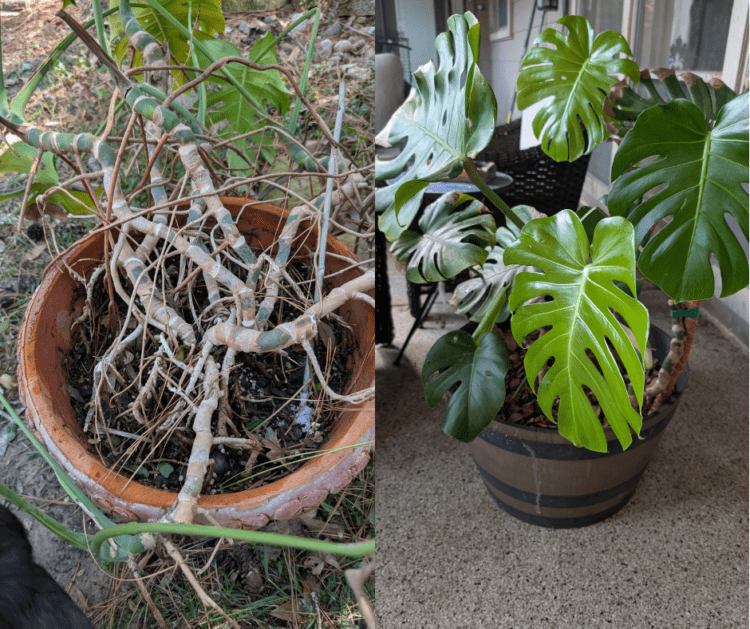
- Ask gardening friends and neighbors. Most gardeners are delighted to share divisions, cuttings, and even plants they’ve given up on but still have a bit of life left in them. That’s how I got this gorgeous Monstera. Check out the before and after pics.
The Toilet Paper Tube Trick (And Other Free Seed Starters)
Starting plants from seed is almost always cheaper than buying seedlings, and you don’t need fancy seed-starting equipment, especially at first.
One trick I’ve used is to cut cardboard toilet paper tubes in half, fill them with seed-starting mix, and use them as individual little pots. Write the plant name right on the tube with a marker. Set them on a cookie sheet or cake pan so you can move them around to catch the light, and the edges of the pan will catch the water as it drains from each “pot”. When it’s time to transplant, you can plant the whole tube directly in the ground. The cardboard breaks down on its own and the roots never get disturbed.
Other things that make perfectly good seed starters: egg cartons, yogurt cups with a hole poked in the bottom, or the plastic containers strawberries come in (great little greenhouse lids too).
For a bigger list, here are 25 different ways to get those seeds started.
Where to Find Cheap Pots and Containers
As it turned out, pots were my biggest initial expense, but once I had a large selection, I’ve used them year after year.
I’ve found great pots at garage sales for a couple of dollars. Aldi sells surprisingly decent garden supplies in spring for very little money. And nursery pots, the plain black and green plastic ones your plants come in, are completely reusable. Wash them out and use them again and again.
Other options: five-gallon buckets from hardware or restaurant supply stores, old colanders, wooden crates lined with landscape fabric, even large tin cans. As long as it holds soil and has drainage, it’s a pot.
You’ll want to have a variety of sizes as you build up your budget garden, since you’ll be moving plants from small to larger pots as they grow.
Don’t Skimp on Soil
If there’s one expense I know is coming each spring/summer, it’s bags of my favorite potting soil. I have seen plants go from suffering and barely hanging in there to rapid growth just by switching out their soil.
Here is where I will tell you to actually spend some money: soil and amendments.
Cheap potting soil is how you kill plants and then blame yourself. Good soil makes an enormous difference, especially in containers where your plant has nowhere else to go looking for nutrients. Over time, even good soil becomes more and more compacted, leaving roots nowhere to expand.
I use a quality potting mix and amend it with perlite (improves drainage and aeration) and compost. I recently started adding orchid bark since I get a lot of rain in my area and need extra help with soil drainage. Yes, this costs money. It costs less than replacing dead plants.
If you garden in the ground, composting is your best free option for soil improvement. Layer kitchen scraps (fruit and vegetable peelings, coffee grounds) with brown material (dried leaves, cardboard) in a bin made from old pallets or a repurposed trash can. It takes a few months but it’s genuinely free fertilizer.
Also around your house are these items that make great, organic fertilizer.
Buy Good Tools at Yard Sales, Not Bad Tools at Box Stores
A cheap trowel that bends the first time you hit clay soil is not a bargain. A solid wood-handled trowel from a yard sale for fifty cents is.
Old-fashioned tools with wooden handles are often better made than new cheap ones. Look for them at garage sales, estate sales, eBay, and thrift stores. Clean them up, sharpen them if needed, and they’ll last years.
Some high-quality brands to watch for:
- Ames
- True Temper
- Union Tools
- Jackson
Note: If you find an Ames or True Temper tool at an estate sale, it was almost certainly made in America. Anything new off a store shelf today is not because the company moved their production to China in 2023.
A few that are currently made-in-the-USA are:
- Hoss
- Bully Tools
- Wilcox All-Pro
You don’t need much to get started: a trowel, a hand fork, and a decent hose or watering can will get you through most of what beginner gardeners need to do.
For these supplies, ask in community Facebook groups or Nextdoor.com since many people have gardening tools and supplies they know they’ll never use again.
Free Seeds Are a Real Thing
Before you spend a dime on seeds, check your local public library.
Seed libraries have quietly taken root in public libraries all across the country over the past decade. You check out seeds the same way you’d check out a book. Take them home, grow them, and ideally save seeds at the end of the season to return. Some libraries just give them away outright, no return required.
Call your local branch and ask. You may be surprised.
Beyond the library, look for:
Local seed swaps — Garden clubs, master gardener programs, and community groups organize these. Search Facebook Events or Nextdoor for “seed swap” plus your city.
Online seed swaps — Reddit’s r/SeedSwap community is active and generous. People mail seeds to strangers for nothing more than a stamped return envelope.
Seed libraries online — Seed Savers Exchange offers a member seed library with thousands of heirloom varieties. Membership isn’t free, but the access to rare varieties you’d never find at a store is remarkable.
Your neighbors — Gardeners are some of the most generous people on earth. Ask someone with a garden if they save seeds. Odds are good they have more than they need and would love to share.
The one thing to know: seeds from libraries and swaps are often heirloom or open-pollinated varieties, which means you can save seeds from your harvest and grow them again next year. That’s the opposite of hybrid seeds from a big box store, which don’t reliably reproduce true to the parent plant.
Smart Watering on a Budget
Water can be a significant expense, so implementing water-wise gardening techniques is crucial for a budget garden. Consider:
- Collecting rainwater in barrels or large containers.
- Water deeply and less frequently to encourage deep root growth, which makes plants more drought-tolerant. Here tips and tricks for gardening in a drought.
- Mulching around your plants with straw, wood chips, or even shredded leaves helps retain soil moisture and reduces evaporation. This helps minimize the need for frequent watering.
- Building or buying affordable sub-irrigated planters, which water plants from below and significantly reduce water loss.
Start Small, Plant Smart
This is one of my best and favorite tips for shoestring gardening.
One container of herbs, three tomato plants, a small raised bed — whatever feels manageable. You can always expand next season once you know what you’re doing and what you actually enjoy growing.
The first time you eat something you grew yourself, even something small, even just a handful of cherry tomatoes or fresh basil on pasta, you’ll feel a completely disproportionate amount of pride.
And when you look out over a beautiful flower bed, a blossoming rose bush, or pots of container plants and you smile, well, that’s an important part of gardening.
Frequently Asked Questions
Absolutely. A five-gallon bucket on a patio can grow a tomato plant. A sunny windowsill can grow herbs year-round. Start with whatever space you have and work with it. The bonus here is that even with a small start, you’ll start learning about what grows and maybe what doesn’t, so if you ever have a larger space, you’ll already know what to grow.
Yes. Start with something super easy, like radishes, green onions, basil. Radishes are ready in about 25 days and are almost impossible to fail at. Everyone kills plants. Gardeners just keep going anyway, which is why I encourage everyone to start small, easy, and cheap.
Look for used tools at garage sales or online marketplaces. Repurpose containers you already have. Consider seed saving from non-hybrid plants and explore free methods of soil enrichment like composting.
Soil and amendments. Good potting mix and a bag of perlite will do more for your plants than any gadget. Don’t cheap out on soil.
Related Gardening Content
- 27 Tips from a Master Gardener
- Grow Food Fast: 13 Veggies for a Quick and Tasty Harvest
- Easily Available Household Items that Make Good Organic Fertilizer
- Learn From My Gardening Mistakes
Take My FREE Gardening Self-Assessment!
Eager to dig in and experience the joy of budget-friendly gardening? Take my FREE Gardening Self-Assessment! This helpful tool will guide you in identifying areas to focus on, figure out the best planting times for your location, and prepare for any gardening hiccups. It’s the perfect first step towards your own rewarding homegrown harvest! Download the printable today!
Final Thoughts
If you’ve been thinking you’d like to try it but are intimidated, I encourage you to just go for it! Start small, and just try it. The first time you pluck something ripe and delicious that you grew all by yourself, you’ll stand there feeling absurdly proud of yourself. Isn’t that the definition of self-sufficiency? I did it all by myself! Good luck and have fun! Start digging dirt!
Great article! I’ve also found seeds by visiting the organic section and saving seeds from the produce I’ve eaten. One year I had some amazing melons from seeds I saved from grocery store.
Also, I think I own SEVERAL garden tools, but never seem to find them when I want them! I’ve been guilty of just finding a large spoon from the kitchen to dig in my container gardens!
Glad to see someone else living the farm life in the suburbs. I was recently in Chicago. Loved the drive up there from Texas!
Thank you, Helen Ruth. What a great idea, saving seeds from the organic produce at the grocery store. I’ll have to try that one, thank you.
i started my broc. tom. cukes in toilet paper halves ….started my zuc.and beans in the carriers from dd ,bk, mc donalds told the kids hold them for me put some black cloth in them to hold the dirt ….great idea
Black plastic kills all the beneficial microrganisums.
Yes, you have to know your soil and decide if this method will be the best choice in the long run.