

This post shares 16 homeschooling tips built from more than 16 years of real experience, covering mindset, curriculum, daily structure, and building community. It also includes homeschool organization ideas for routines, supplies, and planning that don’t require being naturally organized, plus straight answers to the questions beginners ask most often: how many hours a day, the hardest age to homeschool, and whether homeschooling is even right for your family.
Anyone who homeschools will describe it as an adventure, and as with any adventure, there are ecstatic highs, discouraging lows, and everything in between. My kids are now young adults, and our homeschooling years are behind us, but I learned so much as a homeschooling mom. Here are my best tips that helped both my children and me succeed.
What Are the Best Tips for Beginning Homeschoolers?
The most important homeschooling tips for beginners:
- Don’t try to recreate a classroom at home. There’s no need for desks, bells, or set subject times
- Ease in gradually at the beginning of the year. Start with one subject the first week, adding more each week after.
- You don’t need to cover every subject every day. Even public schools teach music, art, and science just once or twice a week
- Connect with other homeschooling families early. Most of your support and resources will come from that network.
- Prioritize reading and math above all else. Everything else builds on those two skills.
- Expect to change curriculum more than once. That’s normal as you learn more about your kids interests, learning styles, and your own homeschooling philosophy.
Most homeschooling families spend 2 to 4 hours a day on core academics, far less than a public school day, since one-on-one teaching skips the transitions, group management, and repetition a classroom requires.
This article has been completely updated. July, 2026.
Some of the links in this post may contain affiliate links for your convenience. As an Amazon Associate, I may earn a small commission from qualifying purchases without any increase in price to you.
Honestly, I didn’t know what I was getting myself into when my husband and I decided to homeschool our kids. How hard could it be? I didn’t think I needed homeschooling advice. After all, not only had I been a classroom teacher for several years, but I had even taught classroom teachers how to teach!
I fully expected to achieve Master Homeschooling Mom status in no time at all.
Well, the reality of homeschooling is a whole other animal entirely. In fact, it doesn’t have much in common at all with traditional public schools. Instead, it combines the best elements of childhood, the love of learning for learning’s sake, with the comfort of a loving home. The result is a transformative experience for parents and children.
Public schools can’t touch that.
My Top Tips for Homeschoolers
Redefining What “School” Actually Means
Forget trying to duplicate a classroom environment, school schedule, and curriculum in your home. One of the saddest sights I ever saw when I was visiting a mom new to homeschooling was her son at the dining room table and a stack of nine textbooks and workbooks in front of him. There’s nothing sacred about sitting at desks, having set amounts of time per subject, or using only textbooks. In fact, up until 11 years old, my daughter didn’t even know what a textbook was!
Your kids learn how to treat others and how to respect themselves by watching and modeling your words and behavior. This is powerful. Ignore the strawman argument about homeschooled kids not being socialized. I challenge the assumption that putting 20-30 kids, all the same age, in a room for nine months is the best method for teaching empathy, self-control, patience, generosity, and other desirable traits. Often, it achieves just the opposite.
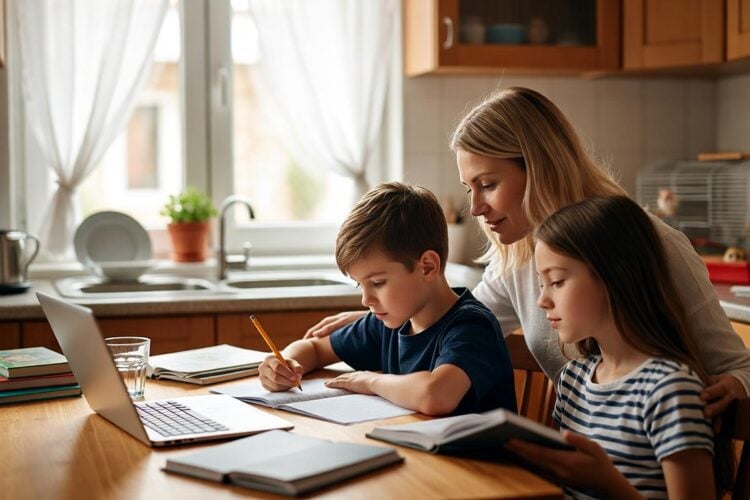
Ultimately, your role is as a facilitator to your child’s learning. There’s no need to lecture or be the one in constant control. Very often, you’ll find yourself learning something new right alongside your child. Please don’t think that because you didn’t like school, didn’t do well, or don’t have a college degree you can’t homeschool. Some of the very best homeschooling moms I ever met told me they were lucky to graduate from high school. Maybe they learned from their negative experiences what education should NOT be. Hmmm…food for thought.
Building Your Homeschool Community
Connect with other homeschooling families. It won’t take long before much of your social life involves them because, like you, they won’t be tied to a school calendar. You’ll share availability for activities, field trips, and dinner together because you have the gift of time to do those things. Depending on where you live and the homeschooling community, your kids may end up with a very diverse group of friends. Living in the Houston area, my kids played sports and hung out with kids from Germany, Qatar, South Africa, Lithuania, England — it was a true international experience right here at home.
Once you get inside the homeschooling ‘inner circle’, you’ll be AMAZED at the many resources available to you! When we lived in the Phoenix area we accessed special homeschooling classes at our Science Center. We received incredibly low rates for virtually every cultural event in town, including the ballet, opera, and museum tours.
My son was in Civil Air Patrol for four years, learning the basics of flight, rocketry, leadership, and volunteering. You can begin learning about these resources from local homeschooling email loops, Facebook groups, forums, and more! These groups also simplify finding families with kids who have similar interests. Jump in and enjoy!

Create your own club or micro-community based on the interests, skills, talents, and knowledge of your family. One year, my kids took an automotive class taught by a dad in the group, and when my kids were high school age, I coordinated with other moms to create a co-op with advanced classes taught by other parents. One mom had been a lawyer, another had been a chemical engineer. Take advantage of the wealth of knoweldge and experience around you, and don’t be afraid to launch something new.
Try to attend a homeschool conference if possible. Benefits include inspecting a multitude of curriculum, listening to inspiring speakers, and networking with others.
Choosing (and Changing) Curriculum
Don’t assume that you’ll always use the same curriculum or belong to the same homeschooling group. You’ll be surprised at how your educational philosophy evolves and how one group or activity turns out to not be the best for your family after all. Over the years, we used four different math curriculums until we finally settled on Teaching Textbooks for middle and high school.
It took us six years to finally land on Ambleside Online, my favorite curriculm ever, encompasses language, nature, history, folk music, art history and appreciation, math, geography.
As well, you can count on life throwing one curveball after another, and when that happens, you may have to switch from a hands-on curriculum style to one that is computer based — at least temporarily.
Whatever you choose, don’t be afraid to make changes. Just roll with it. Also, curriculum sales are a great way to pick up what you need without paying full price.
Use technology, but don’t become dependent on it. One year we used a 100% computer-based curriculum, and when we experienced computer problems, my kids couldn’t do any lessons until the problems were fixed! I couldn’t believe how often we had issues with it. We have tons of books on the Kindle, but when we misplace the charger, forget it!
Handling and reading real-live, actual books is such a good thing for memory and appreciation of books themselves. There’s something about holding a physical book in your hands that no screen can replicate.
If something, anything, isn’t working, give it one more try and then move on. There’s no use being a stubborn idiot about it. I loved the idea of my daughter taking gymnastics, but when it became a fight to get her to class, I gave up and we moved on to another activity. When Saxon Math was stressing her to the point of tears, we moved on to a different curriculum.
That’s part of the wonderfulness of homeschooling. It’s constantly fluid. If Mom wakes up in an awful mood because she only got three hours of sleep, school can start late, “recess” can last most of the morning, and in a worst case scenario, everyone can load up in the car and head to McDonald’s.
Apply that same grace to your school schedule, curriculum choices, extracurriculars — and everyone will have a better homeschooling experience.
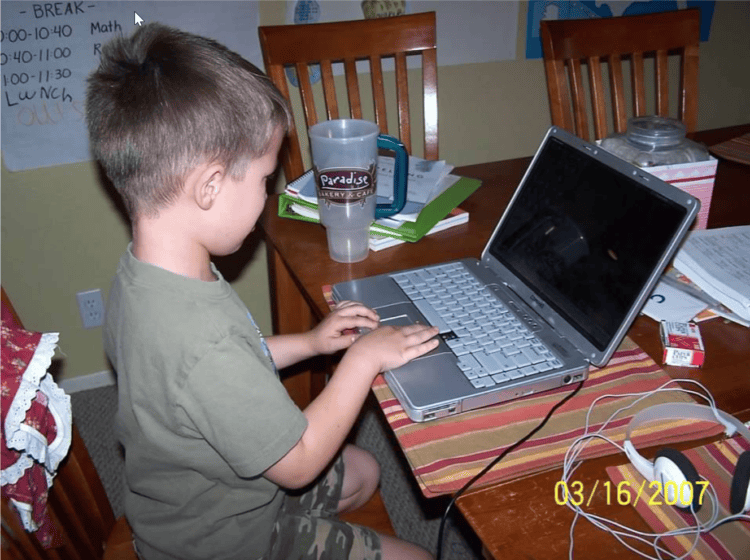
Structuring Your Homeschool Days
At the beginning of the school year, get your feet wet gently. Begin with just one subject for the first week. Add the second, maybe a third subject the next week and another subject or two the third week. This helps ease everyone back into the school year. Each year have some sort of tradition or ritual to mark the date. I took the kids to Starbucks for frappucinos in the first day of school. Sugar + loads of caffeine meant it was a good thing we were just going to do one class that day!
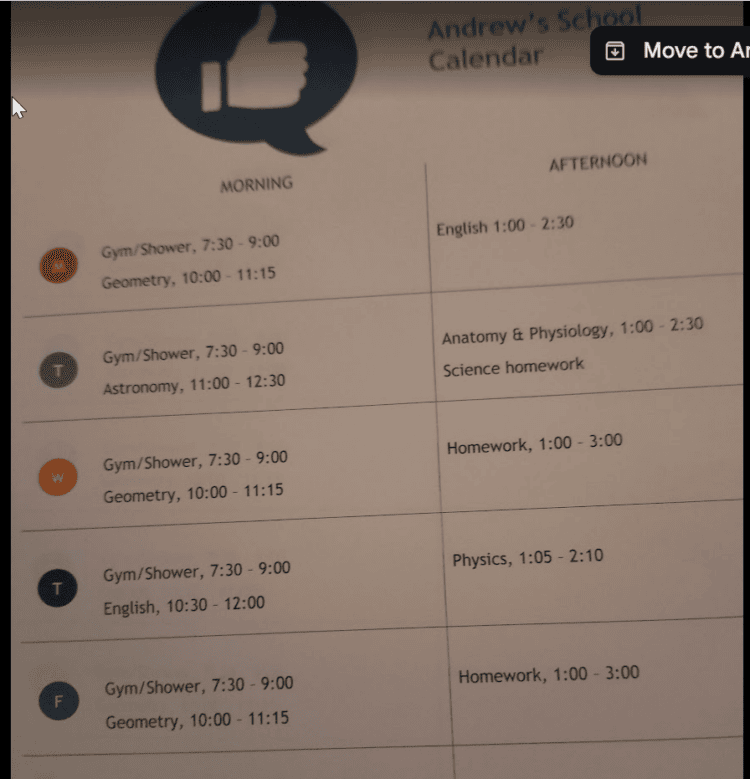
Here’s some homeschooling advice that might surprise you, but there’s no need to do every subject every day! Keep in mind that public schools offer music once a week, maybe twice. Science is taught only two or three days a week, and the same goes for history, geography, social studies, foreign language, and more. Don’t kill yourself trying to fit in six subjects every day. And here’s a closely guarded secret in the public school realm — virtually no one finishes a textbook by the end of the school year. Ever.
You’ll be surprised by how few materials you need to teach. I taught my daughter to read using the book, Teach Your Child to Read in 100 Easy Lessons. The lessons were ghastly boring, but she’s an astonishing reader! My son went through the same lessons, and one day…he could read amazingly well!
Embracing the Freedom
Reading and math are the keys to everything else your kids will learn. I can’t over-emphasize their importance. Do everything in your power to develop strong readers and little mathematicians. I read aloud to my kids through their entire school life, starting when they were toddlers, actually, and even into high school. This is a fabulous and often overlooked way to help them develop a strong vocabulary and a love of reading.
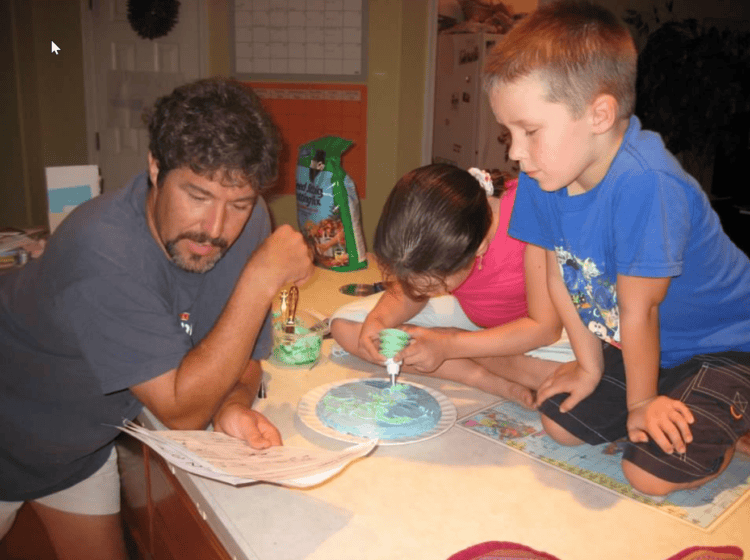
This is YOUR school. You’re the teacher, principal, and superintendent all rolled into one. If you want to spend an entire day playing math games and then going for a nature walk, do it! Flexibility and spontaneity are part of the adventure.
Join HSLDA, the Home School Legal Defense Association. They protect our legal right to homeschool. It’s a Christian-based organization, but if a school district, Board of Education, Child Protective Services, or any other agency questions your homeschooling, you’ll be grateful you belong to this organization. It’s worth the monthly fee, and if you ever need their advice or legal services, it’s priceless. The HSLDA website also provides state-specific homeschooling information.
The world is your classroom! Use it! Track down every resource available. Plan family vacations that reinforce what your kids have been learning. A homeschool family isn’t tied to any particular schedule or holiday schedule. Enjoy the beach, Disneyland, National Parks, and museums while all the other families are tied to the school schedule.
Read through my lists of skills kids should know and incorporate some of them in your learning time. Get started with this list of skills to learn.
Top Tips for Homeschoolers Bonus!
Your kids might still take some classes in public schools. If they want to take P.E., play a sport, sing in the choir, or play an instrument, it’s possible they might take advantage of just those classes. Check your local laws and regulations.
Get extended family involved! There’s a treasure trove of memories, experiences, and practical skills to be passed on to the younger generation. Grandparents, aunts, and uncles may even be able to willing to help with things like lessons, and giving you a break when you need one.
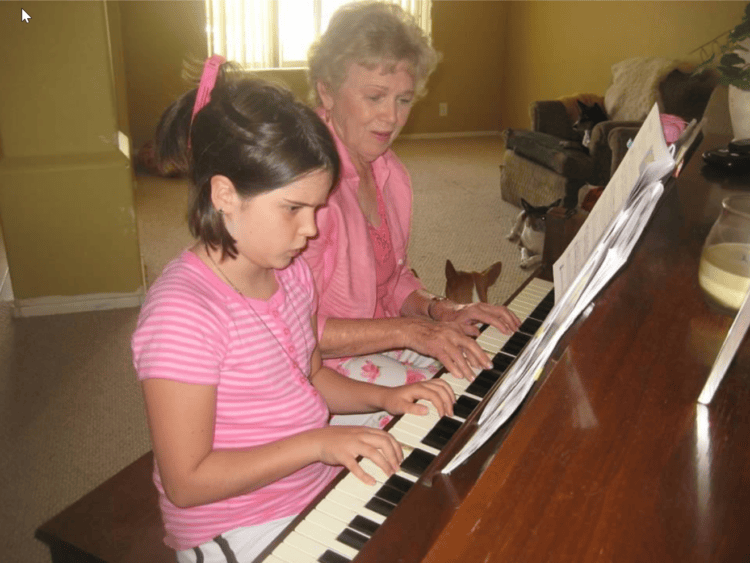
I’m not promising homeschooling years filled only with sunshine and unicorns. Days where you sit and cry from fatigue and frustration exist. It’s not EASY, but it’s beyond rewarding and creates a lifestyle you’ll love for its flexibility, fun, and everyday discoveries.
Homeschool Organization Ideas
Sixteen years of homeschooling — here’s what actually kept everything running smoothly:
- Build a loose weekly rhythm, not a rigid schedule. Assign subjects to certain days rather than certain times. Perhaps math and reading every day, and science and history two or three days a week.
- Build in lots of outdoor time. This helps kids let off some steam (Mom, too!) but also incorporates nature lessons, physical fitness, weather study — which mean fewer hours sitting in the house.
- Give every kid a dedicated supply bin. One bin per child with their current books, workbooks, and pencils means no morning spent hunting for a missing worksheet. We used stainless steel dish drying racks, one per kid, and schoolbooks fit perfectly in between the slots, and the silverware holder was just right for pens, markers, and scissors.
- Use a simple planner, digital or paper, to track what’s actually been covered. You don’t need elaborate lesson plans. A running log of what you did each day is more useful in hindsight than an intricate, color-coded plan you made in August and abandoned by October.
- Create a “landing zone” for finished work. A single folder or shelf where completed assignments go keeps you from losing track of what still needs review versus what’s done.
- Batch your planning. Sit down once a week, not once a day, to map out the next five days. Keep doctor appointments, family outings, holidays, church events, and homeschool groups in mind.
- Keep a portfolio as you go, not at the end of the year. Depending on your state requirements, you might need to keep a portfolio for each student. Toss a sample of work into a folder each month. Come evaluation time (some states require one), you’ll have a real record instead of a scramble.
None of this needs to be fancy. The families I know who stuck with homeschooling longest weren’t the most organized on paper. They were the ones who found a simple system and actually used it.
Want More Useful Info From Survival Mom?
Frequently Asked Questions
There are so many variables, but generally, you’ll spend far less than a public school day. Most homeschoolers finish core academics in 2 to 4 hours for elementary grades, sometimes less. That’s not a shortcut and you aren’t cheating your kids out of anything. It’s because homeschooling skips the parts of a school day that aren’t actually instruction, like transitions between classes, taking attendance, managing a room of 25-30 kids, dealing with discipline issues, and repeating material for the whole group to catch up. One-on-one or small-group teaching is simply faster
This depends on the kids and family. For me, the early years were difficult because while I was trying to “do school” with my kindergarten, and then first grade, daughter, my son was only 3 or 4. He knew he was missing out, and juggling both kids was a challenge, to say the least! Once a child is an independent reader, many subjects become easier because they can read and follow instructions, read for pleasure, and, of course read their school assignments without Mom or Dad being at their side. High school, for us, was even easier than that! When my daughter was in 9th grade, she began creating her own weekly schedules, and was almost completely independent. Plus, we used other resources, like online college classes, that left me with more time for my younger son and his lessons.
The honest answer: the research leans positive, but it’s not a slam dunk. Most studies show homeschooled students entering college with comparable or higher GPAs than their peers, and social-emotional outcomes tend to skew positive as well. What isn’t completely clear where research is concerned is why because families who choose to homeschool also tend to be more involved and resourced in general, which makes it hard to credit homeschooling itself versus the kind of parents who choose it.
There isn’t one, and that’s good news for all homeschooling families. Some families thrive with a structured, boxed curriculum; others do best unschooling, following the child’s interests with almost no set plan. Most land somewhere in between, and most change methods more than once. The best method is the one you’ll actually stick with on a hard Tuesday in February, not the one that looks best on paper and with shiny, slick curriculum in August.
Check your state’s homeschooling requirements first. They vary widely and some states require almost nothing, while others require testing or portfolio review. Pick a starting curriculum knowing you’ll probably change it, and start smaller than you think you need to. Begin with just one or two subjects the first week rather than trying to run a full school day out of the gate. Give yourself permission to adjust everything after the first month. Almost no one’s first homeschool plan survives contact with reality without lots of adjustments.
Now, here’s my real answer. Start reading aloud to your kids every day. Go on walks and talk about everything you see and hear. Have them help you with household chores and explain everything you do (here’s how I sweep the floor, help me make the grocery list), and really, truly focus on what you’re doing. This is the time, Moms and Dads, to keep your own smartphones put away. You’ll find that with “homeschooling”, you’ll learn right alongside your kids, and when everyone is fully engaged, magic happens.
It starts with parents making the decision, knowing there will be challenges and sacrifices. Sit down with your kids and ask what they’d want to learn about if they could pick anything. Spend a few weeks “test driving” a topic from that list, using the library, documentaries, and a book you read aloud together. If that trial run feels good for everyone, and it fits your family’s schedule and finances, you likely have your answer.
If you pay month to month, it's $11 for the HSLDA. Still SO worth the peace of mind!!!
If you're a member of a co-op that's registered w/ HSLDA you get a discount.
You can get a free downloadable kindle app for PC or Mac to help when you can't find the charger. It won't have your page bookmarked from the device, but it'll still have the books. Back-ups are good. 🙂 I don't have a Kindle yet, but I'm assuming that your account will synch to the device and a desktop.
In fact, the Kindle PC app will automatically synchronize to the last page viewed on the Kindle if you enable that option. It will also save your bookmarks, highlights & notes.
There's also a PC app for the Nook. I have each on both my desktop and laptop.
We just started homeschooling and love it! The public school is being somewhat pushy so for peace of mind, we joined HSLDA.
I love these tips! Exactly the kind of reminders I need!
You are right about teaching reading and math as the main focus. Together they will help develop a much lacking skill in life: logical thinking, also called critical thinking. To many people today are incapable of seeing error and/or deciphering a real situation, like what politicians really are doing.
We've been home schooling for 21 years (gasp!) and these are very good things to remember. Nicely done.
I have been homeschooling for four years and can vouch for all of these tips. Once they're independent readers, they can teach themselves history, science, etc. My daughter reads history books before bed each night. It's hard to break out of the need to "play school" with your kids, but its really not as effective as being their facilitator as you say.
And I don't understand how a "long time libertarian" who is in favor of as little government as possible sees government-run schools as the ultimate answer to education. You must be sky-high happy with the results of government schools, then. I taught in public schools and was a trainer as well, and I can vouch for the existence of ignorant, barely literate teachers who can't control their classrooms and students who are passed on to the next grade over and over again in order to avoid 17 year old 8th graders. I taught in one of those schools.
It sounds to me like maybe there are some family issues that are either clouding your judgment when it comes to homeschooling or you're choosing to focus on one example of poor homeschooling that belies the well-publicized stellar success of homeschooling overall.
Well absolutely there's a quality control problem. On the one hand yes the parents may be in charge so no outside influence is allowed. On the other hand if the children can read so hey they can read! Give them great books to read, there is tons of literature out there is enjoyable and broadening.. In most academic fields ultimately you're going to be dependent on books and your own thinking to get anywhere (i.e. in grad school.) Show them Khan academy – and maybe point out that most people work for someone who is better than them at math.
The good thing about homeschooling is that quality control is put more in parents hands, and honestly they're more likely to care. It's not 100% true. But the teachers have the kids for only a year and they have a lot of them, so how are they going to do quality control. Also the curriculum these days is pretty weak. If a child quickly learns reading, writing and arithmetic, and a child can, then they have tons of time to learn, time which is wasted in most classrooms.
Does anyone have any experience homeschooling an only child? My daughter is VERY social and my big concern is homeschooling without other kids around wouldn't work for that reason.
Why not just arrange for some type of sports or other group activity? Putting her in some kind of lessons which take place in a group, whether swimming or gymnastics or martial arts or whatever, will keep her healthy, teach her a useful skill (depending on what you pick) and let her socialize with the other kids taking the lessons. It can be the homeschool equivalent of gym, and the kids will probably be nicer there then in school anyway.
We will begin our 2nd year of homeschooling my only child. A vibrant, super social boy of 7. The other person made some good suggestions but we can't afford to pay the gas bill this month, let less pay for lessons. We are transplants to our state and part of a very small minority group. So a big important part of getting my son the social interactions he needs and craves is being an example for him. I made sure to meet almost all the people on our block. I am very friendly to everyone we meet, and that can be hard sometimes lol. If you are at the library with school age children and its not summer I WILL ask if you homeschool. I made a wonderful friend by taking a stroll around the neighborhood one day and talking to a lady having a garage sale. She introduced me to another good friend who homeschools!
My son is an only. My brother said what about socialization? Some public schools dont even have recess and the assign elementary school kids with hours of homework. When is it kids in public school socialize?
School here is 5 hours and a third is wasted. And Im one on one. We can be done in the morning.
My son goes to three hours of church Sunday, 2 of which is with kids. I teaching 1 of those hours. My son has done 5 seasons of little league, is batting doubles, helped his team come in 2nd of 8 Rookie Teams in our league, they got runner up medals. We coached the first four seasons. Hes earned Tiger and Wolf ranks in Cubs Scouts, did all 13 electives not just the 1 required for rank. We were his Wolf den leaders. My son took swimming lessons and then tried out and now swims on a USA swim team. Hes in homeschool archery, starting the 3rd year this fall. YMCA homeschool P.E., two years.
Hes taken 2 years of Homeschool Explorations science classes at Explora, the local childrens museum. Homeschool classes and daycamps at the Nuclear Museum. Has an annual pass at an indoor placespace. So so much more…
Honestly, we could do with LESS socialization! If “homeschoolers are unsocial” WHY am I often SO tired?
There are free and cheap things to do. And scholarships so ask if you truly cant afford it.
We have more money than some but that is due to choies. I put husband through 3 degrees.
Wed rather spend on experiances so, he rides the bus to work, couldnt even buy gas for what his pass costs. Weve had only 1 car for 10 years. No car payment 12.5 years. It tows. Good mpg. Rated pleasure driving only and low mileage for insurance. It 15.5 years old with 103k miles ish. We paid 13k, averages to less than $70 a month. People are paying 600 a month! Lets say 1 car. 600x12monthsx12.5 years without a car payment=90,000.
Another is efficient appliances. We bought a woodburning fireplace insert. Average cost of wood is 1/3 of what natural gas costs. Weve gotten half FREE. Even low flow toilets. Opted for $1800 swamp cooler vs 10x as much for refrigerated ac. 25 year laminate vs 8 year carpet we wouldve had to pay someone to stretch, Ive bad knees. Soon we need to get a new roof, thinking metal and solar…
Point is yes we can afford to do somethings simply because of choices. Lately Ive choose to do little. We started school as well be vacationing after public school starts.
On the other hand, if pat's relatives went to government schools, the only difference in their education would be the elimination of their belief in God and the Bible. They'd still know nothing about history, geography, grammar, or math, and they'd get their faith mocked and squashed as part of the bargain.
But proponents of government schools seem to think this is a plus.
I personally know lots of Moms that used How to teach your child to Read in 100 Easy Lessons, and they loved it too, but I had the best luck with all my kids using Dr. Seuss books, especially Cat in the Hat, Green Eggs and Ham and Hop on Pop. Keep reading these books over and over, changing your volume and inflections to keep it interesting and your child will soon memorize each of these books. You can use these words to teach the alphabet and phonetics. All the high frequency words are already included in these books and will be memorized in no time. I started mine on these books as babies and they were mostly all reading on their own by 4 yrs old. Not that it is a race but we had a lot of fun with those books!
If you look at the education of a typical public school teacher, you find the focus of most of the upper division classes are on classroom management. They also do not take many classes in their actual focus of teaching. Many school districts have poor quality graduates coming out of them. Many homeschool teachers are college graduates or are former public teachers. Yes, homeschool parents do sometimes fail their kids. These kids can at least read which is more than can be said from public school students. Teaching is an art. Homeschooling is not the answer for every family, but it can be for some. Everyone in my family thank you is going to college or graduated from college.
"The children will end up only as educated as their parents". This is the fallacy of imagining that the students' learning is a product of the teacher's efforts and expertise rather than the students' engagement with the subject matters of interest to the student. Parents can learn from other parents and from resource providers focusing on the home educator market how to become facilitators to their children's efforts, even when they themselves are (initially) unfamiliar with various topics, e.g., view several of the clips at Khan Academy: http://www.khanacademy.org/ (and there are many others either in development or rolled-out to the home educator community).
Expose yourself to John Taylor Gatto's exploration of schooling and the alternatives in "The Underground History of American Education". http://www.johntaylorgatto.com/underground/toc1.h…
and take the "history tour": http://www.johntaylorgatto.com/historytour/histor…
When we homeschooled our child, I found tutors for subjects I was weak in myself. Sometimes I had to pay for the tutor, but sometimes it was another parent who “traded tutoring”.
Yes, and as my own kids got into high school, there were so many online classes taught by outstanding teachers. One memorable class was astronomy taught by a retired military Colonel. He loved his subject and it showed.
Not much of a libertarian, Pat. The public school is the very fuel of our state-worshiping society. It could not exist in its present form without it.
You look at your brothers-in-law and cringe. OK. I look at the millions of kids being told that the Bible ISN'T the literal Word of God and do more than cringe. You wouldn't understand, so I'll leave it at that.
You were no doubt reared by the state in a public school, and are therefore a master of logic, so please explain, logically, how you can even come close to proving that home-schooled children cannot exceed the education of their parents. Where would you even begin with that one? Did you think we just lock our kids in an empty and dark padded cell and then lecture randomly from our own minds to them over an intercom? And in any case, I wouldn't give a nickel for most modern "education", so I wouldn't be heartbroken if my kids weren't as "educated" as the average public school teacher.
I know fewer and fewer children who AREN'T home-schooled and I've never seen such a group of intelligent kids. Your brothers-in-law don't teach their kids geography, etc., and so you do not understand the "home-schooling argument", and lament the absence of the all-powerful state's interference? What you do not see is that character trumps education, and the icing on our cake is that home-schoolers don't have to choose between them, and usually end up with both IN SPADES. That is against their child-prison counterparts, which occasionally get something of an education, but generally end up with neither.
The quality control on the home teachers is usually where it belongs; in the home. Send your kids to the local mind-laundry if you will, but please don't then soil the word "libertarian" by calling yourself one.
I'm not sure if you're counting the "Christian-based" aspect of HSLDA against them or not, but this was a very good article, SurvivalMom.
Proof that anyone who wants to can call himself or herself a libertarian.
Are you for real? My great- niece (11) and great-nephew (13) both attend public schools in the Missouri. The classes are not overcrowded by public school standards. Their ability to spell is limited at best. Don't get me wrong. I am not saying that it is anyone else but the parents responsibility to ensure that their child is properly educated. Pat, do you really believe that education is better left in the hands of a government employee, protected by a union. I had an English teacher in the government ran school I attended. She was an alcoholic. Her large purse had a flask in it. She stunk of booze. It was not uncommon for her to give us an assignment and forget she had given it. Often times she would ask us to turn in assignments she had never given. Not to mention the problems with violence.
Pat you mention racist politics. Have you noticed that most government forms ask your race. When asked race, I decline to answer or put humans. Politics as a whole is racist.
My daughter just finished her kindergarten year in a wonderful, small, public school with just 300 students in a school with grades pre-k to 6th. She had a wonderful teacher, small class size, and I had nothing to complain about. But we will be moving to another city in a month. One where there are too many students and not enough teachers. The education is less than satifactory at best and the teachers have too much on their plates to really care about each student individually. But I found a great alternative available that would help me tons with not only easing our relocation but easing my mind on my daughters education. Its an online public charter school. They give me the cirriculum and lessons, I teach them to my daughter. She has one classroom day per week with a certified teacher to make sure shes hitting her benchmarks and doing well.They give the grades. I make the schedule, she still has to "attend" school everyday but we are not required to have a set schedule or time for schoolwork and she can move through the cirriculum as quickly or as slowly as she needs to. they provide the laptop (so we can do school where ever we need to) and an internet stipend. It sounds amazing and I hope its as good as they say.
Great Tips!
Great tips, I would add simply:
Teach children to be curious and love to read about things, and no matter how old they get, they will never stop learning new things!
Great list! We Love the book “Teach Your Child to Read in 100 Easy Lessons” and our children are fantastic readers too! And I really am glad to hear that it’s true that we don’t have to do every subject everyday. As much as I believe it – it’s hard not to put pressure on myself and feel we really need to do it. Thanks for this post =)
Thank you so much for all the advice, suggestions, and encouragement! I will start homeschooling my grandson and ward (1st grade) this coming fall. After raising 3 public school children I am quite ready to do this, and wish I’d have had the self-confidence to get started 15 years ago. I want to get my feet wet but don’t want to drown by jumping in blindly and feeling overwhelmed by it all. This is why I am reading everything I can and learning the difference between individual homeschools. Your article was a very nice and easy read that I have found quite helpful. Thank you 🙂
I’m just checking out some homeschooling tips, my cousins opted to have their kid schooled at home, some very good tips here, just combined it with some of the stuff from here, really expanded my view on the whole matter http://shai77.hubpages.com/hub/How-to-Start-Homeschooling-Your-Kids
Thanks for this, my kids have been in public school since PreK but we have been talking about Homeschooling next year, so I have been trying to get all the info I can before we take this next step.
Thanks for sharing.
If I may add, always keep your schedule flexible. There is no need to complete one thing in a set amount of time. If you find that your children are enjoying a particular subject, stick with it. There is plenty of time to teach them what they need to learn. Staying flexible will reduce the levels of stress that can be incorporated with homeschooling.
Anne
Hello!!
I am considering homeschooling my son who is nearly 2 years old.
hslda.org looks to be a great resource, however, I am no longer a practicing Catholic. Will this be an issue? Should I look into another organization?
I don’t know of a similar organization that provided legal resources and help to members of any and all religions. HSLDA isn’t associated with a specific denomination and I’m sure that non-Christian homeschoolers are welcome as well. Their purpose is to protect our legal right to homeschool.
Thank you so much, this is great! Thorough yet simplified and easy to read. Makes it all seem very approachable to new homeschooling Parents. I will share this link with my friends.
I’ve been contemplating homeschooling my children for years now and I truly need help in narrowing down which program to use or the easiest ways and information to get started as I won’t be changing until next school year 2017, I want to be prepared for the switch and there is so much and many different curriculums out there. Any suggestions or help? It would be greatly appreciated.
When I started homeschooling my girls, I was honestly scared that I wouldn’t be able to do it. I was in public school growing up and everything was all about tests and a set curriculum. That’s all I had ever known. But reading up on it gave me a lot of confidence and I realize looking back that I wish I had been home schooled. Plus the “social” aspects of high school were a disaster for me. Now I know that there is no set “rules” to follow about curriculum for them. They can follow their interests and their potential knows no limits. I’m especially encouraged about the idea of being a facilitator. I don’t have to completely understand what they want to learn, but I can help point them in the right direction. Homeschooling is rewarding and a great fit for our family. Especially because I love to learn, and with teaching there is always more to learn. Thank You for this list. It’s refreshing to remember the hows and the whys.
This is my first year homeschooling 2 of my children, and I’ve got 2 younger children still attending public school. Both my older children are high-achieving students, very active in sports, music, and extremely sociable. We are in our 3rd week, so the gap to fill is definitely in the peer to peer interactions. My eldest daughter is in Grade 7 and my younger daughter is in Grade 6. We have met several homeschool families, but their children’s ages are much younger. At a homeschooling BBQ in a nearby town, we were told that many parents stop homeschooling at this age or soon after and that it will be difficult to meet families in our situation. Right now I feel like I’m giving them a better academic environment, but that I’ve taken away their friends, sports, music, and other things like student council without having anything similar or as fulfilling to prevent isolation or boredom. We do attend sports and they have music classes, but they are not generating any friends from these outings. I’m a little insecure and hoping to change my way of thinking (maybe I’m stuck on the public school model) or connect with nearby groups to help us. Also, I find our day is from 830 am to 2 pm and then it’s time to get ready for the small kids to come home – I thought we’d have a ton of extra time to learn outside of our home – like field trips but more personalized and with other families. I enjoyed your article because I’m definitely feeling out of my comfort zone! All the great homeschooling resources and sports/recreational groups seem to be at least 1-hour drive from our home. I really hope to figure things out as we go – because today I was ready to throw in the towel. 🙁
It’s a good thing that no one ever claims that homeschooling is easy! I would suggest maybe slowing down a bit. This isn’t a race. When I taught in public school, we NEVER,EVER finished a textbook. In fact, in middle school history, we teachers used to joke that our students thought American history ended with the Korean War, because that’s as far as we ever got!
You don’t mention what type of curriculum you’re using and that can make a big difference. Also, homeschooling through high school is super EASY! There’s no reason to go back to public school during those years, and in fact, FIND YOURSELF A MORE SUPPORTIVE GROUP OF HOMESCHOOLERS. 🙂 Colleges love homeschoolers and we can take the SAT and ACT tests right along with public schools.
Keep visiting other homeschool groups, maybe even churches that have a lot of homeschoolers. Sometimes it can take a while to build a circle of friends. I found that once my kids got deeply involved in sports, book clubs, etc., they soon had many friends and social activities. Join the nearest homeschool group and then offer an activity at your house, or maybe at a location between your home and the nearest town. Start up a girls book club, a craft club, gardening, anything you know how to do and can teach. It may take a while for the club or activity to catch on, so don’t get discouraged.
And, I’m kind of thinking your hours of 8:30 to 2 may be too long
I am interested in starting my kids doing homeschooling. I am a single mom so I do have to work. I was wanting advice ignore I should still try the homeschooling gig or just stay in public schools.
Make a list of all the reasons you want to homeschool and post that list somewhere where you’ll see it every day. Over the next 3-4 weeks, read the list, think about your reasons, and add others to the list as you think of them. Before launching into homeschooling, you need to be very, very sure it’s what you want to do because it isn’t easy. Make a second list with your kids — if they could learn about anything in the world, what would it be? Sharks? Going to Mars? Dinosaurs? British royalty? Make the list together and then just start learning about one thing at a time by visiting the library, looking for related documentaries on YouTube and Netflix, find a longer book on the subject and spend 30-40 minutes per day reading aloud to your kids. This is a great way to start “homeschooling” before you actually begin the school year. If your kids enjoy this, you enjoy it, and it fits in with your schedule, then you’re probably good candidates for homeschooling in the fall. Hope this helps, and don’t miss all the other homeschooling articles here on my blog. Good luck!
Such a comprehensive post. So much does go into homeschooling – it’s a lot for a family to successfully execute year after year. This is a great guide.
You seem like a bigot.
I remember visiting the Isle of Wight as a child in 2004.
Heya.
I now look at workbooks in order to find new questions for history and math. But I can use in literature, history and religious education lessons. Additionally I prefer to use a iPad to teach geography, art, French and math. Good luck to you and pleased to meet you in addition here. I love to read your blog. The workbooks do me well in terms of tracking achievement and for their weekly literature, Bible study and history education. For culinary arts, dance and music I improvise. It is easier that way for sure.
There is a very good website with quizzes and games as well. I write ten questions for the kids to write the answers to on a notepad in literature and history. Homework has to be done but I tend to make it fun and I only hand out two tasks each week. We have a nice time. I am committed as a mom. Homeschooling can be fun. I don’t teach science however.
The advice to start with one or two subjects leaves room to find out what a child needs help with. For a preschooler, I would keep a short game alongside reading aloud and practical activities, rather than turn it into another lesson to finish.