


An EMP or long-term grid failure wouldn’t just turn off the lights and disable cars. It would also shut down the factories and supply chains that make the everyday essentials we rely on. This list covers 14 small, inexpensive, factory-made items you can’t produce at home. Things like underwear, reading glasses, razor blades, and yeast that never show up on standard prepping lists but would be sorely missed and impossible to replace.
This article has been significantly updated, July, 2026.
Every EMP prepping list covers the same ground. Mountains of food, hundreds of gallons of water, or a backyard well, if you can swing it. A Faraday cage for your electronics — they’re all important, and I’ve written about all of them.
But here’s the thing about a true long-term grid failure that most lists miss: it doesn’t just turn off your lights. It turns off the factories. The trucking routes. The pharmacies, the fabric mills, and the little, random plant somewhere that makes razor blades. If the large transformers that move power across the country were damaged, replacing them could take years, not weeks, and everything made in a factory becomes irreplaceable for as long as that lasts.
So the smartest overlooked preps have one thing in common. They’re small, cheap, factory-made items you can’t produce at home. You can grow a tomato, but you can’t manufacture a contact lens.
That’s the logic behind this list. Before you dive in, make sure you know the first things to do immediately after an EMP attack, and then come back and start stocking these.
Some of the links in this post may contain affiliate links for your convenience. As an Amazon Associate, I may earn a small commission from qualifying purchases without any increase in price to you.
In this article
Overlooked EMP Prepping Necessities
- Underwear and bras. Elastic wears out, kids grow, and nobody is going to be sewing bras by candlelight. Stock a range of sizes for the whole family, including the next size or two up for growing kids and teens. This is the cheapest prep on the list and the one you’ll be most grateful for.
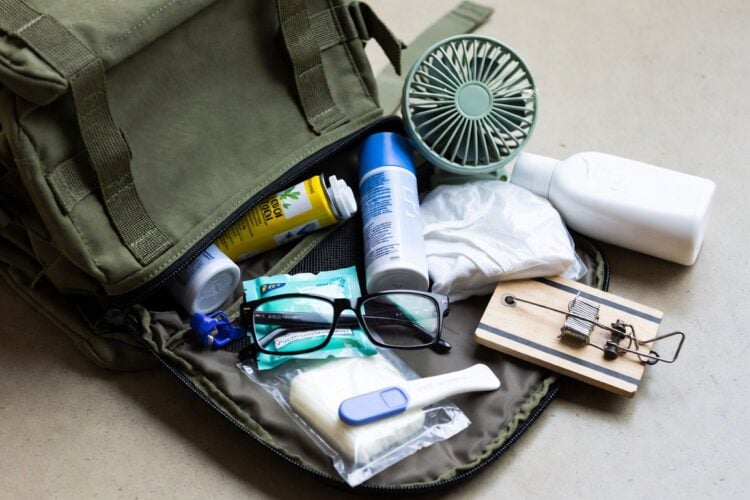
- Reading glasses. Your eyes will keep aging whether the grid is up or not. Buy several pairs in different strengths — dollar store cheapies are fine and Costco sells cheap sets of 3 and 4. Reading glasses aren’t just for reading. They’re for removing splinters, threading needles, repairing small equipment, and most every other close-up task you’ll run into.
- .Feminine protection. I strongly recommend menstrual cups rather than pads or tampons. One cup lasts for years and produces nothing to launder or dispose of. Add fabric menstrual and incontinence pads as backup and you’ve solved a monthly problem for a decade.
- Yeast. Yes, you can capture wild yeast, and it’s a good skill to have. It’s also fussy and slow, and in the early weeks of a crisis you’ll have bigger jobs than babysitting a sourdough starter. Store-bought yeast is cheap insurance. Keep it in the freezer and it lasts for years.
- Hair and beauty products. No woman wants to look like a refugee from the Great Depression. Hair color, lipstick, scented lotion, nail polish — these make hard times feel a little more normal, and looking put together does real things for your morale. A survivor of the Bosnian War once told me, “Yeah, women still wanted to look good no matter what was going on!” These little luxuries will also be premium barter goods.
- Insecticides, mosquito repellent, and mousetraps. In any long-term grid-down period, garbage collection stops, standing water accumulates, and pest-borne disease comes back fast. Pest control stops being about comfort and not having to deal with pesky insects and becomes basic medicine. Stock repellent, traps, and insecticides, and use them wisely. Never spray where water pools, and keep them away from the pollinators we’ll need more than ever. Plan on burning the carcasses of rodents.
- Condoms and other forms of birth control. Plain talk here — it is far easier to prevent a pregnancy than to deliver a baby with no hospital, no prenatal care, and iffy sanitation. Women did it for thousands of years, and plenty of them died doing it.
- Pregnancy tests. Better to know now than be surprised three months down the road. Cheap, tiny, long shelf life — there’s no reason not to have a handful.
- Razor blades. Nothing wrong with the bearded homesteader look, but razor blades are the perfect example of this list’s logic. They cost almost nothing today and are nearly impossible to make at home. If the grid goes down, you’ll have enough problems without having to learn how to shave with a cut-throat razor. Ladies, stock up too, unless you’re at peace with the Sasquatch look.
- Printed recipes. This one comes from a reader, and it’s brilliant. Print instructions now for making soap, lotion, shampoo, and salves. Right now, those recipes probably live on the internet, and the internet lives on the grid. Losing recipes and instructions like that are just one of the many problems if the internet goes down.
- Protein powder. If meat gets scarce or expensive, this is the fastest way to keep protein in your family’s diet. Stock a variety of flavors and brands, rotate them, and remember beans and other plants are protein workhorses too. Protein powder is best used to supplement the other forms of protein in your diet, but if meat (in particular) is scarce, you’ll be glad you have this on hand.
- Rechargeable fans. Babies, the elderly, and anyone in poor health can’t survive unrelenting heat for long. In a summer outage, moving air can save lives. The good news here is that this problem is much easier to solve than it used to be. USB rechargeable fans run for hours per charge, and paired with a power bank and a small solar setup, you can keep air moving indefinitely without a generator.
- Personal documents. Birth certificates, passports, medical records, insurance policies, the deed to your house. After a major disaster, replacing these ranges from difficult to impossible, and you may need them to prove who you are and what you own. My Grab-n-Go Binder walks you through assembling all of it.
- Paper maps and a compass. When GPS dies, basic geography doesn’t. Invest in quality paper maps of your region and the routes to places you’d realistically go, and spend one afternoon learning basic compass navigation with your kids. It’s a fun skill to practice on a hike, and kids take to it fast.
Expert Tips for EMP Preparedness
Protect your key electronics in a Faraday cage. It’s simpler than it sounds, and can be as simple as a metal trashcan with a tight lid. Here’s what to store in one and why.
Build your long-term power outage plan. This is the single most useful preparation on this page, because it pays off in every disaster. You don’t need to wait for an EMP! Being ready for a power outage caused by a hurricane, an ice storm, or a squirrel with bad judgment at the substation pays off. Start your plan here.
Set up a family communication plan. If phones go down, everyone in your family should already know where to meet and who checks on whom. Here’s how to create your plan, plus communication methods that work when the usual ones don’t.
Learn the skills behind the supplies. Growing food, starting fires, basic first aid. Eventually, all consumable supplies will run out, but a lengthy skillset and knowledge base do not.
Buy the reusable version. Wherever there’s a choice, from razors, menstrual products, batteries, cloth vs. paper, and so on, the reusable option outlasts the disposable one by years. That helps ensure you have these supplies for the duration of an emergency and not have to worry about replacements or how to dispose of a growing pile of trash in the backyard.
Frequently Asked Questions
Because they’re small, factory-made, and impossible to improvise. You can’t make reading glasses at home, and you don’t want to solve feminine hygiene with rags if a $30 menstrual cup solves it for years. These are the items that can make your everyday life immeasurably more comfortable and convenient.
Start with my complete guide to what an EMP is, how likely each type really is, and how to prepare — it covers solar storms, nuclear EMP, and the grid attacks already happening. Then learn the first 15 things to do immediately after an EMP and how to protect your gear.
Cool, dark, dry, and airtight — remember those four criteria for food storage, and that handles most of the six enemies of food storage. Keep yeast in the freezer for prolonged shelf life, but in a grid-down scenario, plan on “growing” your own yeast, easily done at room temperature. Rotate protein powder through your normal grocery routine so nothing sits long enough to expire.
Related EMP Preparedness Content
- Protect Your Gear From An EMP
- The First 15 Things You Must Do Immediately After an EMP
- How To Prepare For A Long-Term Power Outage
- What’s in Your Faraday Cage? Electronics to Protect
- 15 Things I Learned From Reading the Book “One Second After”

Learn what you absolutely must do in the first critical hours following an EMP or other massive power grid failure.
Make every second count.
My EMP Survival e-book and 4-email mini e-course show you how.
Final Thoughts
Here’s the pattern behind every item on this list — they’re all cheap right now now, priceless later, and impossible to DIY. And, none of them require a second mortgage or a bunker. Most of them can be picked up a few at a time on regular grocery runs, starting this week.
And like every prep worth doing, these pull double duty. The reading glasses, the documents binder, the fans, the maps are all on a list of “must haves” for things like a hurricane, a job loss, or an ordinary week just as well as they would after an EMP.
Remember that plants have protein. It’s where those animals you eat get their protein. I strongly recommend that people learn how to recognize the edible and medicinal plants in their area.
Also include recipes for making items such as lotions, basic makeup, soap, shampoo, & other items you use. Learn how to make re-usable menstrual pads; women in other countries have been using these for years. Buy some very basic clothing patterns from infant to adults; you may have to make your own clothes in the future. These recipes & patterns could also be useful in a barter economy.