
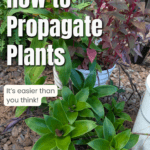
My dad spent years propagating fig trees from cuttings he talked strangers out of, and when he passed, I inherited four of them. Propagating plants is my way of remembering him, but beyond the sentimental reasons, plant propagation is one of the most practical, nearly free gardening skills you can learn, and this covers exactly how I do it, the soil mix that works best, and plant-by-plant notes on everything from pothos to plumeria.
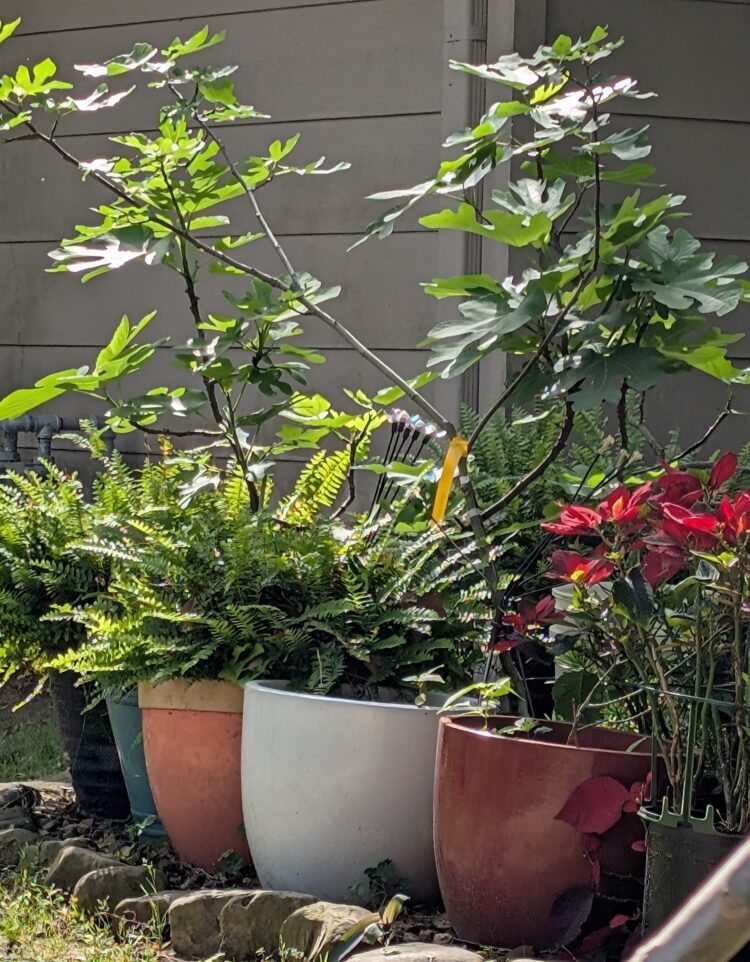
My dad passed away last year. But in a way, he’s still here in the four fig trees growing in my backyard that he propagated himself.
He propagated fig trees from cuttings he gathered over the years asking neighbors and even strangers with fig trees in their yards if he could take a branch home. He must have propagated at least eighty trees over the years, and some of those cuttings became the four fig trees growing in my yard today, all of them now over four feet tall. I cannot tell you how much it means to walk outside and see them.
This spring they’re branching out like never before, and I almost wonder if they’re doing this to honor his memory.
I’ll be taking cuttings from those trees this summer and continue his tradition. I’ve never done this before, and will start from scratch, like he did. I’ll root them in 5-gallon buckets, grow them out, and make sure each of my children gets at least one fig tree when they have a home of their own. My dad’s fig trees will live on in the next generation’s yards. That’s not just gardening. That’s a legacy.
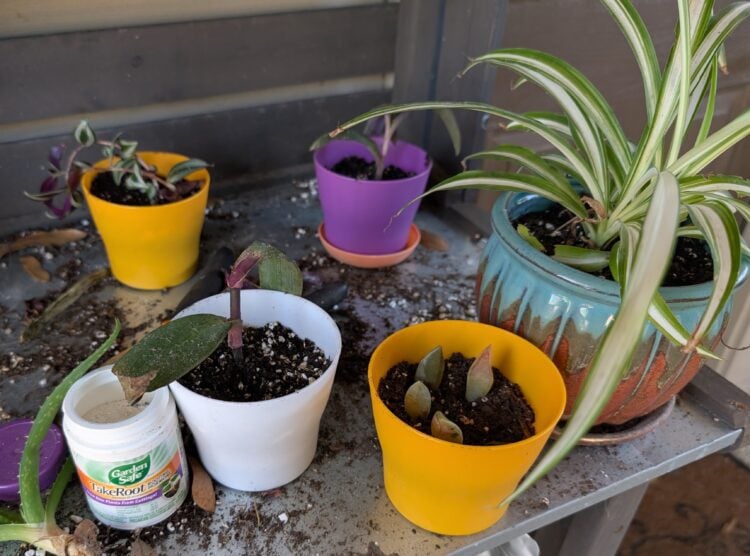
There are other reasons I propagate constantly, and most of them are a lot more practical. I like to say I’ll propgate anything that doesn’t move — succulents, spider plants, pothos, plumeria, polka dot plants, varieties of tradescantia, callisia fragrans, aloe, lavender, crown of thorns.
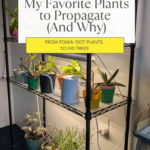
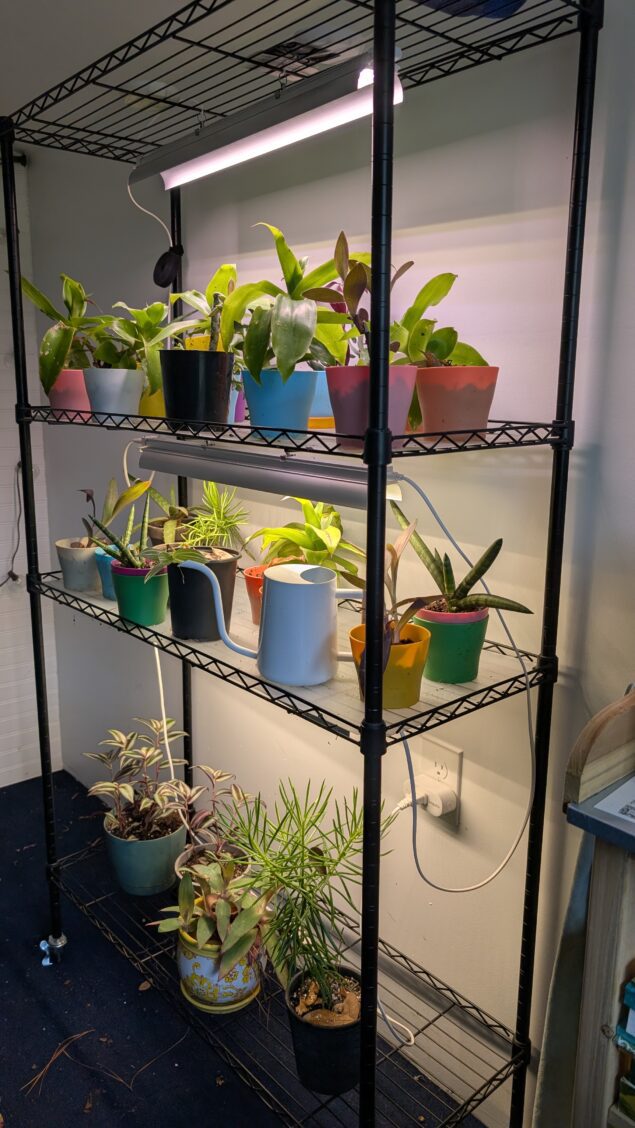
My shelves have a three-tier grow light unit dedicated to new cuttings. I give plants away as gifts. I use propagation to design and fill my garden exactly the way I want it. And honestly? The whole thing costs almost nothing.
Here’s why propagation might just become your favorite gardening skill.
In This Article
- What Is Plant Propagation?
- You Always Have A Gift To Give
- You Can Customize Your Garden Exactly How You Want It
- Some Plants Are Irreplaceable, So Make More of Them
- It Can Put a Little Money in Your Pocket (If You Want It To)
- The Plants I Propagate (And How I Do It)
- Plant-By-Plant Notes
- Where to Get Plants to Propagate
- When In Doubt, Just Try It!
- Frequently Asked Questions
- Final Words
- Want A Better Garden This Year?
Some of the links in this post may contain affiliate links for your convenience. As an Amazon Associate, I may earn a small commission from qualifying purchases without any increase in price to you.
What Is Plant Propagation?
If you’re new to the term: plant propagation simply means creating a new plant from an existing one. You take a piece of a plant — a stem, a leaf, an offset/pup — and help it grow into a new, independent plant. No seeds, no nursery, no waiting for something to sprout from scratch. You’re taking a piece of something that’s already growing and helping it to grow roots of its own
You Always Have A Gift To Give
My very, very first propagated plant came from my dear friend, Joyce. She and her husband had stayed with us for a few weeks while a major construction job was happening in their home, and she brought her houseplants with her. I’d never propagated anything before but asked for a cutting from her tradescantia.
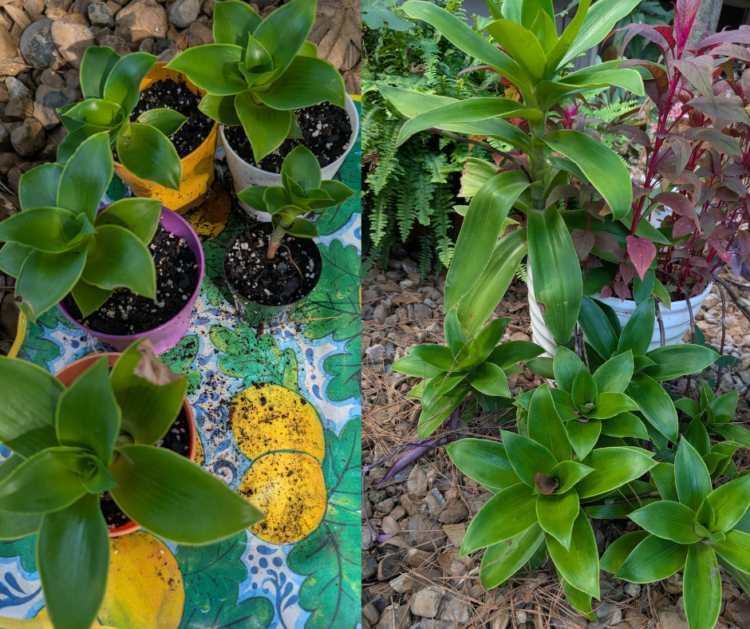
Turns out it’s called Moses-in-the-Cradle, and I’ve propagated at least forty new plants from that one cutting! In fact, many of them now fill a flower bed in my front yard.
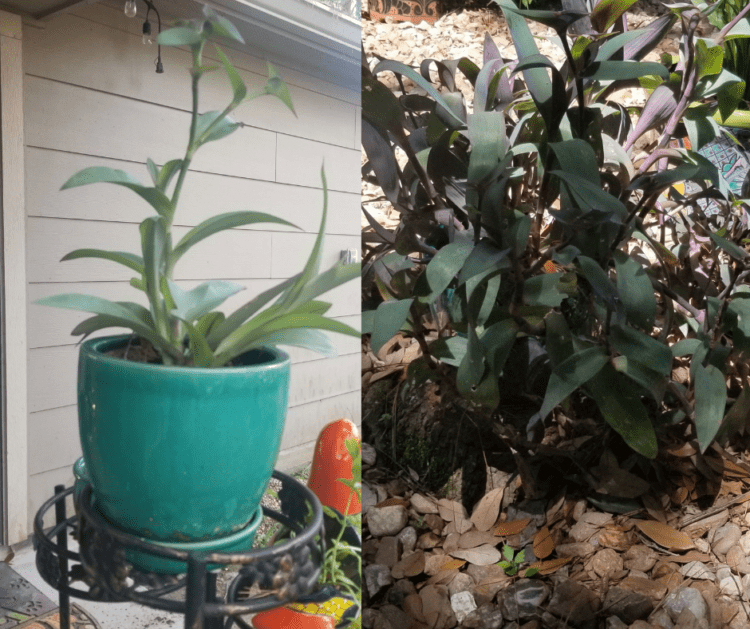
A healthy little plant in a 4-inch pot is one of the best gifts you can give. It’s personal. It’s living. And if you propagate regularly, you always have one on hand.
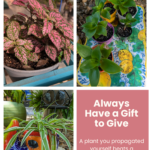
I’ve sent cuttings home with relatives from out of state, given propagated babies to good friends, and almost always take one with me when we visit friends and family. A pothos cutting in a cute little pot, a small succulent you grew yourself, a trailing tradescantia — these are gifts people actually keep and love. They beat a candle every time.
The best part? It costs you almost nothing. You’re making a new plant from one you already have. The only real investment is a few 4-inch pots, some good soil, and a little patience.
You Can Customize Your Garden Exactly How You Want It
Want more of that purple tradescantia spilling over the edge of a planter? Propagate it. Need to fill a bare corner with something tall? Take cuttings from what’s already thriving. Want to add a pop of color or a new texture without spending money at the garden center? Propagate.
This is how I’ve built out sections of my yard — not by buying multiples of the same plant, but by making more of what I already have. I can adjust color, height, density, and variety all without spending much. If I want a hedge-like row of a particular plant, I just take more cuttings.
A few years ago, I propagated at least fifty of those Moses-in-the-Cradle plants, determined to fill a large, empty space in my front yard!
This year I decided I wanted to add a few hanging plants to my backyard landscape. I took a spider plant cutting from a neighbor, it had already grown to a healthy size, and hung it right by a callisia fragrans I propagated from a plant purchased from Mercer Botanic Gardens,
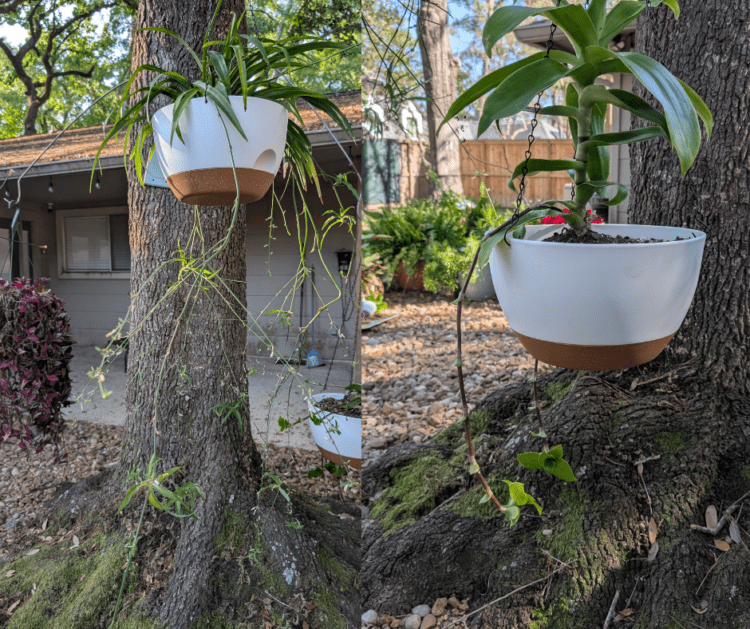
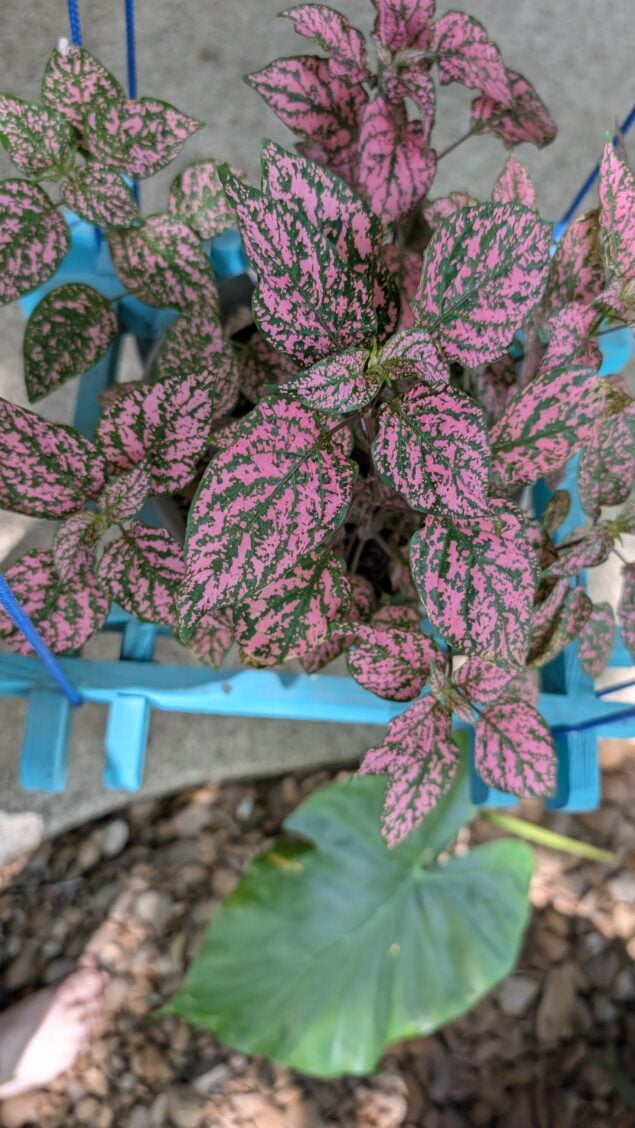
Propagation also lets you rescue a struggling plant. If something in your garden is starting to look rough, maybe it got too much sun, too little water, or just wore itself out, you can take cuttings from its healthiest parts before it’s too late and start fresh. I’ve saved plants that way more than once, like this cute little polka dot plant. She was way too pretty for me to let her die.
Some Plants Are Irreplaceable, So Make More of Them
My dad asked anyone with a fig tree for a cutting. My mom picked up a broken-off tradescantia stem off the floor at Home Depot as we were leaving. I’ve gotten cuttings from plant exchanges, from neighbors, from friends who were moving away and couldn’t take their plants with them.
Every single one of those plants carries a story.
If you have a plant that came from someone you love, a grandmother’s African violet, a cutting from your best friend’s garden, a piece of something that grew in a home you can’t go back to — propagate it. Make backups. Give a rooted cutting to someone else who knew that person. Spread it around so it can’t be lost.
Plants are one of the few living things we can actually multiply and pass forward. That’s the way plants are.
It Can Put a Little Money in Your Pocket (If You Want It To)
Houseplants have become a serious trend, and people are actively looking to buy interesting varieties at reasonable prices. In my town, there are women selling propagated plants through community Facebook groups and local plant exchanges, rooted cuttings and small potted plants going for $5 to $10 each.
I bought a beautiful plant from a woman named Anne in my area for $7. She grew it herself, rooted it herself, and priced it fairly. That’s a real small income stream for someone who enjoys propagating anyway.
I personally give cuttings away for free because I love doing it, but if you want to offset the cost of your gardening hobby or make some pocket change, propagation is a genuinely practical way to do it. You’re selling something you made from something you already had.
The Plants I Propagate (And How I Do It)
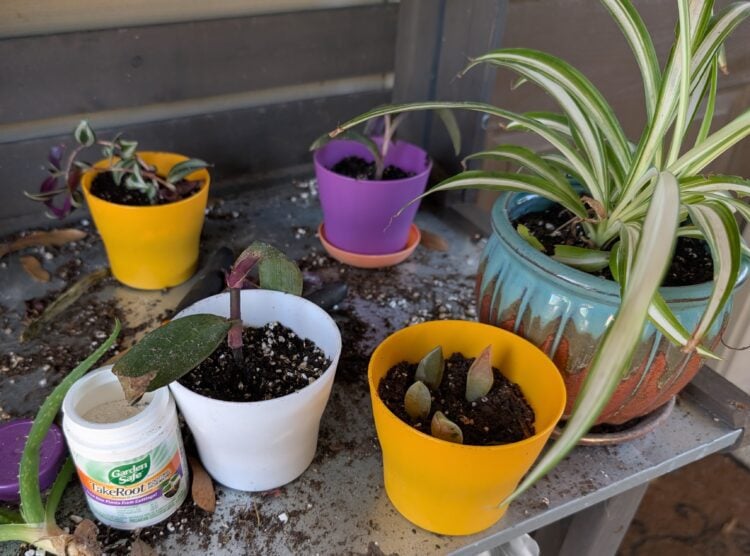
Almost everything I propagate starts the same way: stem cuttings, planted directly into soil. I’m not complicated about it. Here’s my basic method, followed by notes on specific plants.
My Basic Propagation Method
- Take a cutting 3–5 inches long, just below a leaf node
- Remove leaves from the bottom inch or two
- Poke a hole in your soil with your finger
- Insert the cutting and firm the soil gently around it
- Water lightly and place under grow lights or in bright indirect light
- Wait. Check for resistance when you tug gently. That means roots are forming.
I do sometimes use rooting hormone. It’s cheap and easy to find. But I’ll be honest: I haven’t noticed that it makes a dramatic difference. My Dad swore by it for his fig tree, so go figure. If you have it, use it. If you don’t, don’t let that stop you.
Soil Is The Real Secret
This matters more than almost anything else, especially if you’re in a hot, humid climate like Houston. Regular potting soil holds too much moisture and your cuttings will rot before they root.

My mix: potting soil + orchid bark + perlite. The orchid bark and perlite create drainage and airflow around the cutting. It’s the difference between a cutting that rots in two weeks and one that’s thriving in a month.
If you’re not sure what soil to use, go to a local mom-and-pop type nursery where you’re more likely to find employees who know what they’re talking about — they’re more likely to know what grows in your area, what doesn’t, and what type of soil will be best.
Keep in mind you’ll be starting these baby plants in pots, so at this point, the soil is less important now than when you put them in larger pots outside or in the ground.
My Set-Up
I keep it simple. Here’s what I actually use:
- 4-inch plastic pots from Amazon — inexpensive, the right size for almost every cutting
- A 3-shelf unit with built-in grow lights on a timer (I keep this in my outdoor, insulated shed, so a timer is a must, for me.)
- A small watering can for gentle watering without disturbing new roots
- Root hormone (optional)
That’s it. No misting systems, no humidity domes, no complicated setups. The grow light unit is probably the most useful investment I’ve made because it gives me consistent light regardless of season.
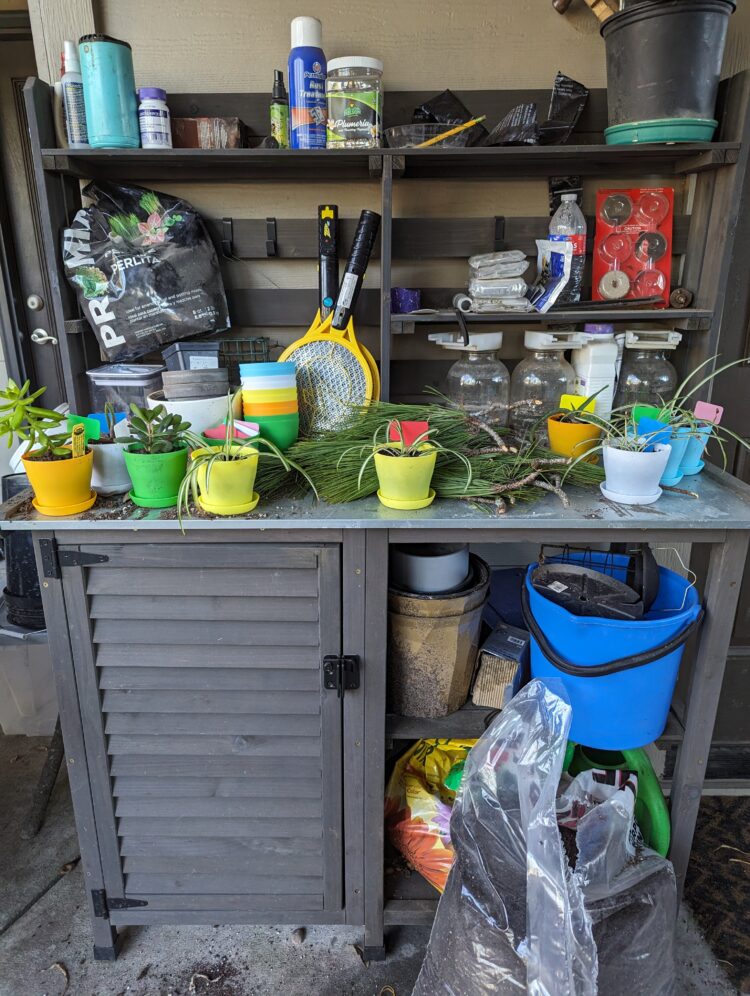
Another must-have is a work area. I purchased a wonderful potting bench from Amazon — it’s super heavy-duty, and I love it — but I’ve also potted a lot of plants near my kitchen sink. Just know it gets messy, so for me, an outdoor work area is best.
And yes, my potting bench is always this messy. Sometimes a lot worse!
Come to think of it, maybe the reason why I enjoy propagating plants so much is that I keep it super, super simple.
Plant-By-Plant Notes
Pothos
One of the easiest plants you’ll ever propagate. Cut just below a node, remove lower leaves, stick it in soil. Pothos is forgiving, grows quickly, and makes a beautiful trailing plant. Great beginner plant and a reliable gift option. I’ve found it to be a slow-grower, though,
Tradescantia (Multiple Varieties)
My mom picked up a broken-off stem off the floor at Home Depot. That stem is now several thriving plants. Tradescantia practically wants to root — it’s one of the most willing propagators I grow. Multiple varieties, lots of color options from deep purple to variegated. Cut, stick, done. And, it loves to trail. Before you know it, you’ll be looking for a way to hang it somewhere.
Callisia Fragrans
Similar to tradescantia in its easy-going nature. Produces long trailing stems with offshoots that are easy to cut and root. Great for hanging baskets once established. This plant is full of surprises, from how quickly it produces cute little babies to a tall, flowering stalk with beautifully smelling blossoms. This one practically propagates itself.
Spider Plants
Spider plants do the work for you. They produce babies (called “spiderettes”) on long runners. Once a baby has small roots forming, cut it from the runner and pot it up. I was given two varieties by a neighbor — and now I have a dozen!

Aloe Vera
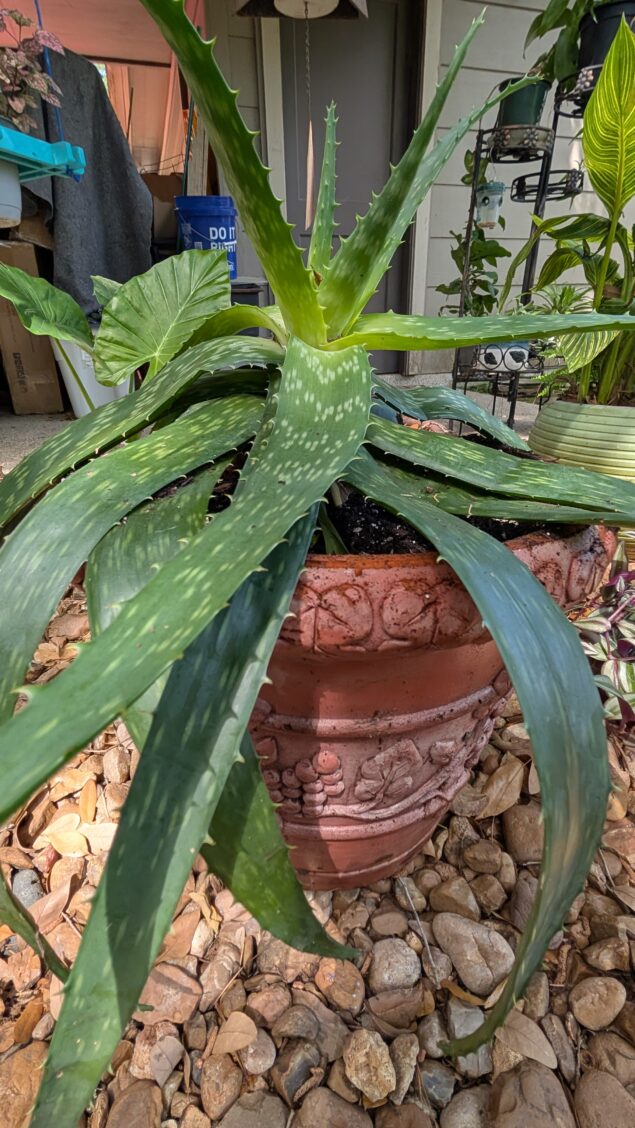
Aloe propagates through pups, small offshoots that grow at the base of the mother plant. Gently separate the pup from the main plant (you may need to dig down a little), let it sit out for a day or two to let the cut end callous, then plant it in well-draining soil. I have a large area of my yard filled with aloe pups from my main plant, this guy! He’s one I had to bring back from the almost-dead due to packed soil that never drained. I repotted, and I’m happy to say (and so is he!), that he’s doing quite well — and I got three new pups!
Succulents
Succulents propagate both from offsets (like aloe) and from individual leaves. For stem cuttings or offsets, let the cut end callous for a day or two before planting. This is important with succulents and prevents rot. Well-draining soil is non-negotiable here, and I use a special soil specific to succulents.
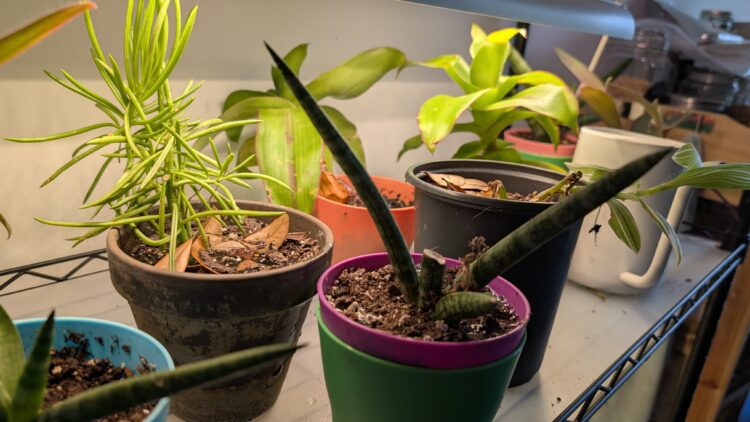
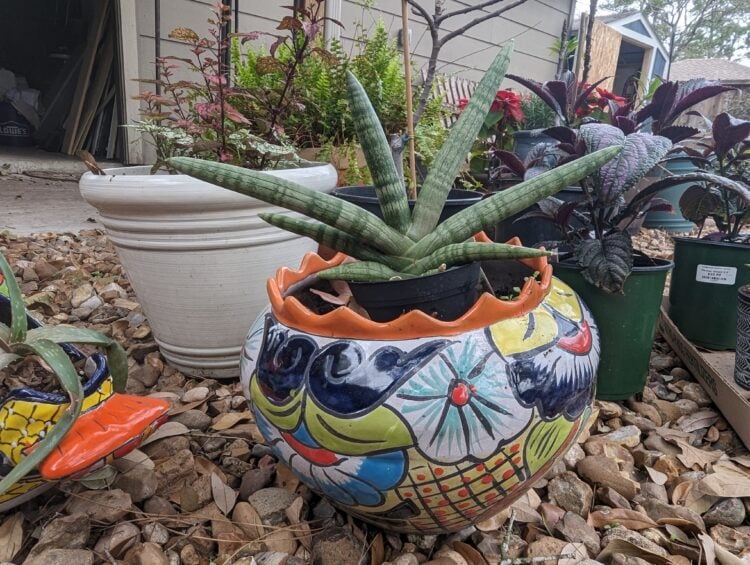
For some reason, I’ve had a lot of success with Starfish Sansevieria Cylindrica. I bought the original plant from a nursery, noticed a pup growing right away, and now I have several more under my grow lights. Sometimes the plant tells YOU it wants to be propagated!
Polka Dot Plant (Hypoestes)
Beautiful little plant with spotted foliage. Propagates easily from stem cuttings. Keep it in bright indirect light and don’t overwater. It roots relatively quickly and makes a delightful small gift plant.

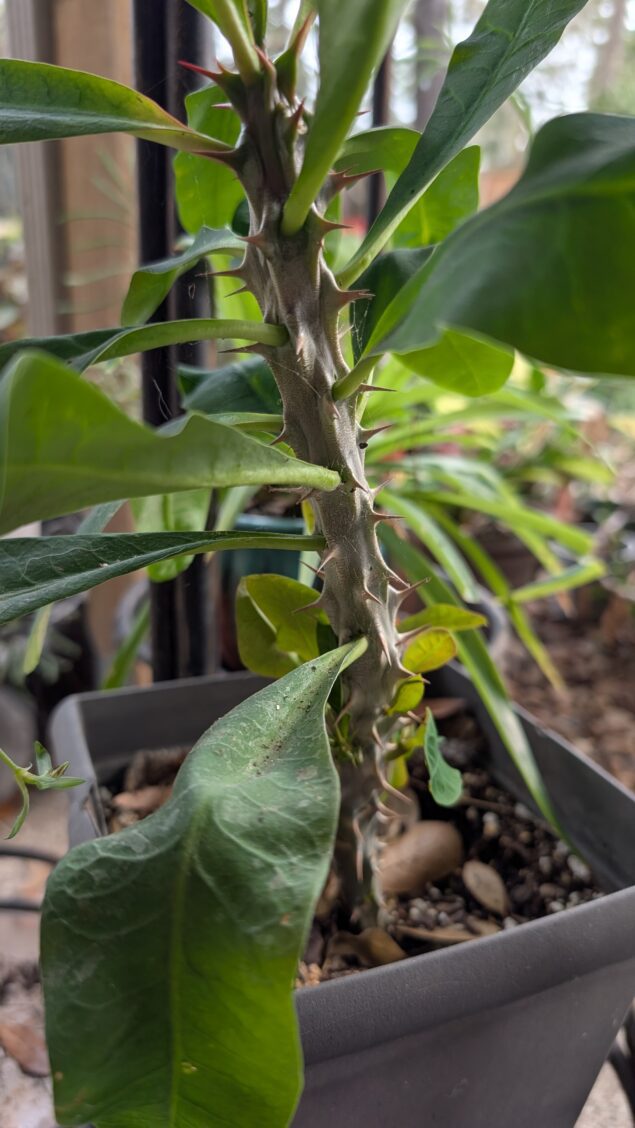
Crown of Thorns (Euphorbia milii)
This one came from my neighbor Vicki. No blooms yet, but it’s been growing like crazy this spring, so maybe this is the year.
A word of caution: crown of thorns has a milky sap that can irritate skin and eyes. Wear gloves when taking cuttings. Let the cut end sit out and dry for a day before planting. This helps it callous and prevents rot. Despite the prickly reputation, it roots reliably and blooms beautifully.
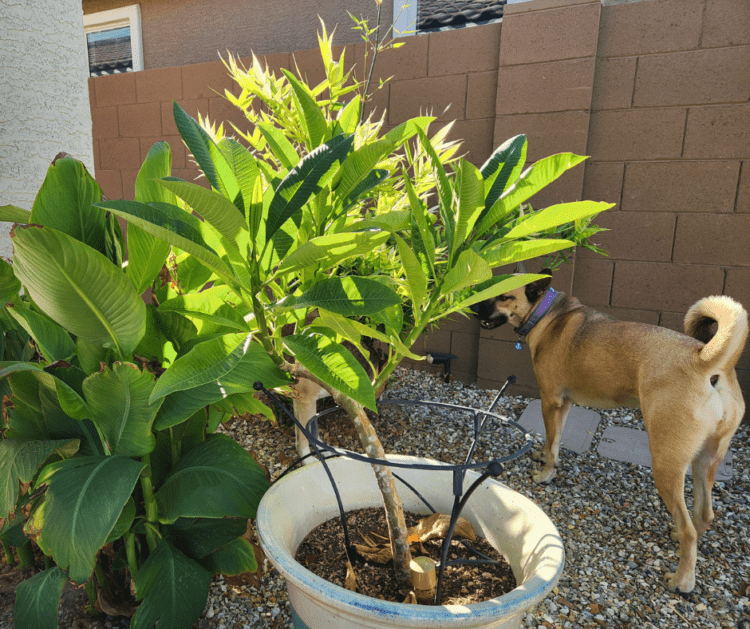
Plumeria
Plumeria is a little more dramatic than the others but very doable. Take a cutting and let it dry out completely, several days to a week, before planting. The cut end needs to callous thoroughly or it will rot. Once you plant it in well-draining soil and give it warmth and sun, it can leaf out beautifully. Worth the extra patience. This is from a cutting I gave my sister-in-law several months ago when she came to visit. She regularly sends me pics like it’s my newest niece!
Where to Get Plants to Propagate
You don’t have to buy everything you propagate from. Some of my best plants came from:
- Plant exchanges — local gardening groups often host swaps where everyone brings cuttings and leaves with new ones
- Friends and neighbors, just ask. Most people with thriving plants are happy to share a cutting.
- Facebook community groups — local plant groups often have members selling or giving away propagated plants for very little money
- Broken pieces at nurseries or big box stores — ask if you can have a stem that fell off. The worst they can say is no.
- Your own plants — once you start propagating, your collection grows and becomes its own source.
My dad didn’t buy his fig trees. He asked around until he found someone willing to give him a branch. That’s the propagator’s mindset. Plants want to be shared.
When In Doubt, Just Try It!
Here’s my philosophy after years of propagating: what have you got to lose?
A cutting costs you nothing. A few minutes of your time, a 4-inch pot, some good soil. If it doesn’t root, you toss it and try again. If it does, and it usually does, you’ve made something from nothing.
Don’t wait until you know everything. Don’t wait until you have the perfect setup. Just take a cutting from something you love and stick it in soil. You’ll figure out the rest.
Frequently Asked Questions
Pothos, spider plants, and tradescantia are the most forgiving plants to start with. They root quickly, tolerate beginner mistakes, and give you fast results that keep you motivated.
No. Rooting hormone can help speed things along, but it’s genuinely optional. Many plants root just fine without it. It’s inexpensive and worth having on hand, but don’t let the lack of it stop you from trying.
Since you’ll be planting these in small pots, a good potting soil is most likely fine. It needs to drain well, though, so look for one that contains perlite or pumice, coconut coir or peat moss, and compost. The brand I’ve been buying is FoxFarm.
It varies by plant, but most stem cuttings show roots within 2–6 weeks. The easiest way to check: give the cutting a gentle tug after a few weeks. If there’s resistance, roots are forming.
Yes, pothos and tradescantia especially root easily in water. However, water-rooted plants sometimes struggle when transferred to soil because water roots and soil roots develop differently. Starting in soil means the roots are already adapted to their permanent home.
Fig trees propagate well from hardwood cuttings taken in late winter or early spring while the tree is dormant. Cut a pencil-thick branch 8–12 inches long, plant it in well-draining soil with at least two nodes buried, and keep it consistently moist. Fig cuttings can be slow to show signs of life so be patient. Once you see new leaf growth, roots are establishing.
Final Words
This summer I’m taking cuttings from my dad’s fig trees. My kids will each get one when they have their own homes. That’s the thing about propagation — it doesn’t end. A plant becomes two, becomes ten, becomes a tree in your daughter’s yard twenty years from now. Start somewhere. What have you got to lose?
Want A Better Garden This Year?
Want to make the most of your garden this year? Download my free printable, “Make Your Next Garden Your Best Garden Assessment”, and figure out exactly where to focus your effort. Get it here.