
When the power goes out for more than a few hours, medical equipment like CPAP machines, oxygen concentrators, and feeding pumps need a backup plan. This guide shows how to inventory each device’s power draw, then build a layered system using power backup systems and even a schedule to ensure life-saving medical equpment is never left in the dark. It covers which power stations and generators work best for sensitive medical equipment, how much fuel or propane to store, and sample daily schedules. Includes a free printable worksheet for listing your own devices and their power needs.
A two-hour outage is annoying. A twelve-hour outage is uncomfortable, but a power outage that lasts more than three days is a different kind of problem, especially if someone in your family cannot sleep, breathe, eat, or keep medication safe without electricity.
I’ve written a lot about backup power over the years — small power stations, generators, solar, and the need for a layered approach. This article is the version for households where the lights going out is more than just about the freezer. It’s about a medically necessary machine that has to keep running, no matter what.
A quick note before the lists start. I am not your doctor, and I’m not the technician who set up that concentrator. Every machine is a little different.
Some will reset if the power blinks, some will not tolerate cheap generator power, and some have a simple DC adapter that can run from a car or a battery pack. Call the home medical equipment company and the prescribing clinician before storm season and ask the questions in this article. Then be sure to test all this out before the next outage.
Some of the links in this post may contain affiliate links for your convenience. As an Amazon Associate, I may earn a small commission from qualifying purchases without any increase in price to you.
Start With A List And Calculations
When you first think about power outages, it’s natural to jump directly into purchasing a generator, but in the case of medical equpment, that really is backwards. The very first step should be to figure out exactly what you’re running and how much power it actually pulls.
Start with a sheet of paper or a note on your phone titled “Power-dependent medical gear.” For each item, write down:
- The name of the device and who uses it
- Where to find the device’s manual (online and/or a hard copy)
- Running watts (the number on the label; if you only see amps, multiply by 120)
- How many hours a day it actually runs
- Whether it has its own battery, and how long that battery lasts
- Whether it can run on DC power (a car adapter or a 12-volt/24-volt pack)
- What happens if it stops. Will it be an inconvenience, a tough night, or a life-and-death emergency?
Now let’s do the math, and don’t worry, it’s just multiplication, nothing more complicated than that.
Take the running watts you wrote down for the device and multiply it by how many hours a day it actually runs. So, for example, if the oxygen concentrator uses 350 watts and runs 10 hours a night, that’s 350 × 10 = 3,500 watt-hours a day.
That number, watt-hours per day, is the one that matters most. It’s what tells you whether a smaller, suitcase-sized power station will carry you through a weekend outage, or whether you really need a generator to keep things running.
Once you have that number, go back to the other things you wrote down — whether the device has its own battery, whether it can run off a car charger, and what happens if it stops working. Those details won’t change the math, but they will help you decide which backup option makes the most sense for your situation.
Here are typical ranges. Yours may be higher or lower, so be sure to check the label and/or the manual.
| Device | Typical draw | What that means in a long outage |
|---|---|---|
| CPAP / BiPAP, no heat | 30–60 watts | Often 240–480 watt-hours for an 8-hour night |
| CPAP with heated humidifier or heated tube | 50–100 watts | Can nearly double the energy use |
| Portable oxygen concentrator | 50–150 watts | Much easier to back up than a home unit |
| Home oxygen concentrator (3–5 liter) | 300–600 watts | Often 7,000–14,000 watt-hours per day if it runs around the clock |
| Home ventilator | about 70–150 watts, more with a humidifier | Life-critical; even a two-second gap can matter |
| Nebulizer | 30–150 watts | Usually short sessions, not all day |
| Feeding or infusion pump | about 10–50 watts | Low draw, but it cannot stop |
| Suction machine | 70–200 watts | Intermittent |
| Electric hospital bed or lift | 200–800 watts when it moves | Idle draw is low; surges when you raise the head |
| Alternating-pressure mattress | 70–120 watts all day | Easy to forget until the pump goes silent |
| Medication fridge | 50–200 watts running | Insulin and some other drugs belong here |
| Wheelchair charger | 200–500 watts while charging | Charge on a schedule, not 24/7 |
| Home hemodialysis machine (NxStage, Tablo) | 300–600 watts during treatment | A single session can use 1,500–3,000+ watt-hours; water purification add-ons can push this higher |
| Peritoneal dialysis cycler | 100–250 watts, running 8–10 hours overnight | Lower wattage but long runtime, often 1,000–2,500 watt-hours per session |
A dialysis machine can look like it pulls less power than a home oxygen concentrator, but don’t trust the watt number by itself. A treatment lasts hours, so the total power used in one session can match or beat a whole night on a CPAP. Multiply watts by hours before you decide what your backup can handle.
When our family friend, Yvonne, asked us for help during an eleven-day power outage in 2024, she was 100% dependent on oxygen machines. I still remember the panic in her voice when she called to say her home generator had gone offline.
My husband quickly calculated the type and size of power station she would need in order to keep her oxygen machine running, and we were both surprised by the amount of power required, not to mention the cost for that size of power backup.
A home oxygen concentrator at 350 watts, running all day, uses about 8,400 watt-hours in 24 hours. A 2,000 watt-hour power station is something to fill the gap, short term but not a three-day plan.
In contrast, a CPAP at about 55 watts for eight hours uses roughly 440 watt-hours a night. Three nights is a little over 1,300 watt-hours of device energy.
So, as you make your own list of the medical equipment in your home, keep in mind the sometimes vast difference in the amount of power needed from one device to another.
Along with this list, include things like extra oxygen cylinders, a manual suction option if one exists, extra tubing and filters, distilled water, cannulas, a cooler and ice packs for medication, and printed copies of settings and prescriptions. Your equipment supplier might be able to provide extra cylinders and batteries if you ask before everyone else does.
Prefer to work from a printed sheet instead of typing this into your phone or starting from scratch? I created a printable Medical Device Power Inventory Worksheet with this exact list, and you’ll find it further down this article.
Whatever power backup you choose, it needs to put out clean power. Look for “pure sine wave” on the label. More on that when we get to products.
Backup Power By Timeframe
Families who get through a long outage usually take it one step at a time. For example, a 2-hour blip can easily be managed when the oxygen machine stops, but when it gets to 24 hours and beyond, you need to have backup options stacked. Here’s a plan to help you with that.
The first minutes.
Initially, you’ll have the device’s own battery, plus a small uninterruptible power supply (UPS) so the machine doesn’t reboot when the grid drops or the generator starts. A UPS is not a three-day solution, though. It just gets you through the first minutes of an outage while you get the next part of your plan in place.
The first night or two.
A portable power station with a pure sine wave outlet can cover this stretch for many home medical devices, including a CPAP or BiPAP, a nebulizer, a feeding or infusion pump, a suction machine used in short sessions, a hospital bed you only adjust now and then, and a small medication fridge. Dedicated device batteries, including CPAP packs, are part of this, too. These units are quiet, safe indoors, and produce no fumes.
However, they won’t last one or two nights on a home oxygen concentrator or anything else that draws several hundred watts all day. For those machines, a power station is only a short hold until a generator, extra cylinders, or a larger battery system takes over.
Day three and beyond.
At this point, you’ll need to call in the “big boys” — a portable generator, a large expandable battery you can recharge, or a whole-home standby generator. This is the layer that covers more than 72 hours for high-draw equipment.
When my husband ran the home generator division for a large Texas power company, he was surprised to learn how many of the generator sales were from homes with a medically fragile family member — someone bedridden, on oxygen, or dependent on a machine that had to run around the clock.
If this describes your household, it’s worth taking time now to research the cost and process involved in installing a home generator. In our home, when I hear the generator kick in, I breathe a sigh of relief because I know we have a reliable power source no matter what.
Add a non-electric fallback plan.
Stock up on extra oxygen tanks and medication, keep a large Yeti-type cooler on hand for cold storage, and know, ultimately, where you’ll go if home isn’t an option.
The people-and-paperwork layer.
This step costs nothing — just a few phone calls. Registering with your utility company, notifying the fire department, and keeping your supplier’s number handy all belong here. I’ll walk through the specifics later in this article.
What can’t wait is deciding, right now, when your family stops waiting and hoping for power to be restored and starts leaving. Decide now on some paramters, like: if the concentrator has less than 8 hours of combined battery and cylinder time left and we can’t refuel or start the generator, we go to [specific place].
Want More Useful Info From Survival Mom?
What “Pure Sine Wave” Means
A lot of medical devices are picky. CPAP motors, in particular, want clean power. A cheap conventional generator can put out “dirty” power that makes the machine noisy, throws error codes, and can shorten the battery life of your medical equipment.
When you shop for a power backup, look for:
- Pure sine wave on any power station or inverter
- A surge / peak rating higher than the device’s startup demand
- A transfer time under about 20–30 milliseconds if the machine resets when power blinks
- Enough watt-hours (capacity) for the hours you need, not just enough watts (output) to turn it on
If the listing does not say pure sine wave, keep shopping.
Next, Assemble a Power Backup Plan: Batteries, Adapters, & Power Stations
IMPORTANT: Use the official battery or DC adapter when you can.
What this looks like by device:
- CPAP / BiPAP
- manufacturer battery packs (ResMed Power Station II / RPS II-V2)
- DC/DC converters that run from a 12-volt or 24-volt source, or
- third-party packs such as Medistrom Pilot-24 Lite and Zopec Explore / Voyage.
- Keep two if you can. One on the machine and one charging.
- Portable oxygen concentrator:
- extra manufacturer batteries and
- the car/DC cable.
- These units already sip less power than a home concentrator.
- Home oxygen concentrator
- a power station may run it for a few hours.
- That is not an overnight plan.
- Pair it with cylinders and a generator.
- Nebulizer
- used for short sessions
- A power station or even a smaller battery pack can cover several treatments.
- Feeding pump or infusion pump
- low draw, but it cannot stop.
- Use the pump’s backup battery first, then a UPS or power station so a flicker does not interrupt a feed or dose.
- Suction machine
- intermittent use
- Keep the unit’s battery charged and have the power station ready for longer use.
- Hospital bed or lift
- the motor only draws hard when you move the bed.
- Idle draw is low.
- A power station can handle occasional adjustments.
- Do not count on it for repeated lift cycles all day.
- Alternating-pressure or low-air-loss mattress
- this pump often runs all day and is easy to forget.
- Include it in your watt-hour math.
- Medication fridge
- a small dedicated fridge on a power station or
- a cooler with frozen bottles as the next step if the station is needed for a higher-priority device.
- Power wheelchair
- charge on a schedule when the generator or power station has spare capacity.
- Do not leave the charger running overnight if that energy is needed for a breathing or feeding device.
A small UPS (that’s short for “uninterruptible power supply” — basically a battery box that plugs into the wall) is a handy addition, too. You plug it in between the wall outlet and the device, so if the power flickers or blips for even a second, the machine keeps running instead of shutting off and restarting.
Buy a UPS that says pure sine wave on the box. APC Back-UPS Pro and CyberPower units made for sensitive electronics are the kind to look at. Check the watts on your medical device and choose a UPS rated higher than that number. If you are unsure, go one size up.
For the overnight stretch of several hours, a portable power station with a pure sine wave outlet can cover many of the devices above, especially anything in the 10–100 watt range. More on which brands and sizes make sense for medical loads coming up.
A car can charge a portable concentrator or a CPAP for a while, but idling in a garage is how families get carbon monoxide poisoning. If you use the car, do it outside, and remember that the gasoline in that tank may be fuel you need if you have to evacuate.
Portable power stations that make sense for medical loads
I’ve used and recommended Jackery, Anker, and Goal Zero for years. EcoFlow and Bluetti show up constantly in current medical-device testing for the same reasons. They all offer clean power, enough outlets, and on many models, a fast switchover.
Use this as a starting map, then size to your watt-hours:
(Product availability, pricing, and specific models mentioned here can change or get discontinued. Always check current specs and reviews before you buy.)
| What you need | Capacity ballpark | Examples in this class |
|---|---|---|
| One night of a lower-draw device (CPAP/BiPAP, feeding or infusion pump, nebulizer sessions, occasional bed adjustment) plus phones | about 300–600 Wh | Bluetti Elite 30 V2, Jackery 300 Plus, Anker SOLIX C300, Bluetti CPAP Backup |
| Two to four nights of those same lower-draw devices, or one night plus a small medication fridge | about 1,000–2,000 Wh | EcoFlow DELTA 2 / DELTA 3 class, Bluetti AC180, Jackery 1000 v2 or 2000 Plus |
| Several devices at once, an all-day mattress pump, or a few hours on a home oxygen concentrator | about 2,000–4,000 Wh, expandable if possible | EcoFlow DELTA 2 Max or DELTA Pro 3, Jackery 2000 Plus, Anker SOLIX F2000 / F3800, Bluetti AC300 with extra batteries |
Even the biggest power station won’t run a home oxygen concentrator all night long if it’s running continuously. That’s simply more power than a battery of that size can hold. So don’t count on the power station to get you through the whole outage.
Instead, think of it as a bridge or a fallback. Something to keep the concentrator running just long enough to start the generator, swap in a backup oxygen cylinder, or move the family member somewhere else with power. It buys you some time, but it’s not meant to replace the generator entirely.
Add solar if you can. Two 200-watt panels sized for your power station should keep pace with your daily power needs.
Next Layer: Generators & Home Batteries
If your household depends on high-draw medical equipment, this is where it’s worth spending some money. It’s the layer that makes a realistic plan possible for oxygen, a fridge full of medication, or more than one machine at once. And, it can help you stay in your home and not evacuate a disabled or highly vulnerable or elderly family member.
Portable inverter generators
Choose an inverter generator when medical equipment is on the circuit. They are quieter and the power is clean enough for electronics.
Names that keep coming up for clean, reliable portable power:
- Honda EU2200i (quiet, very clean; you can parallel two if you need more watts)
- Yamaha EF2200iS
- Champion dual-fuel inverter models in the roughly 3,000-watt class
- Westinghouse iGen inverter line
- Honda EU7000iS if you need more running watts and still want inverter power
Look for a dual-fuel generator, one that runs on either gasoline or propane. Propane has a real advantage because it can be stored almost indefiniteky. But keep in mind a single 20-pound propane cylinder won’t last three days on a generator that’s running heavily. If propane is going to be your main fuel, plan on having several cylinders on hand, or investing in a larger tank.
Larger open-frame dual-fuel units from Champion, DuroMax, Westinghouse, and Generac will run a fridge plus a concentrator plus lights and more. I always recommend buying a generator or power station at the largest possible size you can afford because it ultimately can charge up much more than just medical equipment or a fridge.
Remember that all portable generators are loud, produce dangerous fumes, and can never be used indoors or within at least 20 feet of any opening to your home, including windows and vents.
Standby/Home Generators
A professionally installed standby generator with a transfer switch is the closest thing to “the house just keeps working.” Generac, Kohler, and Cummins are the best known names. We have a Kohler at our house.
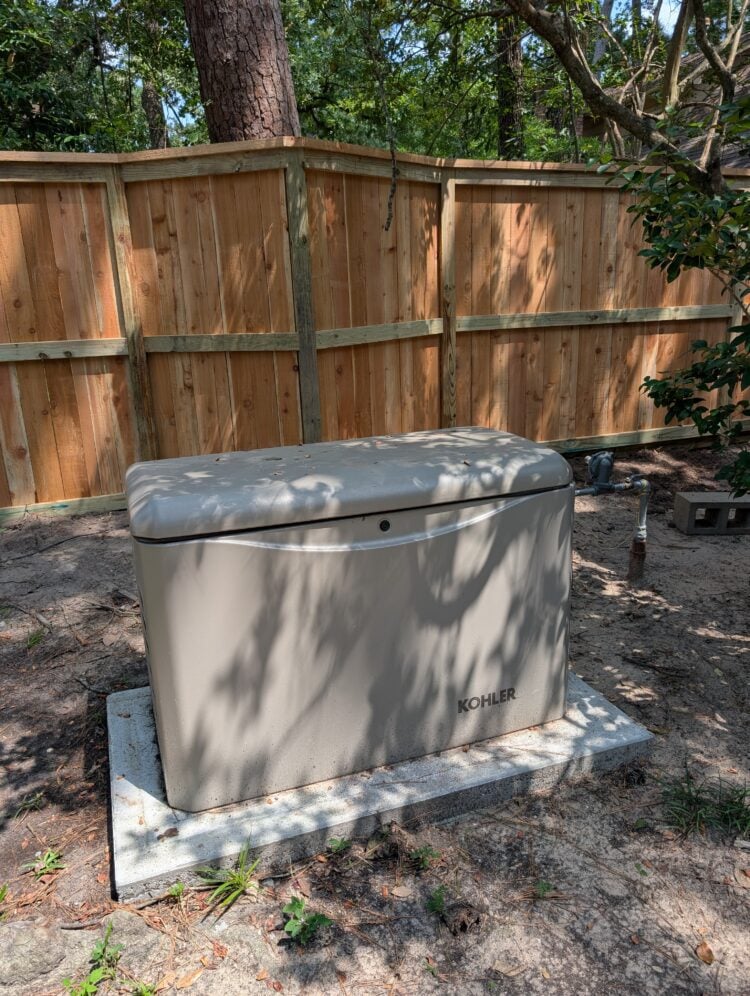
This is the investment that makes sense when someone in the house cannot be without power and you live where outages last days, not hours. It is also the one that requires a licensed electrician, may need a lead time of several weeks for the installation, and it has a significant price tag.
Home Battery Systems
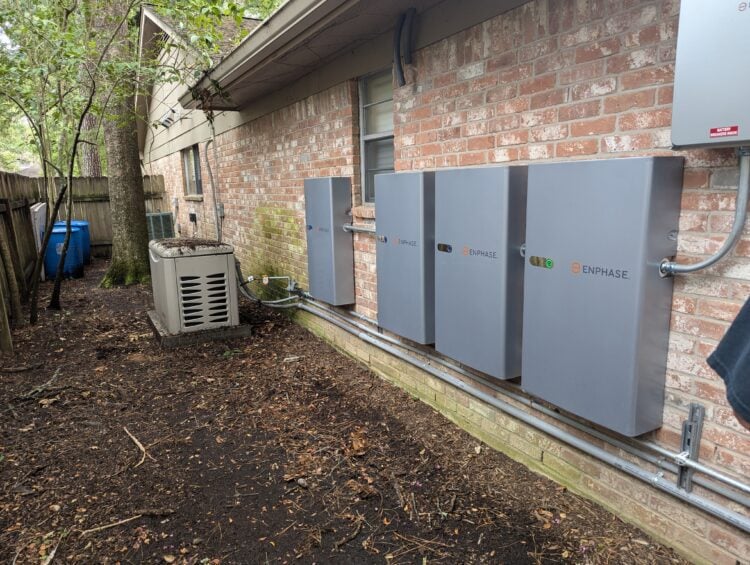
Tesla Powerwall, Enphase (the system we have), Generac PWRcell, and the larger Anker / EcoFlow / Bluetti home systems can carry a medical circuit plus a refrigerator with an automatic transfer. They still need a way to recharge via solar panels or a standby generator if the outage lasts more than a day or two. Used together, battery then generator then battery again, you burn far less fuel and you make far less noise.
Fuel Storage: How Much?
A mid-size portable generator running at a modest load often burns about a third to a half gallon of gasoline an hour. If you run it in blocks, like morning and evening to cool the fridge, charge batteries, and cover treatments, you might use 4 to 8 gallons a day. For three days, you can estimate around15 to 25 gallons of gasoline in approved cans, rotated every few months and with stabilizer added. Untreated gas gets unreliable in a few months.
Propane stores indefinitely in a sealed tank. That is why dual-fuel is so useful. A single 20-pound cylinder may give you something like 7 to 12 hours at a moderate load, closer to 3 hours if you’re running the generator hard. So one tank won’t carry you through even a single full day, and it definitely won’t get you through a multi-day outage. Plan on several tanks per day, or a larger tank, if propane is your main fuel.
Don’t plan to run the generator 24 hours a day if you don’t have to, and don’t be tempted to “save fuel” by turning down prescribed oxygen.
Samples Of Simple Daily Schedules
If the critical load is CPAP, phones, and a refrigerator
- Night: CPAP runs on the power station, backed by the UPS in case the station itself needs a swap or restart.
- Day: Run the generator or power station for two to four hours. Use that window to recharge the power station, let the fridge cool back down, run a nebulizer session, and charge phones, in that order if the generator or power station can’t handle all of it at once.
- Repeat, and check your fuel level each cycle so you know how many days you can keep this pattern going.
If the critical load is a 24/7 concentrator or a ventilator, using a portable generator
Because an oxygen concentrator runs continuously and draws a lot of power, your backup power source needs to run around the clock, too.
- Night: The generator (or whole-home system) keeps running straight through.
- Day: If using a portable generator, check the fuel, refuel if necessary, and check the oil every 8 to 24 hours. Before you shut the generator down for that stop, switch on a backup oxygen cylinder if the device doesn’t have enough internal battery to bridge the gap on its own. Only shut down once the cylinder (or battery) is actively covering the device.
- Repeat: Track fuel, battery percentage, and cylinder pressure every cycle, on paper, with a time written next to each check.
If the critical load is a 24/7 concentrator or a ventilator, using a power station
- Night: The power station runs the concentrator straight through. Know how many watt-hours the station holds and how many it uses per hour, so you know exactly how many hours you have left.
- Day: Recharge the station from solar, a wall outlet, or a car outlet, while the concentrator runs on whatever charge remains, or switch to a second, fully-charged station if you have one. If neither is possible, switch on a backup oxygen cylinder before the station’s charge runs out, so there’s no gap at all.
- Repeat: Track the station’s remaining watt-hours and the cylinder’s pressure every cycle, on paper and with a time written next to each check.
These two examples show how to cycle power for a device that be offline for a short time gaps and the other shows how to manage a schedule when a device can’t. Look back at your own list, and any device you marked “life-and-death emergency” if it stops, belongs in the concentrator/ventilator pattern. Anything you marked “inconvenience” or “tough night” can follow the CPAP pattern instead.
Many devices don’t need a schedule at all. A nebulizer used for a few minutes at a time, a hearing aid charger, a small monitor — these pull so little power that a fully charged power bank or power station will carry them for days without any planning beyond keeping the battery topped off.
Putting it together: example kits by situation
CPAP-only, budget-minded, planning for 72 hours
- Core gear: A CPAP battery pack (Medistrom, Zopec, or a ResMed-brand pack) plus a mid-size power station (roughly 1–2 kWh — think EcoFlow DELTA 2, Bluetti AC180, or a Jackery in the 1000–2000 class).
- Recharging: A 200–400 watt solar panel, or a small inverter generator (Honda/Champion-style) for daily top-offs.
- Don’t forget: Extra distilled water for the humidifier, and a printed copy of your CPAP settings in case you need to reset the machine.
Oxygen concentrator, running 24/7
- Core gear: Backup oxygen cylinders first. These are your real safety net, not the battery.
- Then choose one path:
- A dual-fuel inverter generator sized above 350–600 running watts (enough to cover the concentrator plus the fridge’s startup surge), a transfer switch or a dedicated outdoor cord setup, and at least 72 hours of propane on hand.
- Or a large, expandable battery system (DELTA Pro, Anker F3800, or stacked Bluetti units) paired with a generator to recharge it.
- One thing not to skip: A single 2 kWh suitcase-style power station is a temporary fallback. It will not carry a 24/7 concentrator through an extended outage on its own.
Ventilator or other life-support device
- Core gear: Physician-directed only. Follow whatever backup plan your doctor or medical equipment provider has already given you.
- What that plan should include: An instant-on UPS or the device’s own battery, backed by a generator or medical-grade backup power source, with a documented transfer time (how long the device can bridge the gap between power sources).
- One thing not to skip: A pre-arranged evacuation plan. Do not improvise or experiment with backup power during an actual outage.
Refrigerated medication plus a small device
- Core gear: A power station or generator, run on a duty cycle of about 15 minutes per hour to keep the fridge cold (door kept closed the rest of the time).
- Second layer: A quality cooler with frozen water bottles or ice packs as backup if the power source fails or runs low.
Home dialysis (hemodialysis or peritoneal), on a fixed schedule
- Core gear: A power station or generator sized for 300–900 watts sustained for the full treatment window (often 3–4 hours for hemodialysis, 8–10 hours overnight for PD). Be sure to confirm your exact machine’s draw with your provider first.
- Recharging: If using a power station, plan to recharge fully between sessions rather than running back-to-back treatments on a partial charge.
- One thing not to skip: Never begin a treatment without a confirmed, uninterrupted power source for its entire length. Contact your nephrology team about their specific power-failure protocol.
Calls and Paperwork to Handle Before an Outage
Register with your utility now. Many utility companies offer a Critical Care, Life Support, or Medical Priority residential program, usually requiring a form your doctor signs. Some utilities are upfront that this designation only improves notification. It doesn’t guarantee your power stays on or comes back first, but file it anyway.
Also:
- Tell the fire department, on a non-emergency line, that life-support equipment is in the house.
- Put the medical equipment supplier’s 24-hour number on paper and in every adult’s phone.
- Ask the clinician, “If we cannot keep this machine running at home, where do you want us to go?”
- Keep a go-binder: manuals, a photo of the current settings, prescriptions, serial numbers, physician letter, supply list, emergency contacts, and the stay-or-go trigger.
After some declared disasters, FEMA has reimbursed a generator when it was needed for medically required equipment and the paperwork lined up, but that’s disaster specific and isn’t something you can count on.
Frequently Asked Question
For a CPAP with the humidifier off, often yes, if the station is large enough or you can recharge it each day. For a home oxygen concentrator that runs all day, almost never by itself. Pair the station with solar, a generator, or extra batteries, and keep cylinders as the backup to the backup
Only if that generator produces clean, inverter-style power, or you have confirmed with the manufacturer that your machine will tolerate it. Many conventional generators are a poor match. When in doubt, use an inverter generator or a power station with a pure sine wave outlet.
Ask your clinician. If they say it is acceptable for a few nights, turning off heat and humidity is one of the easiest ways to stretch a battery. If dry air makes therapy fail, keep the humidity and buy more watt-hours.
Usually no. Critical-care or medical-baseline programs improve notification and, in some places, may influence restoration when conditions allow. They are not a promise. Register anyway, then assume you are on your own for the first three days.
Enough to run your real load for at least 72 hours, plus a cushion. For many families on a mid-size portable generator used in blocks, that is roughly 15–25 gallons of gasoline or several propane cylinders. Store fuel the legal, safe way. Rotate gasoline. Propane keeps.
Ask your pharmacist for your drug, not a generic internet number. Many insulin products have a published room-temperature window. Still plan to keep them cold: a small fridge on a power station, or a quality cooler with frozen bottles you do not keep opening.
A DC adapter designed for your machine can work for a limited time. Never run the car in a garage or close to a window that can pull exhaust inside. Watch the fuel gauge. The car is a bridge, not the plan.
The device, every battery and cable that belongs to it, extra supplies for several days, medication with ice packs if needed, the go-binder, IDs, and whatever the clinician said is non-negotiable. If oxygen is involved, take more tank time than you think you need and call the supplier about a refill at the destination.
Sometimes, after a declared disaster, if the generator was needed for medically required equipment and you have the documentation they ask for. Rules change by event. Don’t delay a purchase because a reimbursement might exist later.
Often yes, but sizing is stricter than for most devices on this list because treatments run for hours at a fixed wattage and can’t be safely interrupted partway through. Confirm the exact wattage of your machine (and any water purification component) with your provider, use only pure sine wave power, and never start a session unless you’re confident power will hold for its full length. When in doubt, follow your dialysis center’s specific power-outage protocol rather than improvising.
Get the Medical Device Worksheet Here
The Final Word
A long power outage is hard on every family, but it’s a different kind of hard when you know a loved one depends on a medical device for their health and survival.
If this is your reality, it doesn’t take much time to list the equipment, determine how much power it requires, and then have a plan to provide that power backup — one that’s easy for you to manage and is in your budget.
Wow, excellent post, Lisa. Thank you for the work put in to make this practical for folks.
I’m so glad this was useful!
Excellent information here, as always. One question: I noticed one electronic item of necessity for some people that wasn’t mentioned: what about portable at home kidney dialysis machines. Due to the rising epidemic of Chronic Kidney Disease in the US and other countries, kidney failure is a big issue. A lot of people are opting to do home dialysis. Think you can add this to your list for CKD sufferers. Thank you again for a valuable subject. Stay safe!
Thanks for this suggestion. I’ll add it to the article.